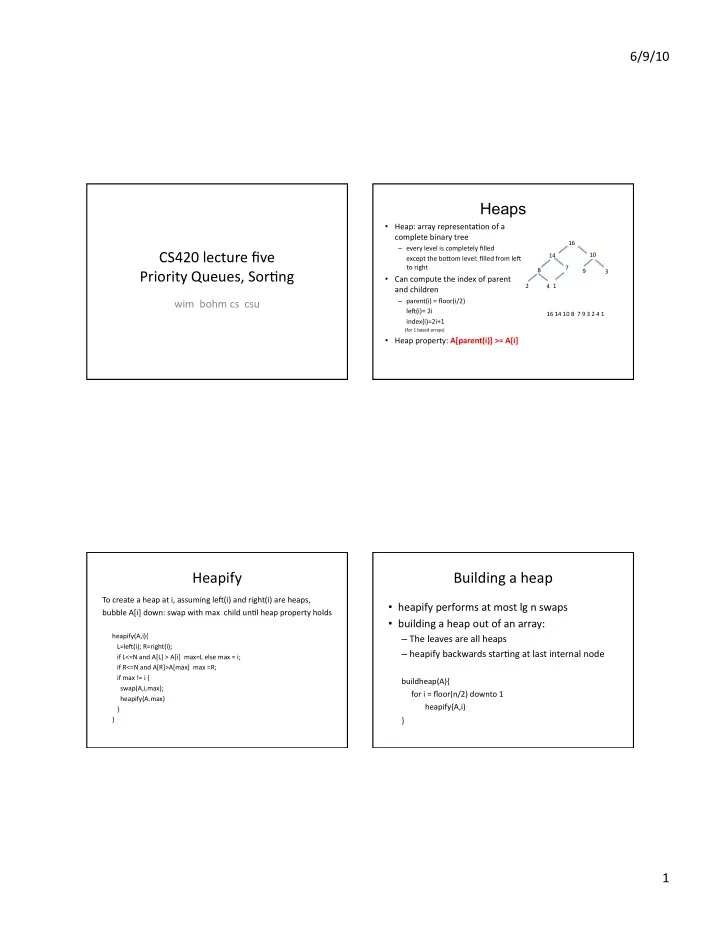
Heaps Heap: array representa:on of a complete binary tree - - PDF document

heaps
SMART_READER_LITE
LIVE PREVIEW

Heaps Heap: array representa:on of a complete binary tree - - PDF document

6/9/10 Heaps Heap: array representa:on of a complete binary tree 16 every level is completely filled CS420 lecture five 10 14


slide-1
SLIDE 1

6/9/10 ¡ 1 ¡

CS420 ¡lecture ¡five ¡ Priority ¡Queues, ¡Sor:ng ¡

wim ¡ ¡bohm ¡cs ¡ ¡csu ¡

Heaps

  • Heap: ¡array ¡representa:on ¡of ¡a ¡

complete ¡binary ¡tree ¡

– every ¡level ¡is ¡completely ¡filled ¡ ¡ ¡ ¡ ¡ ¡except ¡the ¡boHom ¡level: ¡filled ¡from ¡leI ¡ to ¡right ¡

  • Can ¡compute ¡the ¡index ¡of ¡parent ¡

and ¡children ¡

– parent(i) ¡= ¡floor(i/2) ¡ ¡ ¡ ¡ ¡ ¡leI(i)= ¡2i ¡ ¡ ¡ ¡ ¡ ¡index(i)=2i+1 ¡

¡ ¡ ¡ ¡ ¡ ¡(for ¡1 ¡based ¡arrays) ¡

  • Heap ¡property: ¡A[parent(i)] ¡>= ¡A[i] ¡

16 ¡ 10 ¡ 9 ¡ 3 ¡ 1 ¡ 4 ¡ 2 ¡ 7 ¡ 8 ¡ 14 ¡ 16 ¡14 ¡10 ¡8 ¡ ¡7 ¡9 ¡3 ¡2 ¡4 ¡1 ¡

Heapify ¡

To ¡create ¡a ¡heap ¡at ¡i, ¡assuming ¡leI(i) ¡and ¡right(i) ¡are ¡heaps, ¡ ¡ bubble ¡A[i] ¡down: ¡swap ¡with ¡max ¡ ¡child ¡un:l ¡heap ¡property ¡holds ¡

¡ ¡ ¡ ¡ ¡ ¡heapify(A,i){ ¡ ¡ ¡ ¡ ¡ ¡ ¡ ¡ ¡ ¡L=leI(i); ¡R=right(i); ¡ ¡ ¡ ¡ ¡ ¡ ¡ ¡ ¡ ¡if ¡L<=N ¡and ¡A[L] ¡> ¡A[i] ¡ ¡max=L ¡else ¡max ¡= ¡i; ¡ ¡ ¡ ¡ ¡ ¡ ¡ ¡ ¡ ¡if ¡R<=N ¡and ¡A[R]>A[max] ¡ ¡max ¡=R; ¡ ¡ ¡ ¡ ¡ ¡ ¡ ¡ ¡ ¡if ¡max ¡!= ¡i ¡{ ¡ ¡ ¡ ¡ ¡ ¡ ¡ ¡ ¡ ¡ ¡ ¡swap(A,i,max); ¡ ¡ ¡ ¡ ¡ ¡ ¡ ¡ ¡ ¡ ¡ ¡heapify(A.max) ¡ ¡ ¡ ¡ ¡ ¡ ¡ ¡ ¡ ¡} ¡ ¡ ¡ ¡ ¡ ¡ ¡ ¡ ¡ ¡} ¡

Building ¡a ¡heap ¡

  • heapify ¡performs ¡at ¡most ¡lg ¡n ¡swaps ¡
  • building ¡a ¡heap ¡out ¡of ¡an ¡array: ¡

– The ¡leaves ¡are ¡all ¡heaps ¡ – heapify ¡backwards ¡star:ng ¡at ¡last ¡internal ¡node ¡

buildheap(A){ ¡ ¡ ¡ ¡ ¡ ¡for ¡i ¡= ¡floor(n/2) ¡downto ¡1 ¡ ¡ ¡ ¡ ¡ ¡ ¡ ¡ ¡ ¡ ¡ ¡ ¡heapify(A,i) ¡ } ¡

slide-2
SLIDE 2

6/9/10 ¡ 2 ¡

Complexity ¡buildheap ¡

  • Sugges:ons? ¡... ¡

Complexity ¡buildheap ¡

  • ini:al ¡thought ¡ ¡O(nlgn), ¡but ¡

¡ ¡ ¡ ¡ ¡ ¡ ¡half ¡of ¡the ¡heaps ¡are ¡height ¡1 ¡ ¡ ¡ ¡ ¡ ¡ ¡ ¡quarter ¡are ¡height ¡2 ¡ ¡ ¡ ¡ ¡ ¡ ¡ ¡only ¡one ¡is ¡height ¡log ¡n ¡ It ¡turns ¡out ¡that ¡O(nlgn) ¡is ¡not ¡:ght! ¡

complexity ¡buildheap ¡

height ¡ 0 ¡ 1 ¡ 2 ¡ 3 ¡ max ¡#swaps ¡ 0 ¡ ¡= ¡21-­‑2 ¡ 1 ¡ ¡= ¡22-­‑3 ¡ 2*1+2 ¡= ¡4 ¡= ¡23-­‑4 ¡ 2*4+3 ¡= ¡11 ¡= ¡24-­‑5 ¡

complexity ¡buildheap ¡

height ¡ 0 ¡ 1 ¡ 2 ¡ 3 ¡ max ¡#swaps ¡ 0 ¡ ¡= ¡21-­‑2 ¡ 1 ¡ ¡= ¡22-­‑3 ¡ 2*1+2 ¡= ¡4 ¡= ¡23-­‑4 ¡ 2*4+3 ¡= ¡11 ¡= ¡24-­‑5 ¡

Conjecture: ¡ ¡ ¡ ¡ ¡height ¡= ¡h ¡ ¡ ¡ ¡max ¡#swaps ¡= ¡2h+1-­‑(h+2) ¡ Proof: ¡induc:on ¡ ¡ ¡ ¡ ¡height ¡= ¡(h+1) ¡ ¡ ¡ ¡ ¡max ¡#swaps: ¡ ¡ ¡ ¡ ¡ ¡ ¡ ¡ ¡ ¡2*(2h+1-­‑(h+2))+(h+1) ¡ ¡ ¡ ¡ ¡ ¡= ¡2h+2-­‑2h-­‑4+h+1 ¡ ¡ ¡ ¡ ¡ ¡= ¡2h+2-­‑(h+3) ¡ ¡ ¡ ¡ ¡ ¡= ¡2(h+1)+1-­‑((h+1)+2) ¡ ¡ ¡ ¡n ¡nodes ¡O(n) ¡swaps ¡ ¡ ¡ ¡ ¡ ¡ ¡

slide-3
SLIDE 3

6/9/10 ¡ 3 ¡

Cormen ¡et.al. ¡complexity ¡buildheap ¡

N 2h

h=0 lgN

h = N h 2h

h=0 lg N

h 2h

h=0 ∞

= 1/2 (1−1/2)2 = 2 N h 2h

h=0 lg N

= O(n)

Differen:a:on ¡trick ¡ ¡ (Cormen ¡et.al. ¡Appendix ¡A) ¡

x h

h=0 ∞

= 1 1− x Infinite geometrics series | x |<1 differentiate both sides and multiply by x : hx h

h=0 ∞

= x (1− x)2 take x =1/2

Heapsort ¡

¡heapsort(A){ ¡ ¡ ¡ ¡ ¡buildheap(A); ¡ ¡ ¡ ¡ ¡for ¡i ¡= ¡n ¡downto ¡2{ ¡ ¡ ¡ ¡ ¡ ¡ ¡swap(A,1,i); ¡ ¡ ¡ ¡ ¡ ¡ ¡n=n-­‑1; ¡ ¡ ¡ ¡ ¡ ¡ ¡heapify(A,1); ¡ ¡ ¡ ¡} ¡ } ¡

Complexity ¡heapsort ¡

  • buildheap: ¡ ¡O(n) ¡
  • swap/heapify ¡loop: ¡O(nlgn) ¡
  • space: ¡in ¡place: ¡n ¡

– less ¡space ¡than ¡merge ¡sort ¡

slide-4
SLIDE 4

6/9/10 ¡ 4 ¡

1 ¡ 4 ¡ 2 ¡ 7 ¡ 8 ¡ 14 ¡ 14 ¡ 1 ¡ 2 ¡ 7 ¡ 4 ¡ 8 ¡ 14 ¡ 8 ¡ 2 ¡ 1 ¡ 4 ¡ 7 ¡ 14 ¡ 8 ¡ 7 ¡ 1 ¡ 2 ¡ 4 ¡ 14 ¡ 8 ¡ 7 ¡ 4 ¡ 1 ¡ 2 ¡ 14 ¡ 8 ¡ 7 ¡ 4 ¡ 2 ¡ 1 ¡

Priority ¡Queues ¡

  • heaps ¡are ¡used ¡in ¡priority ¡queues ¡

– each ¡value ¡associated ¡with ¡a ¡key ¡ – max ¡priority ¡queue ¡S ¡(as ¡in ¡heapsort) ¡has ¡

  • pera:ons ¡that ¡maintain ¡the ¡heap ¡property ¡of ¡S ¡
  • insert(S,x) ¡
  • max(S) ¡ ¡returning ¡max ¡element ¡
  • Extract-­‑max(S) ¡extrac:ng ¡and ¡returning ¡max ¡element ¡
  • increase ¡key(S,x,k) ¡ ¡increasing ¡the ¡key ¡value ¡of ¡x ¡

¡Extract ¡max: ¡O(log ¡n) ¡

¡ ¡ ¡Extract-­‑max(S){ ¡

¡ ¡ ¡ ¡ ¡ ¡ ¡// ¡pre:N>0 ¡ ¡ ¡ ¡ ¡ ¡ ¡max=S[1]; ¡ ¡ ¡ ¡ ¡ ¡ ¡S[1]=S[N]; ¡ ¡ ¡ ¡ ¡ ¡ ¡N=N-­‑1; ¡ ¡ ¡ ¡ ¡ ¡ ¡heapify(S) ¡ ¡ ¡ ¡} ¡

O(log ¡N) ¡ ¡ ¡ ¡

Increase ¡key: ¡O(log ¡n) ¡

Increase-­‑key(S,i,k){ ¡ ¡ ¡ ¡//pre: ¡k>S[i] ¡ ¡ ¡ ¡A[i]=k; ¡ ¡ ¡ ¡// ¡bubble ¡up ¡ ¡ ¡ ¡while(i>1 ¡and ¡S[parent(i)]<S[i]){ ¡ ¡ ¡ ¡ ¡ ¡ ¡ ¡swap(S,i,parent(i)); ¡ ¡ ¡ ¡ ¡ ¡ ¡ ¡i ¡= ¡parent(i) ¡ ¡ ¡ ¡} ¡ } ¡ ¡

slide-5
SLIDE 5

6/9/10 ¡ 5 ¡

Insert ¡ ¡O(log ¡n) ¡

  • Insert(S,x) ¡

– put ¡x ¡at ¡end ¡of ¡S ¡ – bubble ¡x ¡up ¡like ¡in ¡Increase-­‑key ¡ ¡

Decrease-­‑key ¡

  • How ¡would ¡decrease ¡key ¡work? ¡
  • What ¡would ¡be ¡its ¡complexity? ¡

Quicksort ¡

  • Quicksort ¡has ¡worst ¡case ¡complexity? ¡

Quicksort ¡

  • Quicksort ¡has ¡worst ¡case ¡complexity ¡O(n2) ¡
  • So ¡why ¡do ¡we ¡care ¡about ¡Quicksort? ¡
slide-6
SLIDE 6

6/9/10 ¡ 6 ¡

Quicksort ¡

  • Quicksort ¡has ¡worst ¡case ¡complexity ¡O(n2) ¡
  • So ¡why ¡do ¡we ¡care ¡about ¡Quicksort? ¡

– Because ¡it ¡is ¡ ¡very ¡fast ¡in ¡prac:ce ¡

  • Average ¡complexity: ¡O(nlgn) ¡
  • Low ¡mul:plica:ve ¡constants ¡
  • Sequen:al ¡array ¡access ¡
  • In ¡place ¡ ¡
  • OIen ¡faster ¡than ¡MergeSort ¡and ¡HeapSort ¡ ¡

Par::on: ¡O(n) ¡

Par::on(A,p,r){ ¡ ¡// ¡par::on ¡A[p..r] ¡in-­‑place ¡in ¡two ¡sub ¡arrays: ¡low ¡and ¡hi ¡ ¡// ¡all ¡elements ¡in ¡low ¡< ¡all ¡elements ¡in ¡hi ¡ ¡// ¡return ¡index ¡of ¡last ¡element ¡of ¡low ¡ ¡ ¡ ¡x=A[p]; ¡i=p-­‑1; ¡j=r+1; ¡ ¡ ¡ ¡while ¡true ¡ ¡ ¡ ¡ ¡ ¡ ¡ ¡repeat ¡j=j-­‑1 ¡un:l ¡A[j]<=x ¡ ¡ ¡ ¡ ¡ ¡ ¡ ¡repeat ¡i=i+1 ¡un:l ¡A[i]>x ¡ ¡ ¡ ¡ ¡ ¡ ¡ ¡if ¡i<j ¡swap(A,i,j) ¡else ¡return ¡j ¡ } ¡ ¡ ¡

QuickSort ¡

¡ ¡ ¡Quicksort(A,p,r){ ¡ ¡ ¡ ¡ ¡ ¡ ¡ ¡if ¡p<r ¡{ ¡ ¡ ¡ ¡ ¡ ¡ ¡ ¡ ¡ ¡ ¡q=Par::on(A,p,r) ¡ ¡ ¡ ¡ ¡ ¡ ¡ ¡ ¡ ¡ ¡Quicksort(A,p,q) ¡ ¡ ¡ ¡ ¡ ¡ ¡ ¡ ¡ ¡ ¡Quicksort(A,q+1,r) ¡ ¡ ¡ ¡ ¡ ¡ ¡ ¡} ¡ ¡ ¡ ¡ ¡} ¡

Worst ¡case ¡complexity: ¡when ¡one ¡par::on ¡is ¡size ¡1: ¡

¡ ¡ ¡ ¡T(n)=T(n-­‑1)+n=T(n-­‑2)+(n-­‑1)+n=T(n-­‑3)+(n-­‑2)+(n-­‑1)+n= ¡ ¡ ¡ ¡ ¡ ¡ ¡ ¡ ¡ ¡ ¡ ¡= ¡O(n2) ¡ ¡

Quicksort ¡average ¡case ¡complexity ¡

  • Assume ¡a ¡uniform ¡distribu:on: ¡each ¡par::on ¡

index ¡has ¡equal ¡probability ¡1/n. ¡Thus ¡

T(n) = (n +1) + 1 n T(q) + T(n − q)

q=1 n−1

T(0) = T(1) = 0

slide-7
SLIDE 7

6/9/10 ¡ 7 ¡

Quicksort ¡average ¡case ¡complexity ¡

We ¡are ¡summing ¡all ¡Ts ¡up ¡(T(q)) ¡ ¡and ¡down ¡ ¡(T(N-­‑q)), ¡ ¡both ¡are ¡the ¡same ¡sums ¡so ¡

T(n) = (n +1) + 1 n T(q) + T(n − q)

q=1 n−1

T(0) = T(1) = 0 T(n) = (n +1) + 2 n T(q)

q=1 n−1

∑ Quicksort ¡average ¡case ¡complexity ¡

  • mul:ply ¡both ¡sides ¡by ¡n ¡
  • subs:tute ¡n-­‑1 ¡for ¡n ¡

T(n) = (n +1) + 2 n T(q)

q=1 n−1

nT(n) = n(n +1) + 2 T(q)

q=1 n−1

(2) (n −1)T(n −1) = n(n −1) + 2 T(q)

q=1 n−2

(3)

Quicksort ¡average ¡case ¡complexity ¡

  • subtract ¡ ¡ ¡(2)-­‑(3) ¡

nT(n) = n(n +1) + 2 T(q)

q=1 n−1

(2) (n −1)T(n −1) = n(n −1) + 2 T(q)

q=1 n−2

(3)

nT(n) − (n −1)T(n −1) = 2n + 2T(n −1) nT(n) = 2n + 2T(n −1) + (n −1)T(n −1) nT(n) = 2n + (n +1)T(n −1)

Quicksort ¡average ¡case ¡complexity ¡

  • Which ¡technique ¡that ¡we ¡have ¡learned ¡can ¡

help ¡us ¡here? ¡

nT(n) = 2n + (n +1)T(n −1) a non − linear recurrence relation : T(n) = 2 + n +1 n T(n −1)

slide-8
SLIDE 8

6/9/10 ¡ 8 ¡

Quicksort ¡average ¡case ¡complexity ¡

  • repeated ¡subs:tu:on!! ¡

T(n) = 2 + n +1 n T(n −1) T(n −1) = 2 + n n −1T(n − 2) T(n − 2) = 2 + n −1 n − 2 T(n − 3) etc. T(n) = 2 + 2 n +1 n + 2 (n +1)n n(n −1) + 2 (n +1)n(n −1) n(n −1)(n − 2) + ...

Quicksort ¡average ¡case ¡complexity ¡

T(n) = 2 + 2 n +1 n + 2 (n +1)n n(n −1) + 2 (n +1)n(n −1) n(n −1)(n − 2) + ... simplify T(n) = 2 + 2(n +1) 1 n + 2(n +1) 1 (n −1) + 2(n +1) 1 (n − 2) + ... reorder T(n) = 2 + 2(n +1) 1 k

k=1 n

= 2(n +1) 1 k

k=1 n

Harmonic series from previous lecture : 1 k

k=1 n

= ln(n) + O(1) T(n) = O(nlgn)