
SLIDE 1
Safety Express Game 1
Harm Free Care
learning through interaction This learning resource was developed by Derbyshire Community Health Services NHS Trust
Harm Free Care learning through interaction This learning resource - - PowerPoint PPT Presentation
Safety Express Game Harm Free Care learning through interaction This learning resource was developed by Derbyshire Community Health Services NHS Trust 1 Safety Express Game DR.Moza Alishaq Executive Director Quality Patient Safety Clinical
Safety Express Game 1
learning through interaction This learning resource was developed by Derbyshire Community Health Services NHS Trust
Safety Express Game
DR.Moza Alishaq Executive Director Quality Patient Safety Clinical Transformation
Quality patient safety department
Safety Express Game
As part of our extensive program and with CPD hours awarded based
attendance per session, requiring delegates to attend a minimum of 80% of a session to qualify for the allocated CPD hours.
hours Total CPD hours for the forum are awarded based on the sum of CPD hours earned from all individual sessions. Conflict of Interest The speaker(s) or presenter(s) in this session has/have no conflict of interest or disclosure in relation to this presentation.
Safety Express Game
Quality patient safety department
Safety Express Game
Quality patient safety department
Safety Express Game
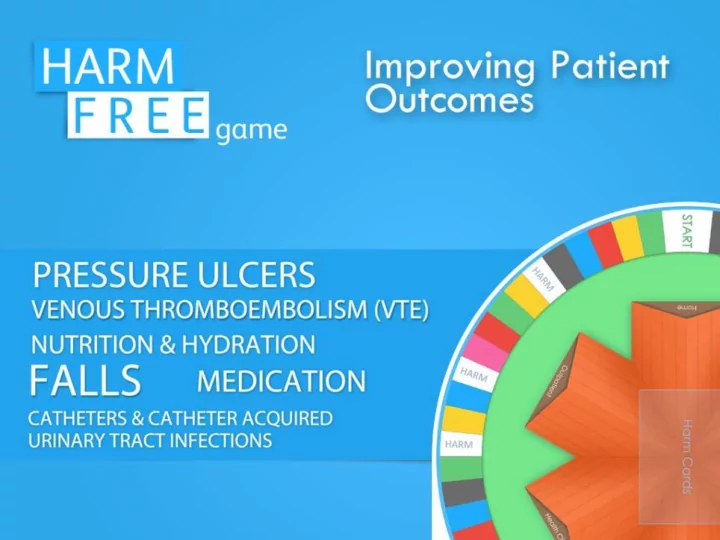
By the end of the game you will have a clear understanding of how you can directly influence the prevention of these avoidable harms:
Additional harms to consider
Quality patient safety department Quality patient safety department
Safety Express Game Quality patient safety department
Safety Express Game
Early detection, action or treatment can save the life of a patient. Good record keeping is essential. Early Warning Scores (EWS) Early Warning Scores should always be used as per trust policy to identify changes in a patient's condition.
Quality patient safety department
Safety Express Game
times. These are all proven to help reduce the risk of all four harms. You should also spend time explaining to patients how they can help themselves.
Quality patient safety department
Safety Express Game
Patient is not eating well or taking enough fluids making them dizzy when they stand and at risk of falling. Their catheter is not draining well because they're not drinking enough
How can you work with the patient and their care givers to reduce harm?
Quality patient safety department
Safety Express Game
It is estimated that over 280,000 patient falls are reported every year, however the number
multifactorial assessments and interventions. The causes of falls are complex, particularly in the elderly, as they are linked to medical conditions including delirium, cardiac, neurological or muscular-skeletal conditions, medication problems with strength, balance
Quality patient safety department
Safety Express Game PRESSURE ULCERS
Pressure ulcers also called Bedsore and decubitus ulcers — are injuries to skin and underlying tissue resulting from prolonged pressure on the skin. Bedsores most often develop on skin that covers bony areas of the body, such as the heels, ankles, hips and tailbone. People most at risk of bedsores are those with a medical condition that limits their ability to change positions or those who spend most of their time in a bed or chair. You can take steps to help prevent bedsores and aid healing
Quality patient safety department
Safety Express Game
CATHETER ASSOCIATED URINARY TRACT INFECTION (CAUTI)
A urinary tract infection (UTI) is an infection involving any part of the urinary system, including urethra, bladder, ureters, and kidney. Approximately 75% of the UTIs are associated with a urinary catheter, which is a tube inserted into the bladder through the urethra to drain urine. The most important risk factor for developing a catheter-associated UTI (CAUTI) is prolonged use of the urinary catheter. Therefore, catheters should only be used for appropriate indications and should be removed as soon as they are no longer needed. Quality patient safety department
Safety Express Game
Since its recognition as the commonest cause of avoidable hospital mortality, reducing avoidable harm through the prevention of Venous Thrombo Embolism (VTE) has been an area of high national priority. The application of improvement methodology and reliable care process design, along with improved patient awareness and involvement, are key to to prevent VTE. Venous thromboembolism (VTE) refers to a blood clot that starts in a vein. It is the third leading vascular diagnosis after heart attack and stroke, affecting between 300,000 to 600,000 Americans each year.
Quality patient safety department
Safety Express Game
Medicines related error is
harm to patients in a number
Quality patient safety department
Omitted and delayed medication doses can lead to significant consequences for patients causing harm, prolonging recovery and lengths of stay. There are resources steps to prevent errors “Reducing Medication harm”.
Safety Express Game Nutrition & Hydration Correct hydration and nutrition can save lives; it is a key intervention relation to the four harms (Venous Thrombus Emboli (VTE), Falls, Catheter Acquired Urinary Tract Infection (CAUTI) and Pressure Ulcers). Monitoring fluid status is essential basic care for all patients to prevent acute kidney injury (AKI). Quality patient safety department Malnutrition is a state of nutrition in which a deficiency or excess (or imbalance) of energy, protein and other nutrients causes measurable adverse effects on tissue/body form (body shape, size and composition) and function and clinical outcome
Safety Express Game Quality patient safety department
Safety Express Game
Quality patient safety department
Safety Express Game 19 Quality patient safety department
Items available and required for HARM
FREE GAME
The following are:
Game board Team Counter Patient card Location card Card holders Corresponding coloured ‘clip Category colours Harm Card Dice
Safety Express Game
Quality patient safety department
Safety Express Game Quality patient safety department
Safety Express Game Quality patient safety department
Safety Express Game 1. Place the TEAM counter on the board in the START position. 2. Choose a patient card and a location, put the card in the card holder and place your patient on the corresponding area on your game board. 3. Throw the dice to move round the board. 4. When you land on a coloured spot discuss, as a team, the potential risk for your patient from that particular harm and how this could be avoided/managed. 5. Add a corresponding coloured ‘clip’ to your patient card. 6. Document your discussions on Document 1. This will be discussed at the end of the game. 7. Once you are happy you have assessed your patient against that harm throw the dice and move on until you reach the next harm. 8. The aim is to visit all the harms around the board. 9. Once completed, your patient can be placed in the SAFE ZONE. 10. If you land on a ‘HARM’ square, take a card from the centre and within your team discuss and answer and record on Document 2. This will be discussed at the end of the game. 11. Choose another patient and location and continue until 5 patients and locations have been discussed against all of the harms.
Quality patient safety department
Safety Express Game
As a team discuss and document if and how this patient, service user, may be at risk of 1 2, 3 or all of the 6 harms
Clip appropriate coloured harms counter to the patient card to indicate a the potential risks that patient may be facing.
Quality patient safety department
Safety Express Game
Quality patient safety department
Safety Express Game
users.
responsible for every patients.
being (use of patient information leaflet, vital conversations)
both in, and outside of, formal care settings.
Quality patient safety department
Safety Express Game
Avoidable Pressure Ulcer:
“Avoidable” means that the person receiving care developed a pressure ulcer and the provider of care did not do one of the following: – evaluate the person’s clinical condition and pressure ulcer risk factors – plan and implement interventions that are consistent with the person’s needs and goals, and recognised standards of practice – monitor and evaluate the impact of the interventions, or revise the interventions as appropriate.”
Quality patient safety department
Safety Express Game
Unavoidable Pressure Ulcer: “Unavoidable” means that the person receiving care developed a pressure ulcer even though the providers of the care had evaluated the person’s clinical condition and pressure ulcer risk factors;
Quality patient safety department
Safety Express Game
Quality patient safety department
Safety Express Game
Quality patient safety department
Safety Express Game
Conversations
Keeping/Evaluation
accountability
Score/interpretation/ action
Review/reconciliation
symptoms
Non Touch Technique (ANTT)
Quality patient safety department
Safety Express Game
Quality patient safety department
Safety Express Game
Falls
review?)
clutter, adequate lighting
footwear
CAUTI
about it
Pressure Ulcers
for signs
pressure aids
VTE
Quality patient safety department
Safety Express Game
A patient suffers from a harm during their care within your organisation.
Quality patient safety department
Safety Express Game
Patient
care home
Organization
loss of business
hospital stay, increase use of staff/consumables/medications
activity or performance
team (morale, job satisfaction, registration)
Quality patient safety department
Safety Express Game
If a patient is not eating well or taking enough fluids:
risk of falling.
drinking enough fluids which increases their risk of CAUTI.
motivated to move so they are at risk of VTE.
ulcers could develop.
Quality patient safety department
Safety Express Game Thank you Quality patient safety department