Fuel Industry 101 in Florida Hurricane Irma in Review Christy Haven - - PowerPoint PPT Presentation

fuel industry 101 in florida hurricane irma in review
SMART_READER_LITE
LIVE PREVIEW

Fuel Industry 101 in Florida Hurricane Irma in Review Christy Haven - - PowerPoint PPT Presentation

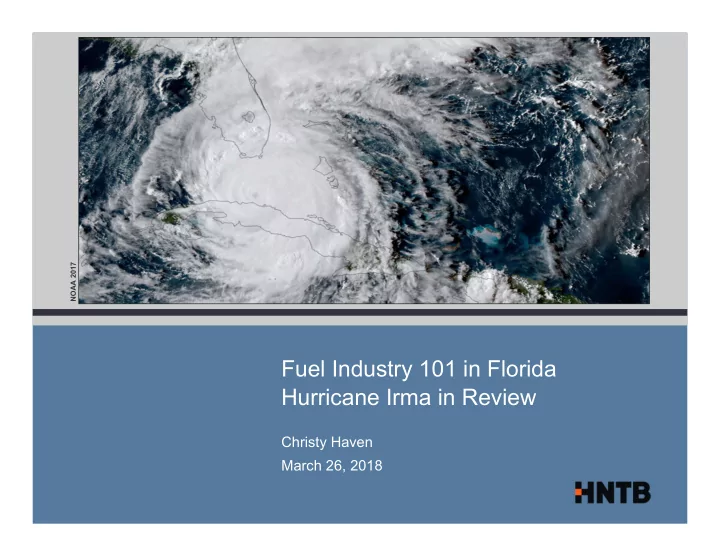
NOAA 2017 Fuel Industry 101 in Florida Hurricane Irma in Review Christy Haven March 26, 2018 Assessment Process Interviews Florida Department of Revenue Florida Department of Transportation Florida Division of Emergency


slide-1
SLIDE 1

Fuel Industry 101 in Florida Hurricane Irma in Review

Christy Haven March 26, 2018

NOAA 2017
slide-2
SLIDE 2

Assessment Process

Interviews

  • Florida Department of Revenue
  • Florida Department of Transportation
  • Florida Division of Emergency

Management

  • Florida Highway Patrol
  • Florida Petroleum Council
  • Florida Petroleum Marketers

Association

  • Florida Rock and Tank
  • Florida Trucking Association
  • CSX Transportation
  • U.S. Department of Homeland

Security

slide-3
SLIDE 3

Situation

  • Largest Evacuation in U.S. History
  • Hurricane Irma Unpredictable Path
  • Supply Anxiety
  • Hurricane Harvey
  • Major Ports Closed
  • High Demand for Truck Drivers and Fuel

Trucks

  • Severe Congestion and Gas Shortages

in Wildwood, Lake City, and Panhandle

  • K. Clark, Miami Herald

Michelle Eve Sandberg/AFP/Getty Images

slide-4
SLIDE 4

How the System Works Fuel Distribution System

Florida Petroleum Council. 2017. Hurricanes Harvey and Irma. A presentation to FDOT on Hurricane Response andPreparedness

Jobber Franchises Major Brand to Dealer Jobber Owns Site Hypermarket, Large Independent Brands Small Independent Outlets Franchised Independent Dealer Outlets Leased From Jobber Jobber Independent Dealer Outlets Jobber Operated Outlets Franchised Independent Dealer Outlets, Dealer Owns Site Franchised Independent Dealer Outlets, Leased From Refiner Company Owned Operated Outlets& (less than 5%)

WHOLESALE/DISTRIBUTOR THIRD-PARTY DELIVERED (58% single store owners: about 50% branded by refineries) REFINER DIRECT DELIVERED (Retail) TERMINAL LOADING RACK Branded, contracted and spot market sales. Gasoline, ethanol, and additives blended to finish gasoline. ADDITIVES RAIL TRUCK Fuel Products ETHANOL PLANTS TERMINALS MARINE Above the rack bulk deliveries to terminals

(e.g. exchange deliveries, third party terminals, end users with terminals) (Fuel products are unfinished gasoline, diesel, jet, kerosene, home heating oil, ethanol)

PIPELINE REFINERIES

Jobber Franchises Major Brand to Dealer Outlets. Dealer Owns Site

slide-5
SLIDE 5

How the System Works Florida Fuel Supply Chain

slide-6
SLIDE 6

How the System Works

Truck Drivers

  • Special Training Required – Hazardous Materials and

Terminal Operations

  • Access Requirements
  • Trucks Generally Owned by Commercial Carriers

Gas Stations – Contract vs. Spot Pricing

  • Contract
  • Between Supplier and Dealer
  • Given Higher Priority when Supplies Constrained
  • “Spot Market”
  • Surplus Sold at a Discount
  • Last to be Served when Supplies Constrained

.

twitter.com/PortCanaveral Oil Price Information Service (OPIS) 2017

slide-7
SLIDE 7

What Worked Well

  • Communications and Coordination
  • Daily Calls with Governor
  • Between States
  • Regulation Waivers
  • Fuels
  • Motor Carrier
  • FERC Tariffs
  • Jones Act
  • Tolls
  • Florida Highway Patrol Escorts
  • Fuel Trucks
  • Station Employees

twitter.com/FLGovScott/

slide-8
SLIDE 8

Considerations

Coordination

  • Coordinate with Fuel industry to develop planning guide.
  • Engage with trucking companies to develop emergency

staffing plan.

Assessment

  • Explore sites for more fuel storage.
  • Evaluate feasibility of adding more racks at port terminals.
  • Assess the feasibility of accessing fuel storage of other public

and private entities during an emergency.

  • Evaluate option to use fuel trains as temporary storage and

dispensing facilities.

slide-9
SLIDE 9

Considerations

Response

  • Create a public information plan to effectively communicate

fuel availability.

  • Coordinate with southeastern states on pre-agreed upon

regional waivers for emergencies.

  • Identify critical gas stations along evacuation routes.
  • Coordinate with local emergency management officials to

develop a plan for orderly fuel service during emergencies.