
SLIDE 1
CITY OF MARKHAM: CHANGING LANDSCAPE
MAY 2, 2016
Lisa Gonsalves
Director, Strategies and Partnerships Community and Health Services PRESENTATION TO GENERAL COMMITTEE
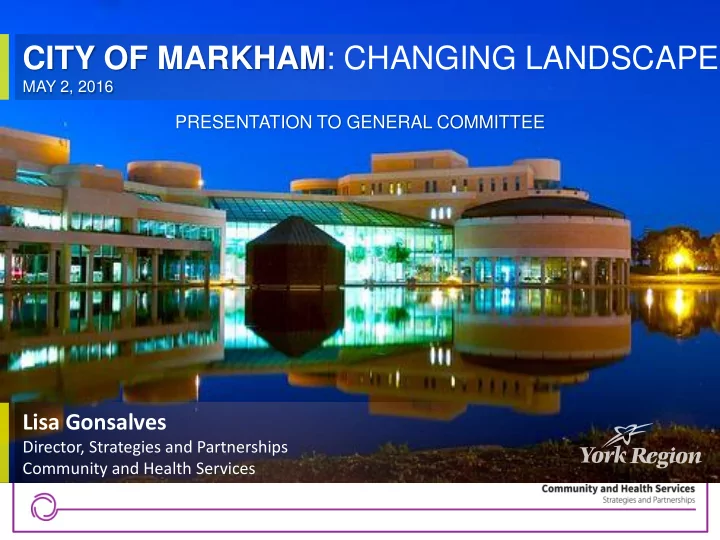
CITY OF MARKHAM : CHANGING LANDSCAPE MAY 2, 2016 PRESENTATION TO - - PowerPoint PPT Presentation
CITY OF MARKHAM : CHANGING LANDSCAPE MAY 2, 2016 PRESENTATION TO GENERAL COMMITTEE Lisa Gonsalves Director, Strategies and Partnerships Community and Health Services OVERVIEW Population growth and changing demographics Labour force
MAY 2, 2016
Lisa Gonsalves
Director, Strategies and Partnerships Community and Health Services PRESENTATION TO GENERAL COMMITTEE
2
Almost 400,000 residents in 2026
2015 year-end estimated population
1996-2015
growth
Source: Statistics Canada: 1996 and 2006 Census 2015 and 2026 population estimates: York Region, Corporate Services, Long Range planning Branch
3
Source: Statistics Canada: 1996 and 2006 Census 2015 and 2026 population estimates: York Region, Corporate Services, Long Range planning Branch
seniors (65+)
children (<15)
youth (15-24)
4
Multiple Family Households
%69 61% 19%
One-person households Multiple family households Couples with children 2001 – 2011 Changes
Source: Statistics Canada: 2011 Census
5
In 2010-2014,
no knowledge of official languages In 2011,
visible minority status in 2011
Source: Citizenship & Immigration Canada, RDM as of September 2015
Markham, 32.6% Vaughan, 30.9% Richmond Hill, 27.8% Rest of York Region, 8.6%
New Permanent Residents in Canada, 2010-2014
6
HALF OF WORKFORCE HAS A UNIVERSITY DEGREE
7
Working outside York Region
Top Industries
Working in Markham
Top Industries
Working in other municipalities in York Region
Top Industries
30.7% 13.8% 55.5%
8
Source: Statistics Canada:, 2011 NHS
were low income in Markham in 2013
income residents worked in 2012
21%
$0 - $39,999
26%
$40,000 - $79,999
23%
$80,000 - $124,999
30%
$125,000
Markham Households by Income Group (2015)
Source: Environics Analytics, WealthScapes 2015
9
Source: Statistics Canada, 2011 and 2013 Taxfilers Databases
10
Average Household carries: (2015)
(78% of total debt)
(22% of total debt)
Homeowners Spending 30% or More of Their Household Income
Markham York Region Owner Households
Average Resale Price
Source: Statistics Canada, 2011 National Household Survey
11
Source: Environics Analytics, WealthScapes 2015 Source: Toronto Real Estate Board, 2016
Average Markham Monthly Rent
2014: $1,125 2015: $1,197
Increase 6.4%
Tenants Spending 30% or More of Their Household Income on Housing
Markham York Region Renter Households
Average Vacancy Rate
Source: CMHC, GTA Rental Market Report 2015
12
Source: Statistics Canada, 2011 National Household Survey Source: CMHC, GTA Rental Market Report 2015
Region
Engaging residents Sharing data and knowledge Integrating affordable housing Creating a welcoming and inclusive community
14