Building Damage Asssessment A tool for policy making and rapid - - PowerPoint PPT Presentation

building
SMART_READER_LITE
LIVE PREVIEW

Building Damage Asssessment A tool for policy making and rapid - - PowerPoint PPT Presentation

Building Damage Asssessment A tool for policy making and rapid recovery Technical expertise and Digital technology The methodology Inspectors Questionnaire Sectorization / zoning App Team development Data collection


slide-1
SLIDE 1

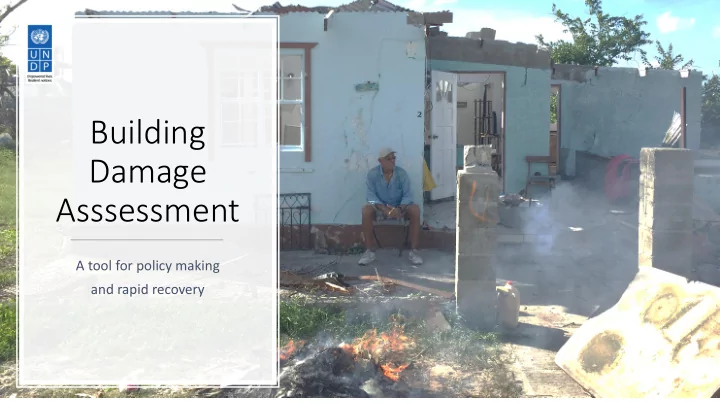
Building Damage Asssessment

A tool for policy making and rapid recovery
slide-2
SLIDE 2

Technical expertise and Digital technology

slide-3
SLIDE 3

The methodology

  • Questionnaire
  • App

development Technical definition

  • Team

formation

  • Training

Inspectors

  • Sectorization /

zoning

  • Data collection

Field assessments

  • Decisions
  • Actions
  • Recovery

Programs and policies

  • Data analysis
  • Visualization
  • Reports

Reporting

  • Data

verification

Data Management

slide-4
SLIDE 4
  • 2. IN

INFORMATION AVAILABLE

slide-5
SLIDE 5

Roofs, ceilings, floors and walls

slide-6
SLIDE 6

And more relevant information

slide-7
SLIDE 7
  • 3. COLOR TAGGING
slide-8
SLIDE 8

Green: minimal or no damage

slide-9
SLIDE 9

Yellow: Minor repairs required

slide-10
SLIDE 10

Orange: Major repairs required

slide-11
SLIDE 11

Red: Building destroyed

slide-12
SLIDE 12

Grey: Unclear

slide-13
SLIDE 13

4. . DATA MANAGEMENT & & REPORTING

slide-14
SLIDE 14
slide-15
SLIDE 15

Data exportable, sharable and compatible

slide-16
SLIDE 16
slide-17
SLIDE 17

5. . ANALYSIS (few examples)

slide-18
SLIDE 18

Building damage

Minimal damage Minor damage Major damage Destroyed Other

slide-19
SLIDE 19
slide-20
SLIDE 20

Roof damage

25%-49% roof damage 50%-75% roof damage Over 75% roof damage Minimal roof damage

slide-21
SLIDE 21

Damage by building size

Extra Small - Less than 200 ft2 Small - 200 ft2 to 500 ft2 Medium - 500 ft2 to 1200 ft2 Large - 1200 ft2 to 2500 ft2 Extra Large - Over 2500 ft2

% of rood needs relate to extra small, small and medium buildings.

slide-22
SLIDE 22

Construction techniques

VS

70% damage 20% damage

slide-23
SLIDE 23

Ongoing repairs (permanent housing)*

*Plastic sheeting and other temporal/transitional solutions are not considered as repairs in this assessment.

No Yes

slide-24
SLIDE 24

Public buildings – level of f damage

slide-25
SLIDE 25

Debris to be managed

  • Volume
  • Location
  • Heavy equipment required
  • Storage capacity
  • Transportation
slide-26
SLIDE 26

Color tag (by district)

slide-27
SLIDE 27

Planning and Budgeting

Damage Cost/unit Materials Type Budget required Size

slide-28
SLIDE 28
  • 6. WAY FORWARD
slide-29
SLIDE 29

Green buildings

  • Minimal fixes
  • Reinforcements
  • Inexpensive
  • Fast

Yellow buildings

  • Minor repairs
  • Installation of galvanized
  • Minor rafter replacement
  • Prioritization (possible criteria):
  • Government buildings
  • Essential personnel
  • Business
  • Houses with occupants

Quick impact – families back to SAFE homes

slide-30
SLIDE 30

Orange buildings

  • Major repairs
  • Reinforcements
  • Good quality materials
  • Time frame

Red buildings

  • Debris management
  • Disaster resilient structures
  • Location
  • Vulnerabilities

Reconstruction

slide-31
SLIDE 31

Long term view

  • Building codes (use)
  • Urban planning
  • Resilience and Climate

Change adaptation

  • Adequate financing
  • Livelihoods
  • Sustainable development
slide-32
SLIDE 32

Thank you for the attention

ugo.blanco@undp.org

a house is NOT a home