
SLIDE 1
Programming for Engineers Winter 2015 Andreas Zeller, Saarland University
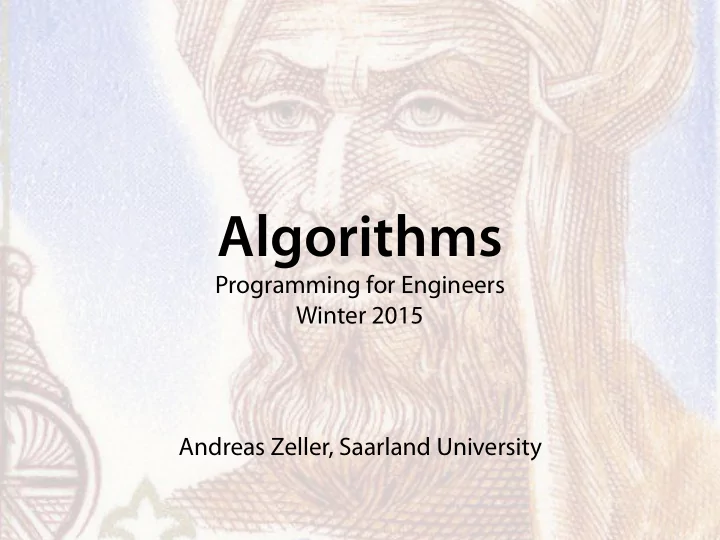
Algorithms Programming for Engineers Winter 2015 Andreas Zeller, - - PowerPoint PPT Presentation
Algorithms Programming for Engineers Winter 2015 Andreas Zeller, Saarland University Todays Topics Algorithms Search and Sort Complexity Sounds! An Algorithm unambiguous instruction to solve a problem consists
Programming for Engineers Winter 2015 Andreas Zeller, Saarland University
to solve a problem
steps
programs
be divided
“However, if CD does not measure AB, and if one repeatedly and alternately deducts the smaller from the larger (of AB, CD), then fjnally a number must remain which measures the previous one.” (Euclid, Elements)
“However, if CD does not measure AB, and if one repeatedly and alternately deducts the smaller from the larger (of AB, CD), then fjnally a number must remain which measures the previous one.” (Euclid, Elements)
Example: The GCD of 12 and 44 is 4
int gcd(int a, int b) { if (a == 0) return b; while (b != 0) { if (a > b) a = a - b; else b = b - a; } return a; }
Example: The GCD of 12 and 44 is 4
يمزراوخلا ىسوم نب دمحم رفعج وبأ
Muhammad ibn Musa al-Chwarizmi, * ~780 • †835–850
رصتخلنا باتكلا ربجلا باسح يف ةلباقلناو
The concise Book about calculus
The First Algorithm Developed for Computers
in mathematics in many contexts
B0 = 1, B1 = ±1⁄2, B2 = 1⁄6, B3 = 0, B4 = −1⁄30, B5 = 0, B6 = 1⁄42, B7 = 0, B8 = −1⁄30.
1815–1852
Charles Babbage, 1837
1912–1954
no program which can decide for an arbitrary program P, whether it will (eventually) return a result or not.
(Wolfgang Collatz, 1937)
19, 58, 29, 88, 44, 22, 11, 34, 17, 52, 26, 13, 40, 20, 10, 5, 16, 8, 4, 2, 1, …
(Wolfgang Collatz, 1937)
manner ends in 4, 2, 1, …
19, 58, 29, 88, 44, 22, 11, 34, 17, 52, 26, 13, 40, 20, 10, 5, 16, 8, 4, 2, 1, …
19, 58, 29, 88, 44, 22, 11, 34, 17, 52, 26, 13, 40, 20, 10, 5, 16, 8, 4, 2, 1, …
for every n?
(in infjnite time)
void collatz(int n) { while (n != 1) { if (n % 2 == 0) n = n / 2; else n = 3 * n + 1; } }
It is impossible to show correctness automatically for all programs
To show that a real program fulfjls its requirements, we must either
assumptions to prove it by hand (which is very hard), or
suffjce.
Calculate Search Sort
Calculate Search Sort
1 2 3 4 5 6 7 8 9 10
int a[11]; // 11 Elements
a
Type of the elements Name
array Size
array
1 2 3 4 5 6 7 8 9 10 a
// If x is in a[0..size], return index, // such that x == a[index]; // otherwise < 0 int find(int a[], int size, int x) { // what happens here? }
10 –10 7 2 2 –4 –7 –10 1 4 5
// If x is in a[0..size], return index, // such that x == a[index]; // otherwise < 0
int find(int a[], int size, int x) { for (int i = 0; i < size; i++) { if (x == a[i]) return i; } return -1; }
1 2 3 4 5 6 7 8 9 10 a
int index = find(a, 11, -4);
10 –10 7 2 2 –4 –7 –10 1 4 5
i
1 2 3 4 5 6 7 8 9 10 a
int index = find(a, 11, -4);
10 –10 7 2 2 –4 –7 –10 1 4 5
i
1 2 3 4 5 6 7 8 9 10 a
int index = find(a, 11, -4);
10 –10 7 2 2 –4 –7 –10 1 4 5
i
1 2 3 4 5 6 7 8 9 10 a
int index = find(a, 11, -4);
10 –10 7 2 2 –4 –7 –10 1 4 5
i
1 2 3 4 5 6 7 8 9 10 a
int index = find(a, 11, -4);
10 –10 7 2 2 –4 –7 –10 1 4 5
i
1 2 3 4 5 6 7 8 9 10 a
int index = find(a, 11, -4);
10 –10 7 2 2 –4 –7 –10 1 4 5
i ✔
// If x is in a[0..size], return index, // such that x == a[index]; // otherwise < 0
int find(int a[], int size, int x) { for (int i = 0; i < size; i++) { if (x == a[i]) return i; } return -1; }
Having n elements:
points?
a
10 –10 7 2 2 –4 –7 –10 1 4 5
a
10 –10 7 2 2 –4 –7 –10 1 4 5
// If x is in a[0..size], return index, // such that x == a[index]; // otherwise < 0
int sorted_find(int a[], int size, int x) { // Would this be faster? }
a
10 –10 7 2 2 –4 –7 –10 1 4 5
i
int index = sorted_find(a, 11, -4);
a
10 –10 7 2 2 –4 –7 –10 1 4 5
i
int index = sorted_find(a, 11, -4);
a
10 –10 7 2 2 –4 –7 –10 1 4 5
i
int index = sorted_find(a, 11, -4);
interval
continue the search in the left half
half
a
10 –10 7 2 2 –4 –7 –10 1 4 5
left
int index = sorted_find(a, 11, -4);
right mid
a
10 –10 7 2 2 –4 –7 –10 1 4 5
left
int index = sorted_find(a, 11, -4);
right mid
a
10 –10 7 2 2 –4 –7 –10 1 4 5
left
int index = sorted_find(a, 11, -4);
right mid
a
10 –10 7 2 2 –4 –7 –10 1 4 5
left
int index = sorted_find(a, 11, -4);
right mid
a
10 –10 7 2 2 –4 –7 –10 1 4 5
left
int index = sorted_find(a, 11, -4);
right mid
int sorted_find(int a[], int size, int x) { int left = 0; int right = size - 1; while (left <= right) { int mid = left + ((right - left) / 2); if (x == a[mid]) return mid; else if (x < a[mid]) right = mid - 1; else // (x > a[mid]) left = mid + 1; } return -1; }
Having n elements:
Calculate Search Sort
Calculate Search Sort
a
10 –10 7 2 2 –4 –7 –10 1 4 5
a
10 –10 7 2 2 –4 –7 –10 1 4 5
How do I sort an array?
a
10 –10 7 2 2 –4 –7 –10 1 4 5
a
10 –10 7 2 2 –4 –7 –10 1 4 5
a
10 –10 7 2 2 –4 –7 –10 1 4 5
a
10 –10 7 2 2 –4 –7 –10 1 4 5
a
10 –10 7 2 2 –4 –7 –10 1 4 5
a
10 –10 7 2 2 –4 –7 –10 1 5 4
a
10 –10 7 2 2 –4 –7 –10 1 5 4
a
10 –10 7 2 2 –4 –7 –10 1 5 4
a
10 –10 7 2 2 –4 –7 –10 1 5 4
a
10 –10 7 2 2 –4 –7 –10 1 5 4
a
10 –10 7 2 2 –4 –7 –10 1 5 4
a
10 –10 7 2 2 –4 –7 –10 1 5 4
a
10 –10 7 2 2 –4 –7 –10 1 5 4
a
10 –10 7 2 2 –4 –7 –10 1 5 4
a
10 –10 7 2 2 –4 –7 –10 1 5 4
a
10 –10 7 2 2 –4 –7 –10 1 4 5
a
10 –10 7 2 2 –4 –7 –10 1 4 5
already sorted
a
10 –10 7 2 2 –4 –7 –10 1 4 5
already sorted
a
10 –10 7 2 2 –4 –7 –10 1 4 5
already sorted
a
10 –10 7 2 2 –4 –7 –10 1 4 5
already sorted
a
10 –10 7 2 2 –4 –7 –10 1 4 5
already sorted
until the element reaches the correct position
until the element reaches the correct position
a
10 –10 7 2 2 –4 –7 –10 1 4 5
already sorted
until the element reaches the correct position
a
10 –10 7 2 2 –4 –7 –10 1 4 5
already sorted
until the element reaches the correct position
a
10 –10 7 2 2 –4 –7 –10 1 4 5
already sorted
until the element reaches the correct position
a
10 –10 7 2 2 –4 –7 –10 1 4 5
already sorted
until the element reaches the correct position
a
10 –10 7 2 2 –4 –7 –10 1 4 5
already sorted
until the element reaches the correct position
a
10 –10 7 2 2 –4 –7 –10 1 4 5
already sorted
void insertion_sort(int a[], int size) { for (int i = 1; i < size; i++) { int j = i; while (j > 0 && a[j - 1] > a[j]) { // Swap a[j] and a[j - 1] int tmp = a[j]; a[j] = a[j - 1]; a[j - 1] = tmp; j--; } }
}
Having n elements:
6 7 8 9 10
–7 –10 1 4 5
1 2 3 4 5
10 –10 7 2 2 –4
1 2 3 4 5
10 –10 7 2 2 –4
6 7 8 9 10
–7 –10 1 4 5
1 2 3 4 5
10 –10 7 2 2 –4
6 7 8 9 10
–7 –10 1 4 5
1 2 3 4 5
10 –10 7 2 2 –4
6 7 8 9 10
–7 –10 1 4 5
1 2 3 4 5
10 –10 7 2 2 –4
6 7 8 9 10
–7 –10 1 4 5
1 2 3 4 5 6 7 8 9 10
1 2 3 4 5
10 –10 7 2 2 –4
6 7 8 9 10
–7 –10 1 4 5
1 2 3 4 5 6 7 8 9 10
1 2 3 4 5
10 –10 7 2 2 –4
6 7 8 9 10
–7 –10 1 4 5
1 2 3 4 5 6 7 8 9 10
1 2 3 4 5
10 –10 7 2 2 –4
6 7 8 9 10
–7 –10 1 4 5
1 2 3 4 5 6 7 8 9 10
1 2 3 4 5
10 –10 7 2 2 –4
6 7 8 9 10
–7 –10 1 4 5
1 2 3 4 5 6 7 8 9 10
1 2 3 4 5
10 –10 7 2 2 –4
6 7 8 9 10
–7 –10 1 4 5
1 2 3 4 5 6 7 8 9 10
1 2 3 4 5
10 –10 7 2 2 –4
6 7 8 9 10
–7 –10 1 4 5
1 2 3 4 5 6 7 8 9 10
1 2 3 4 5
10 –10 7 2 2 –4
6 7 8 9 10
–7 –10 1 4 5
1 2 3 4 5 6 7 8 9 10
1 2 3 4 5
10 –10 7 2 2 –4
6 7 8 9 10
–7 –10 1 4 5
1 2 3 4 5 6 7 8 9 10
1 2 3 4 5
10 –10 7 2 2 –4
6 7 8 9 10
–7 –10 1 4 5
1 2 3 4 5 6 7 8 9 10
1 2 3 4 5
10 –10 7 2 2 –4
6 7 8 9 10
–7 –10 1 4 5
1 2 3 4 5 6 7 8 9 10
1 2 3 4 5
10 –10 7 2 2 –4
6 7 8 9 10
–7 –10 1 4 5
1 2 3 4 5 6 7 8 9 10
1 2 3 4 5
10 –10 7 2 2 –4
6 7 8 9 10
–7 –10 1 4 5
1 2 3 4 5
10 –10 7 2 2 –4
6 7 8 9 10
–7 –10 1 4 5
How do I sort partial arrays?
to the partial arrays
1903–1957
// Sort a[0..size], using b[0..size] as a buffer void merge_sort(int a[], int b[], int size) { partial_merge_sort(a, b, 0, size); }
// Sort a[begin..end], using b[begin..end] as buffer void partial_merge_sort(int a[], int b[], int begin, int end) { if (end - begin < 2) return; // Split and sort int mid = begin + (end - begin) / 2; partial_merge_sort(a, b, begin, mid); partial_merge_sort(a, b, mid, end); // Merge and copy merge(a, b, begin, mid, end); copy(a, b, begin, end); }
// Merge a[begin..mid - 1] and a[mid..end] into b[begin..end] void merge(int a[], int b[], int begin, int mid, int end) { int i_begin = begin; int i_mid = mid; for (int j = begin; j < end; j++) if (i_begin < mid && (i_mid >= end || a[i_begin] <= a[i_mid])) b[j] = a[i_begin++]; else b[j] = a[i_mid++]; }
// Copy b[begin..end] into a[begin..end] void copy(int a[], int b[], int begin, int end) { for (int k = begin; k < end; k++) a[k] = b[k]; }
Having n elements:
5 10 15 20 25 5 10 15 20
exponential quadratic linear logarithmic linear- logarithmic
Calculate Search Sort
Calculate Search Sort
and a microphone
Speaker Microphone
Piezo Buzzer
sounds in arbitrary frequencies
Theremin =
+
19, 58, 29, 88, 44, 22, 11, 34, 17, 52, 26, 13, 40, 20, 10, 5, 16, 8, 4, 2, 1, …
for every n?
(in infjnite time)
void collatz(int n) { while (n != 1) { if (n % 2 == 0) n = n / 2; else n = 3 * n + 1; } }
It is impossible to show correctness automatically for all programs
int sorted_find(int a[], int size, int x) { int left = 0; int right = size - 1; while (left <= right) { int mid = left + ((right - left) / 2); if (x == a[mid]) return mid; else if (x < a[mid]) right = mid - 1; else // (x > a[mid]) left = mid + 1; } return -1; }
a
10 –10 7 2 2 –4 –7 –10 1 4 5
left
int index = sorted_find(a, 11, -4);
right mid
void insertion_sort(int a[], int size) { for (int i = 1; i < size; i++) { int j = i; while (j > 0 && a[j - 1] > a[j]) { // Swap a[j] and a[j - 1] int tmp = a[j]; a[j] = a[j - 1]; a[j - 1] = tmp; j--; } }
}
// Sort a[0..size], using b[0..size] as a buffer void merge_sort(int a[], int b[], int size) { partial_merge_sort(a, b, 0, size); }
// Sort a[begin..end], using b[begin..end] as buffer void partial_merge_sort(int a[], int b[], int begin, int end) { if (end - begin < 2) return; // Split and sort int mid = begin + (end - begin) / 2; partial_merge_sort(a, b, begin, mid); partial_merge_sort(a, b, mid, end); // Merge and copy merge(a, b, begin, mid, end); copy(a, b, begin, end); }
// Merge a[begin..mid - 1] and a[mid..end] into b[begin..end] void merge(int a[], int b[], int begin, int mid, int end) { int i_begin = begin; int i_mid = mid; for (int j = begin; j < end; j++) if (i_begin < mid && (i_mid >= end || a[i_begin] <= a[i_mid])) b[j] = a[i_begin++]; else b[j] = a[i_mid++]; }
// Copy b[begin..end] into a[begin..end] void copy(int a[], int b[], int begin, int end) { for (int k = begin; k < end; k++) a[k] = b[k]; }