
SLIDE 1
01/02/2013 1
“To standardize the technique of preparing the fruit leather by blending two indigenous fruit pulp viz Bael and Aonla”
under the project
“International network on preserving safety and nutrition
- f indigenous fruits and their derivatives”
funded by Leverhulme Trust, UK 14-16 January,2013, Institute of Technology of Cambodia Submitted by : Susanta K Roy, Shailendra K Dwivedi, Vigya Mishra & Neeru Dubey
Amity International Centre for Post Harvest Technology & Cold Chain Management,
Amity University Uttar Pradesh,
Sector-125, Expressway, Noida, India www.amity.edu/aicpht
Final Report on Mini Research project entitled
Background
- India has a rich heritage of indigenous fruit types.
- For this project two highly nutritious and complementary fruits
- viz. Bael and Aonla were selected.
- Both of these fruits are known for their therapeutic/medicinal
and nutritive properties.
- Blending of bael and aonla pulp could be of great economic
as well as nutritional and therapeutic value.
Aims and objectives
- Aims: The aim of the project was to standardize the
techniques for preparing fruit leather by blending bael and aonla pulp and evaluation of nutritional and quality parameters of the product. Objectives:
- To study the physico-chemical composition of bael and
aonla fruits
- To determine the optimum ratio of aonla and bael pulp in
blended fruit leather
- To
standardize the potassium metabisulphite concentration in fruit leather
- To identify the ideal packaging material to maintain
storage quality of the leather
Procurement
- Freshly harvested uniform sized fully
mature bael fruit were procured from farmers’s field, Kushinagar, Uttar Pradesh.
- Fully
matured Aonla fruits were purchased from local mandi of New Delhi. Physico-chemical parameters
- Weight
- Peel percent
- Pulp percent
- Seed percent
- Moisture (Ranganna, 2009)
- Fibre (Ranganna, 2009)
- Non-enzymatic browning (Ranganna, 2009)
- Total soluble solids (Ranganna, 2009)
- Acidity (AOAC, 2004)
- Ascorbic acid (AOAC, 2004)
- Total phenolic contents (Bray and Thorpe, 1954)
- Organoleptic quality (Amerine et al., 1965)
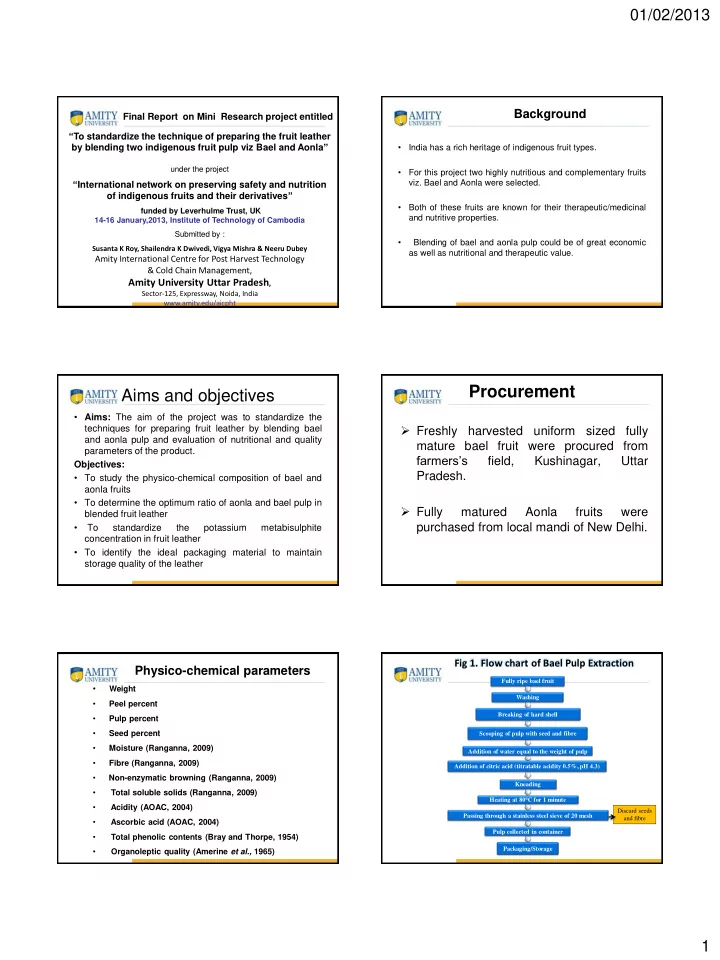
Fig 1. Flow chart of Bael Pulp Extraction
Fully ripe bael fruit Washing Breaking of hard shell Scooping of pulp with seed and fibre Addition of water equal to the weight of pulp Addition of citric acid (titratable acidity 0.5%, pH 4.3) Kneading Heating at 800C for 1 minute Passing through a stainless steel sieve of 20 mesh Pulp collected in container Packaging/Storage Discard seeds and fibre