
SLIDE 1
AHMAD WASEEM KHAN HEAD OF INTERNAL AUDIT & COMPLIANCE LUCKY CEMENT LTD
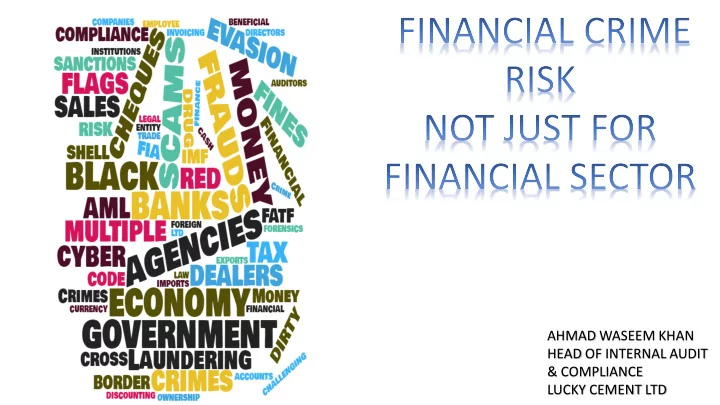
AHMAD WASEEM KHAN HEAD OF INTERNAL AUDIT & COMPLIANCE LUCKY - - PowerPoint PPT Presentation
AHMAD WASEEM KHAN HEAD OF INTERNAL AUDIT & COMPLIANCE LUCKY CEMENT LTD IS NON FINANCIAL SECTOR EXPOSED TO FINANCIAL CRIMES ? Where money is given to or received The process of disguising the proceeds from a different entity than the
AHMAD WASEEM KHAN HEAD OF INTERNAL AUDIT & COMPLIANCE LUCKY CEMENT LTD
“Where money is given to or received from a different entity than the services/goods were received from or provided to in order to transfer funds without utilizing traditional banking channels” The process of disguising the proceeds
use of trade transactions in an attempt to legitimize their illicit origin
a wide variety of illicit activities.
Risk of Investigations
“Financial Crime Risks” then there is a greater risk that the entity is exposed to an increased risk of investigations.
increase
enforcement agencies local/federal /international and this can become cumbersome Increased Administrative Burden in Maintaining Banking Relationships
generating number of queries for the fund movement.
details of their customers/dealers
will become arduous and time consuming
devastating implications on the business Risk of Being “De-Risked”
host of problems for any corporate entity
greatly affected.
corporate credit cards etc becomes a serious threats to operations.
high Risk of Fines & Penalties
face huge fines, penalties and may face criminal prosecution.
company’s cash flow and in some cases may wipe-off sizable portion of entities equity. Risk of Loss of Reputation
their name pops up in an AML fraud.
value
with financial institutions.
erosion of human capital Increased Burden of Fighting a Legal Battle
queries and supplying correct/accurate information may add up to
Enhance your own AML Compliance Build In –House Compliance Function For Scrutiny of All Financial Transaction Invest in terms of Financial Resources & Manpower to Minimize The Risk Suspicious Activity Reporting (SAR) Framework Develop “Red Flags” to highlight any high risk transaction Use technology “Big Data” to analyze high volume data to raise any suspicious activity Revisit The Distribution & Collection Channels Cutting Ties With Customers/Dealers With Dubious Background Deny third party payments in your accounts & From Your Accounts Define “Know Your Customer” (KYC) policy at all distribution levels Do the deep digging by KYCC- Know your Customer’s Customer Define Risk policy for Jurisdictions known for smuggling or lawlessness
A PRACTICAL APPROACH COLLECTION & PAYMENTS
unusually complex deal structures or structures with apparent business purpose
funds be delivered to apparently unconnected accounts
instruments of third and unknown parties
rumors/news of criminal or regulatory violations PREEMPTIVE CONTROLS
trigger bank scrutiny.
documentation for future investigations.
known for smuggling or lawlessness
need to develop a well documented “Response Policy” defining the protocols to follow in case a query is raised or an investigation is initiated.
should be prepared to deal with the questions from the financial institution about potential compliance issues.
dealing with questions from banks that may implicate legal compliances
inquiry to the right legal /compliance authority for an appropriate response.
evaluated from all legal perspectives so as to ensure that the same will be used by law enforcing agencies in case of any complications. Falsification of records or submission of fabricated documents may at a later stage of investigation may jeopardies company’s image. Therefore the evidence should be submitted after review of the legal council
“Today’s heightened AML scrutiny
potential consequences for their customers as well. Non Financial Institutions can protect them selves by enhancing their own compliance – especially in areas like AML which might raise red flags with banks and appropriately handle queries and concerns that their financial institutions may raise.”
10