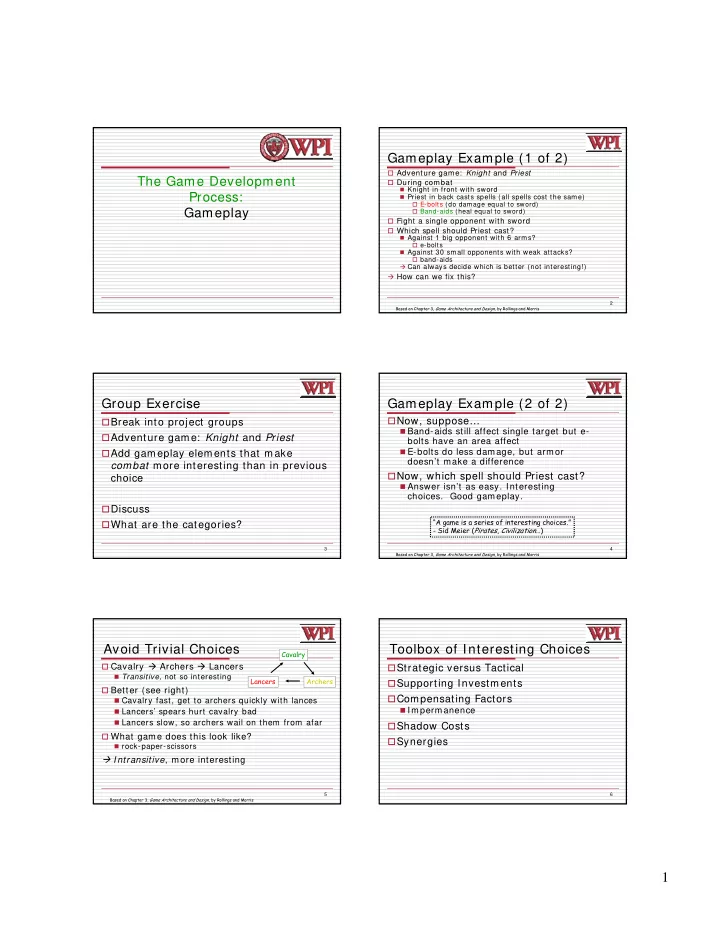

SLIDE 1
1
The Game Development Process: Gameplay Gameplay Example (1 of 2)
Adventure game: Knight and Priest During combat
Knight in front with sword Priest in back casts spells (all spells cost the same) E-bolts (do damage equal to sword) Band-aids (heal equal to sword)
Fight a single opponent with sword
2
Fight a single opponent with sword Which spell should Priest cast?
Against 1 big opponent with 6 arms? e-bolts Against 30 small opponents with weak attacks? band-aids Can always decide which is better (not interesting!)
How can we fix this?
Based on Chapter 3, Game Architecture and Design, by Rollings and Morris
Group Exercise
Break into project groups Adventure game: Knight and Priest Add gameplay elements that make
combat more interesting than in previous
3
combat more interesting than in previous choice
Discuss What are the categories?
Gameplay Example (2 of 2)
Now, suppose…
Band-aids still affect single target but e-
bolts have an area affect
E-bolts do less damage, but armor
doesn’t make a difference
4
Now, which spell should Priest cast?
Answer isn’t as easy. Interesting
- choices. Good gameplay.
“A game is a series of interesting choices.”
- Sid Meier (Pirates, Civilization…)
Based on Chapter 3, Game Architecture and Design, by Rollings and Morris
Avoid Trivial Choices
Cavalry Archers Lancers
Transitive, not so interesting
Better (see right) Cavalry fast, get to archers quickly with lances Lancers’ spears hurt cavalry bad
Cavalry Archers Lancers
5
Lancers spears hurt cavalry bad Lancers slow, so archers wail on them from afar What game does this look like?
rock-paper-scissors
Intransitive, more interesting
Based on Chapter 3, Game Architecture and Design, by Rollings and Morris
Toolbox of Interesting Choices
Strategic versus Tactical Supporting Investments Compensating Factors
Impermanence
6