
SLIDE 1
1
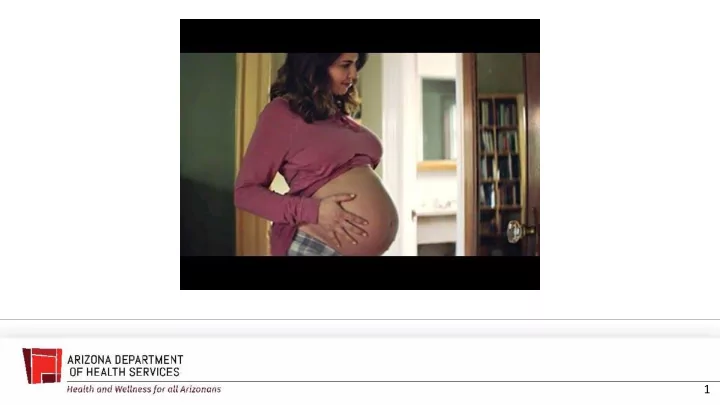
1 Maternal Mortality and Severe Morbidity in Arizona Attached to - - PowerPoint PPT Presentation
1 Maternal Mortality and Severe Morbidity in Arizona Attached to every statistic there is a person, family, child, or community. Dr. George Askew, MD, FAAP New York City Deputy Commissioner of Health Enid Quintana Torres, MPH Martn
1
“Attached to every statistic there is a person, family, child, or community.”
New York City Deputy Commissioner of Health
Enid Quintana Torres, MPH Martín F. Celaya, MPH
2
1. Provide an overview of the maternal morbidity continuum 2. Review social and health drivers of severe maternal morbidity (SMM) and mortality 3. Provide a national overview of SMM and mortality 4. Present recent SMM and mortality data in Arizona 5. Review findings from the ‘Arizona Hospital Maternal Safety Readiness Survey’
3
2017 Arizona Perinatal Health Overview
Total Births: 83,784 Statistics for women who had a live birth:
by AHCCCS
deliveries
2017 Arizona Vital Records
indicated deliveries
4
Maternal Morbidity Uncomplicated Deliveries
Spectrum of Maternal Morbidity
Increasing Severity Maternal Deaths
New York City Department of Health and Mental Hygiene (2016). Severe Maternal Morbidity in New York City, 2008–2012. New York, NY.
Severe Maternal Morbidity
5
Maternal Mortality
Death of a women while pregnant or within 42 days
to or aggravated by the pregnancy or its management but not from accidental or incidental causes. - CDC Definition National rise in maternal deaths over the past decade. There are significant racial disparities with Black women being three times as likely than White women to experience maternal death in the United States.
Maternal Mortality Rate per 100,00 Live Births (1990-2015)
Martin N, Montagne R. Focus On Infants During Childbirth Leaves U.S. Moms In Danger. NPR. https://www.npr.org/2017/05/12/527806002/focus-on-infants-during-childbirth-leaves-u-s-moms-in-danger. Published May 12,
6
Maternal Deaths in the United States
Hemorrhages account for a least a quarter of maternal deaths worldwide Older women with pre-existing conditions are at higher risk for morbidity and mortality Top leading causes of maternal deaths in the US:
(14.7%)
Reproductive Health. Centers for Disease Control and Prevention. https://www.cdc.gov/reproductivehealth/maternalinfanthealth/pregnancy-mortality-surveillance-system.htm. Published August 7, 2018. Accessed October 20, 2018.
7
AZ Maternal Mortality Review Program
Established by the Arizona Senate Bill 1121 on April 2011 Authorized the Child Fatality Review Program to create a subcommittee to review all identified pregnancy related deaths. Multidisciplinary team reviews cases to identify preventative factors and produce recommendations for systems level changes. Report released on June 1, 2017 “12. Evaluate the incidence and causes of maternal fatalities associated with pregnancy in this state. For the purposes of this paragraph, "maternal fatalities associated with pregnancy" means the death of a woman while she is pregnant or within one year after the end of her pregnancy.”
8
Arizona Maternal Mortality and Percent of Births by Racial Group in Arizona, 2012-2015
State Rate: 18.9 2016 Arizona Maternal Mortality Review Program Report 2012-2015 Arizona Vital Records
9
Top Causes of Death for Pregnancy-Related Deaths and Preventability in Arizona, 2012-2015
Other* Cardiac and hypertension disorders Suicide, homicide, and accidents Hemorrhage
*All deaths that do not fit in the other categories 2016 Arizona Maternal Mortality Review Program Report
Preventability of a death is determined based upon the idea that under reasonable conditions something could have been done by an individual, or by the community as a whole, to prevent the death.
10
Severe Maternal Morbidity (SMM)
For every death there are multiple women experiencing complications Global burden of SMM is unknown but is on the rise Most common causes are hemorrhages and hypertensive disorders Most preventable factors are provider-related Contributors for Global SMM: Substandard maternal health care Inconsistent monitoring and surveillance Suboptimal use of evidence-based strategies for prevention and treatment
Geller SE, Koch AR, Garland CE, Macdonald EJ, Storey F, Lawton B. A global view of severe maternal morbidity: moving beyond maternal mortality. Reproductive Health. 2018;15(S1):98. doi:10.1186/s12978-018-0527-2.
11
SMM in High Income Countries
Lack of a standardized definition to monitor and compare SMM cases are typically identified by analyzing ICD diagnoses and procedure codes SMM case reviews (medical records) are utilized by some high income countries (Gold Standard) WHO Recommendations: Identify system failures Identify intervention priorities Routine surveillance of SMM
Geller SE, Koch AR, Garland CE, Macdonald EJ, Storey F, Lawton B. A global view of severe maternal morbidity: moving beyond maternal mortality. Reproductive Health. 2018;15(S1):98. doi:10.1186/s12978-018-0527-2.
12
Geller SE, Koch AR, Garland CE, Macdonald EJ, Storey F, Lawton B. A global view of severe maternal morbidity: moving beyond maternal mortality. Reproductive Health. 2018;15(S1):98. doi:10.1186/s12978-018-0527-2.
SMM in High Income Countries
13
14
SMM in the United States
SMM results from unexpected outcomes of labor and delivery that lead to significant short- or long-term consequences to a woman’s health. Occurs more frequently than maternal mortality Estimated 50-100 women experiencing SMM to every maternal death Rates have been increasing nationally since 2008 Surveillance provides an opportunity for public health improvement
HCUP State Inpatient Databases
15
Adjusted for maternal age, race/ethnicity, payer, method of delivery, plurality and comorbidity, and clustered by hospital.
Severe Maternal Morbidity in the United States
SMM may result in: Longer hospital stay Major surgery Other major medical interventions
New York City Department of Health and Mental Hygiene (2016). Severe Maternal Morbidity in New York City, 2008–2012. New York, NY.
16
Factors that affect Maternal Mortality and Morbidity
Mental health status Overweight and obesity Older women in pregnancy Parity Pre and interconception health status Pre-existing chronic conditions Prenatal care utilization Substance use disorder Delay in timely diagnosis and treatment Lack of care coordination Rising rate of cesarean sections (C-sections) Insufficient training for OB providers on management of chronic conditions
Inconsistent implementation of national hospital protocols for perinatal health Lack of continuum of care between maternal and primary care Limited access to primary care for chronic conditions Lack of emphasis on maternal health Lack of accurate and standardized data Failure to follow evidence-based guidelines Socioeconomic and racial factors Shortage of maternity care providers (maternity care deserts) Lack of equipment to address complications at birth System Level Factors Provider Level Factors Patient Level Factors
17
March of Dimes. Nowhere to Go: Maternity Care Deserts across the U.S.March of Dimes; 2018.
Access to Maternity Care in the U.S. Counties, 2016
18
Protective Factors of Maternal Mortality and SMM found in High Income Countries
Better adequacy of prenatal care utilization Women are attended by a skilled health worker during childbirth Availability of postpartum care Improved access to and quality of reproductive, maternal, and newborn health care services Universal health coverage for comprehensive reproductive, maternal, and newborn health care Strong health systems to collect high quality data in order to respond to the needs and priorities of women Employ a culture of accountability in order to improve quality of care and equity
Maternal mortality. World Health Organization. http://www.who.int/news-room/fact-sheets/detail/maternal-mortality. Accessed October 23, 2018.
19
20
SMM Overall: includes women with a delivery hospitalization and a diagnosis or a procedure code for a qualifying medical indicator for SMM. SMM without transfusions: includes women with a delivery hospitalization and a diagnosis or a procedure code for a qualifying medical indicator for SMM but excludes women that only have a blood transfusion procedure code and no other qualifying medical indicators for SMM.
Identifying SMM Cases
21
Identifying SMM Cases
All hospital discharge entries from HDD participating hospitals
6,895,635 entries were analyzed for 2016-2018 (Quarters 1 and 2)
Delivery hospitalizations
179,005 delivery inpatient hospitalizations Excludes:
pregnancy and pregnancy with abortive outcome
Indicators used to identify SMM cases
Diagnosis based indicators (16): Procedures based indicators (5):
infarction
diagnosis
Distress Syndrome diagnosis
fibrillation
Intravascular Coagulation
procedure or surgery
Disorder
Pulmonary edema
complications
Crisis
embolism
Follows methodology suggested by the ACOG Alliance for Innovation in Maternal Health (AIM)
22
Maternal characteristics
compared to all women giving birth
Compared to all women that gave birth between 2016-2018, a higher proportion of women with SMM are:
than 35 years old
Race/Ethnicity categories are based on the AIM Data Collection Guidelines
23
Medical and Procedure Indicators for SMM
24
More than 1,000 cases every year, 35 for each maternal death in Arizona Clear disparities among racial/ethnic groups Combined Arizona SMM Rate 2016-2018Q2
65.79
SMM in Arizona
25
Arizona Perinatal Trust (APT): Levels of Perinatal Care
IN-HOSPITAL BIRTHING CENTERS – IHBC (Indian Health Services Only) Provide hospital services for uncomplicated obstetrical patients (excluding cesarean delivery) and basic and transitional newborn care. Such centers should not electively deliver infants less than 37 weeks gestation. PERINATAL CARE CENTERS – LEVEL I Provide hospital services for low-risk obstetrical patients, including cesarean delivery and basic and transitional newborn care; such centers should not electively deliver infants less than 36 weeks gestation. PERINATAL CARE CENTERS – LEVEL ll Provides hospital services for selected high risk obstetrical patients and newborns requiring selective continuing care; such centers should not electively deliver infants less than 32 weeks gestation. PERINATAL CARE CENTERS – LEVEL IIE Provide hospital services for high-risk obstetrical patients and newborns requiring selective continuing care; such centers should not electively deliver infants less than 28 weeks gestation. PERINATAL CARE CENTERS – LEVEL III Provide hospital services for all obstetrical and newborn patients including those patients requiring subspecialty and intensive care at all gestational ages. FREESTANDING NEONATAL CARE CENTERS – LEVEL III Provide hospital services for all newborns requiring subspecialty and intensive care at all gestational ages.
Arizona Perinatal Trust-https://azperinatal.org/certification
26
Variations by level of care
All Arizona facilities Reporting to HDD 2016-2018Q2
Rates per 10,000 delivery hospitalizations
27
Variations by facility
All Arizona facilities Reporting to HDD 2016-2018Q2
Rates per 10,000 delivery hospitalizations
28
29
Arizona Hospital Maternal Safety Readiness Survey
Purpose: To assess quality improvement efforts in maternal care practices across Arizona’s birthing facilities. This data will be used to drive morbidity/mortality prevention efforts in Arizona. This work is in alignment with and will support the Arizona Health Improvement Plan Maternal and Child Health Workgroup and advance obstetric care and health outcomes of Women in Arizona. Design: 27 questions modeled after the Alliance for Innovation in Maternal (AiM) Health Readiness Survey Recruitment: Online and phone recruitment Data collection period: October 7-18, 2018
30
Survey Working Group
Name Agency/Organization Name Agency/Organization Enid Quintana Torres ADHS Linda Meiner Arizona Perinatal Trust Martín Celaya ADHS Deb Christian Arizona Perinatal Trust Patricia Tarango ADHS Dean Coonrod Arizona Perinatal Trust Breann Westmore March of Dimes Robert BJ Johnson Arizona Perinatal Trust Kathy Walker Banner Health April Hamilton Arizona Perinatal Trust
31
Survey Participants 80% participation rate 34/42 birthing facilities participated
32
Last QI project that OB departments participated on...
OB Hemorrhage Reduction Primary C-section Retained Sponges Maternal Sepsis Delayed Cord Clamping Exclusive Breastfeeding Reduction Inductions OB Hypertension Maternal Early OB Warning System Mental Health Perinatal Opioid Exposure
What worked well in previous OB QI efforts...
Teamwork/Buy-in/Engagement Shared leadership Clear scientific rationale, expectations and implementation steps Drills Physician Champions Active participation from the QI Department
33
effort with a QI organization (i.e. Leapfrog, CMQCC, APT)
34
(OB,CNM,RN)
and family
35
3 years
75-100% of the time.
36
OB Department have a standardized process for OB emergencies related to:
Emergency Departments have a standardized process for OB Emergencies
37
OB emergencies
doing quarterly drills
38
Other: newborn/neonatal code; shoulder dystocia; infant abduction; and malignant hyperthermia
In 67% of facilities OBs Anesthesia are not required to participate in drills In 64% of facilities Family Practitioners or Emergency Department Staff are not required to participate in drills In 55% of facilities MTF are not required to participate in drills In 44% of facilities OBs nor OB residents are required to participate in drills Identified challenges in OB-related drills...
39
Data measure types currently being tracked by OB Departments...
Measure Type Percent of respondents (%)
Process measure-frequency of performing a diagnostic test or treatment related to an outcome (i.e. rate of antibiotic prophylaxis at Cesarean birth, rate of obstetric hemorrhage risk assessment on L&D admission)
29
Structure measure-identify information about policies, equipment, and staff that are relevant to the QI project and are often noted once when the task is completed (i.e. annual policy review, staff training sessions
37
Outcome measures-examines the impact on patient's health and well-being (i.e. severe maternal morbidity and mortality rates
24
40
Barriers to past implementation of QI efforts...
“It can be very challenging to get the hospital staff and physicians to agree to the same plans and the support each other though
that someone is always resistant to the change.”
Burden of documentation in EHR systems Facilities are short staffed Infrequency of drill opportunities The amount of effort required (staff training, coordination) Lack of participation in efforts Resistance to change from all levels Limited provider/physician buy-in
41
Overall challenges to data collection in facilities...
Other: limited reports from EHR systems
42
Greatest need to improve OB specific QI efforts...
“Staff needs to feel empowered” “Move towards collaborative teams”
Involvement of staff and personnel in the process Motivation of providers and physicians Continued staff education Lack of specialized equipment
43
collaborative to improve quality of care
44
Obstetrical topics that facilities want to see addressed in a collaborative improvement effort….
“Perhaps urban
centers could collaborate with rural hospitals to help staff gain experience”
Substance use during pregnancy Chronic conditions management (obesity, hypertension, as such) Breastfeeding support Mental health Reduction of peripartum racial/ethnic disparities Standardized perinatal benchmarks across Arizona “We feel that we
already have a perinatal collaborative with the Arizona Perinatal Trust”
“Would love to be
able to participate in an AZ collaborative and submit data”
45
In Summary...
Maternal Mortality continues to be on the rise in Arizona and across the nation While the rate of maternal mortality increases more women become severely morbid during delivery A variety of provider, patient, and systemic factors contribute to this emerging maternal and child health threat Consistent surveillance of SMM and maternal mortality coupled with the identification and use of evidence based strategies at the facility level can aid states curve the rise in cases and prevent maternal deaths
46
Factors that affect Maternal Mortality and Morbidity
Mental health status Overweight and obesity Older women in pregnancy Parity Pre and interconception health status Pre-existing chronic conditions Prenatal care utilization Substance use disorder Delay in timely diagnosis and treatment Lack of care coordination Rising rate of cesarean sections (C-sections) Insufficient training for OB providers on management of chronic conditions
Inconsistent implementation of national hospital protocols for perinatal health Lack of continuum of care between maternal and primary care Limited access to primary care for chronic conditions Lack of emphasis on maternal health Lack of accurate and standardized data Failure to follow evidence-based guidelines Socioeconomic and racial factors Shortage of maternity care providers (maternity care deserts) Lack of equipment to address complications at birth System Level Factors Provider Level Factors Patient Level Factors
47