1_begin dnfehren SI658 11-2-2009 2_author bio Bruce Sterling - - PowerPoint PPT Presentation

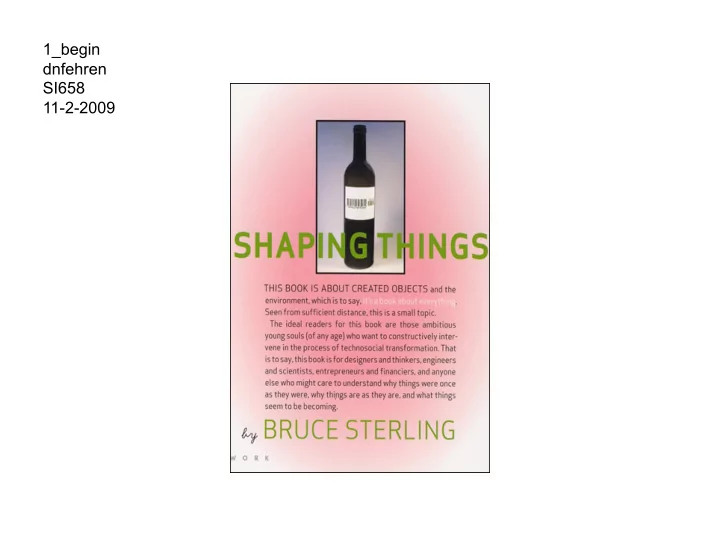
1 begin dnfehren si658 11 2 2009
SMART_READER_LITE
LIVE PREVIEW

1_begin dnfehren SI658 11-2-2009 2_author bio Bruce Sterling - - PowerPoint PPT Presentation

1_begin dnfehren SI658 11-2-2009 2_author bio Bruce Sterling writing since the 1970s design fiction futurist technophile sustainability 3_Sterlings theory of history technosocial transformation Artifacts are made and used by


slide-1
SLIDE 1

1_begin dnfehren SI658 11-2-2009
slide-2
SLIDE 2

writing since the 1970’s “design fiction” futurist technophile sustainability

2_author bio

Bruce Sterling

slide-3
SLIDE 3

3_Sterling’s theory of history

technosocial transformation Artifacts are made and used by Hunters and Farmers

? 1500’s

Machines are made and used by Customers

1500’s World War I

Products are made for use by Consumers

World War I 1989

Gizmos are made for use by End-Users

1989 2035

~2.5 million years ~400 years ~70 years ~45 years

slide-4
SLIDE 4

4_the next step

spimes and the “Internet of things”

RFID tags tags will create a network spime info stored in vast searchable databases

slide-5
SLIDE 5

you can know everything about anything anywhere at any time (as much as you can stand) (most important objects) (all data is shared with everyone) (from inception past destruction)

5_spimes mean

slide-6
SLIDE 6

6_problem

does this book matter for IA?

no navigation, classification, organization, etc are we going to build the infrastructure? how good are we handling the information on the present Internet? what if its all just fiction?

does this matter for IA? maybe it doesn’t

slide-7
SLIDE 7

7_here’s why

the book is a love letter to design

design history, notable figures he connects with the design community

slide-8
SLIDE 8

he is convinced will save the world

look past the speculation and there are useful lessons

8_the world

slide-9
SLIDE 9

9_economics

cognitive load and opportunity cost

always a trade off attention and energy are finite demands will only grow

slide-10
SLIDE 10

cognitive load and opportunity cost

IA should reduce CL and OC

  • f users

“representative design”

10_economics2

slide-11
SLIDE 11

11_history as resource

learn from past mistakes. or else

rapid prototyping don’t underestimate serendipity deeply searchable data aids problem solving

slide-12
SLIDE 12

12_history as resource2

learn from past mistakes. or else

today’s bad idea can save you tomorrow useful sites will account for user histories

slide-13
SLIDE 13

13_maya

Most Advanced Yet Acceptable*

technological capability and societal understanding can go wrong both ways too advanced, no one uses it too acceptable, no one cares

*Raymond Loewy

slide-14
SLIDE 14

Most Advanced Yet Acceptable

find a balance back up glamour with real ideas can’t live only in your head or only in the market

14_maya2

slide-15
SLIDE 15

15_algorithm

25 questions for any design project*

Wim Gilles, 1950’s procedure to consider a product and develop improvements

*d/l at http://drop.io/634_gilles

slide-16
SLIDE 16

25 questions for any design project*

any design has many layers of consideration Opportunities to improve come from many places

16_algorithm2

slide-17
SLIDE 17

17_my take

parting thoughts…

what if we are the spimes? how much data do you generate about yourself? Sterling’s future only needs search, where does IA fit? attention and energy as sustainable resources? are we doing permanent damage to them now?

slide-18
SLIDE 18

18_the end

any questions?

thanks