The Many Paths to Suicide Cause of Proximal Risk Factors Fundamental - - PowerPoint PPT Presentation

the many paths to suicide
SMART_READER_LITE
LIVE PREVIEW

The Many Paths to Suicide Cause of Proximal Risk Factors Fundamental - - PowerPoint PPT Presentation

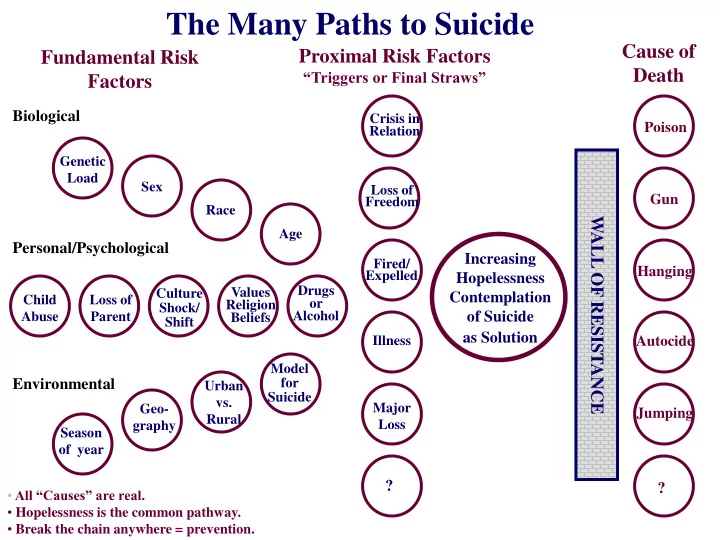
The Many Paths to Suicide Cause of Proximal Risk Factors Fundamental Risk Death Triggers or Final Straws Factors Biological Crisis in Poison Relation Genetic Load Sex Loss of Gun Freedom Race WALL OF RESISTANCE Age


slide-1
SLIDE 1

The Many Paths to Suicide

Fundamental Risk Factors Proximal Risk Factors

“Triggers or Final Straws”

Cause of Death

Crisis in Relation Loss of Freedom Fired/ Expelled Illness Major Loss

?

Poison Gun Hanging Autocide Jumping

? Increasing Hopelessness Contemplation

  • f Suicide

as Solution

WALL OF RESISTANCE

Genetic Load Sex Race Age Drugs

  • r

Alcohol

Biological

Child Abuse Loss of Parent Culture Shock/ Shift Values Religion Beliefs Season

  • f year

Geo- graphy Model for Suicide

Personal/Psychological

  • All “Causes” are real.
  • Hopelessness is the common pathway.
  • Break the chain anywhere = prevention.

Environmental

Urban vs. Rural

slide-2
SLIDE 2
  • - Sobriety --

Best Friend(s) Safety Agreement Treatment Availability Pet(s) Calm Environment Religious Prohibition AA or NA Sponsor Difficult Access to means A sense of HOPE Positive Self-esteem Fear Job Security or Job Skills Support of significant

  • ther(s)

Counselor or therapist Medication Compliance Good health Responsibility for children Others?

Wall of Resistance to Suicide

Protective Factors

Duty to others

slide-3
SLIDE 3

Suicidal Crisis Episode

Risk Level Years Days Hours Days Years Approximately 3 weeks

3 2 1

Stable Crisis Begins Crisis Diminishes Crisis Peaks Stable

Risk is Imminent

7 6 5 4

Initial Hazard is Encountered

slide-4
SLIDE 4

Contagion Effect

Years Days Hours Weeks Days

Due to mounting losses, increasing frequency of anniversary dates, role-modeling effects, and building stress, the risk for additional suicides can remain present for months and even years.

Stable Crisis Begins High Risk

Risk Continues to Increase

Crisis Builds Higher Risk Crisis Continues Very High Risk Crisis Remains

Months Weeks Months

Initial Hazard Encountered First Suicide Occurs Secondary Hazard Occurs (e.g. anniversary date) Duration and Intensity

  • f Risk Factors Increases

(2nd and 3rd suicides occur)

Risk Continues

Mos/Yrs

VW/1998

slide-5
SLIDE 5

The Lethal Triad

When these three are present—risk of violence is high.

Upset Person Alcohol/drugs Firearm

slide-6
SLIDE 6

Psychiatric

Comorbid Transient Illness Psychological States Schizophrenia Agitation Depressive Disorder Perturbation Bipolar Disorder Psychic Pain Panic Disorder Hopelessness Substance Abuse Disorder Dopamine Deficit Personality Disorder Serotonin Deficit Comorbid Physical Illness Alcohol Myopia

Disease Management Model for Suicidal Patients

slide-7
SLIDE 7

Six QPR Goals

Access Active Intervention Accompanied Referral Alleviation of Immediate Risk Factors Accurate Diagnosis Aggressive Treatment

We can make a difference!

slide-8
SLIDE 8

Gatekeeper training research results

Increased knowledge Increased recognition of sources of stress Increased confidence and competence in helping someone in crisis Increased likelihood to intervene Increased likelihood to call a resource Satisfaction with the training For every 13 gatekeepers trained, there was one referral made Knowledge and skills are retained

  • ver time

QPR Works!