SLIDE 1 Notre ¡Europe ¡– ¡Synthesis ¡of ¡the ¡Conference ¡-‑ ¡20/09/2011 ¡ ¡ ¡ 1 ¡
¡ ¡ ¡ ¡
The ¡contribution ¡of ¡16 ¡European ¡Think ¡Tanks ¡to ¡the ¡ ¡ Polish, ¡Danish ¡and ¡Cypriot ¡Presidencies ¡of ¡the ¡European ¡Union ¡ 15 ¡June ¡-‑ ¡Egmont ¡II ¡– ¡Brussels ¡ ¡ ¡
¡ ¡ ¡ ¡ ¡ The ¡third ¡edition ¡of ¡the ¡Think ¡Global ¡– ¡Act ¡European ¡(TGAE) ¡report ¡was ¡made ¡available ¡to ¡the ¡public ¡
- n ¡ June ¡ 15, ¡ 2011 ¡ online ¡ at: ¡ www.notre-‑europe.eu/en/tgae, ¡ and ¡ during ¡ a ¡ conference ¡ organized ¡ in ¡
Brussels ¡the ¡same ¡day. ¡This ¡Report ¡led ¡more ¡than ¡70 ¡researchers ¡from ¡16 ¡European ¡think ¡tanks ¡to ¡ produce ¡ a ¡ pan-‑European ¡ vision ¡ of ¡ the ¡ main ¡ issues ¡ at ¡ stake ¡ on ¡ the ¡ economic, ¡ financial, ¡ environmental, ¡migratory, ¡diplomatic ¡and ¡military ¡registers, ¡during ¡the ¡next ¡18 ¡months. ¡ ¡ ¡ ¡
SYNTHESIS ¡OF ¡THE ¡CONFERENCE ¡
Olivier ¡LEWIS ¡
SLIDE 2 Notre ¡Europe ¡– ¡Synthesis ¡of ¡the ¡Conference ¡-‑ ¡20/09/2011 ¡ ¡ ¡ 2 ¡
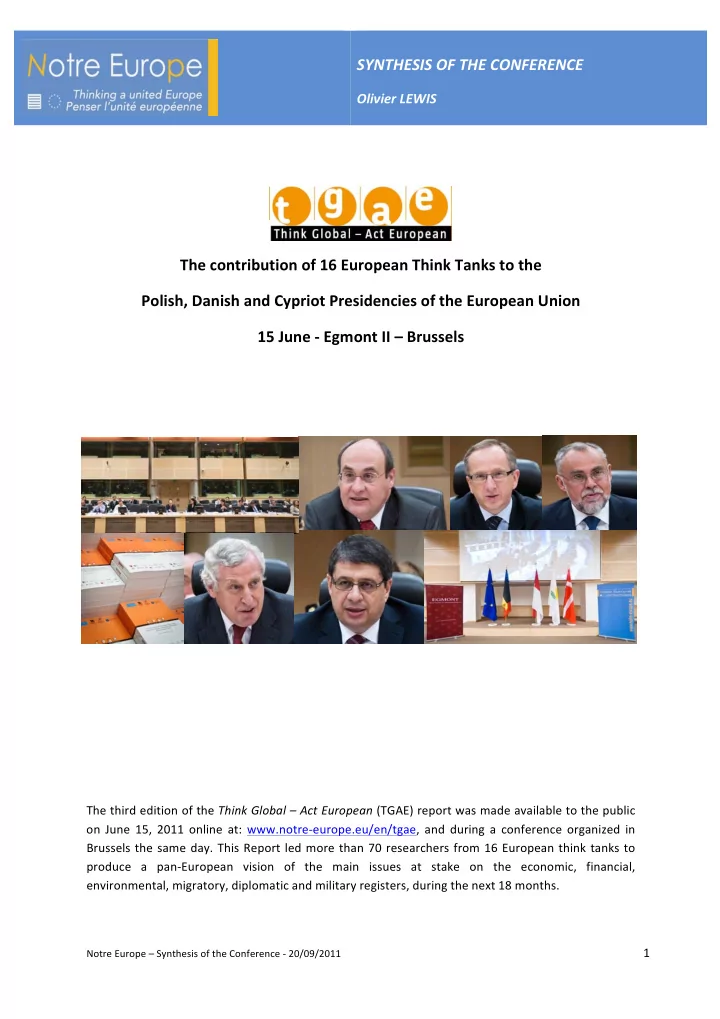
¡ To ¡celebrate ¡the ¡release, ¡Notre ¡Europe, ¡the ¡other ¡editorial ¡committee ¡members ¡(demosEUROPA, ¡the ¡ Danish ¡ Institute ¡ for ¡ International ¡ Studies ¡ and ¡ the ¡ Cyprus ¡ Center ¡ for ¡ European ¡ and ¡ International ¡ Affairs) ¡and ¡the ¡12 ¡participating ¡think ¡tanks ¡all ¡took ¡part ¡in ¡this ¡conference, ¡organized ¡in ¡partnership ¡ wih ¡ Egmont. ¡ The ¡ conference ¡ was ¡ introduced ¡ by ¡ Notre ¡ Europe’s ¡ president ¡ Antonio ¡ Vitorino ¡ and ¡ composed ¡of ¡two ¡panels: ¡a ¡first ¡one ¡entitled ¡“Lisbon ¡Treaty ¡rules ¡in ¡a ¡time ¡of ¡crisis: ¡stress ¡tests ¡for ¡ European ¡governance ¡– ¡The ¡vision ¡of ¡the ¡rotating ¡presidencies”, ¡and ¡a ¡second ¡one ¡running ¡under ¡the ¡ headline ¡“Prospects ¡ for ¡ European ¡ growth ¡ and ¡ implications ¡ for ¡ the ¡ EU ¡ policies.” ¡ The ¡ panellists ¡ included ¡ notable ¡ figures, ¡ such ¡ as ¡ Pierre ¡ Vimont, ¡ Jan ¡ Tombinski, ¡ Claus ¡ Grube, ¡ Nicholas ¡ Emiliou, ¡ Pervenche ¡ Berès, ¡ Michael ¡ Clauß ¡ and ¡ Pierre ¡ Delsaux ¡ (see ¡ programme ¡ – ¡ appendix ¡ 1). ¡ This ¡ short ¡ synthesis ¡presents ¡the ¡main ¡outlines ¡of ¡the ¡interventions ¡and ¡discussions ¡which ¡took ¡place ¡during ¡the ¡
¡ INTRODUCTORY ¡REMARKS ¡BY ¡NOTRE ¡EUROPE ¡ ¡ ¡ Notre ¡Europe’s ¡President, ¡António ¡Vitorino, ¡started ¡the ¡event ¡by ¡paraphrasing ¡Mark ¡Twain. ¡“The ¡ news ¡about ¡the ¡death ¡of ¡the ¡rotating ¡presidencies” ¡was ¡greatly ¡exaggerated, ¡he ¡said. ¡According ¡to ¡ Vitorino, ¡the ¡rotating ¡presidencies ¡“run ¡the ¡machinery”, ¡promote ¡the ¡EU ¡at ¡the ¡national ¡level ¡and ¡ bring ¡ a ¡ diversity ¡ of ¡ ideas ¡ to ¡ the ¡ EU. ¡ Yet, ¡ Vitorino ¡ said, ¡ this ¡ does ¡ not ¡ mean ¡ the ¡ current ¡ model ¡ is ¡
- perfect. ¡For ¡example, ¡he ¡noted, ¡the ¡Trio ¡Presidency/European ¡Council ¡Presidency ¡relationship ¡could ¡
be ¡improved, ¡as ¡could ¡the ¡definition ¡of ¡the ¡Trio ¡in ¡foreign ¡affairs ¡issues. ¡ ¡ Elvire ¡Fabry, ¡the ¡coordinator ¡of ¡this ¡third ¡edition ¡of ¡“TGAE” ¡and ¡Senior ¡Researcher ¡at ¡Notre ¡Europe, ¡ added ¡ that ¡ the ¡ Trio ¡ Presidency ¡ is ¡ vital ¡ to ¡ the ¡ EU ¡ as ¡ a ¡ global ¡ actor ¡ – ¡ linking ¡ internal ¡ and ¡ external ¡ policies ¡– ¡but ¡also ¡as ¡an ¡“administrative ¡leader” ¡within ¡the ¡EU. ¡Fabry ¡also ¡noted ¡that, ¡overall, ¡the ¡Trio ¡ is ¡ essential ¡ to ¡ maintaining ¡ the ¡ EU’s ¡ “institutional ¡ balance”. ¡ Fabry ¡ then ¡ presented ¡ the ¡ 12 ¡ key ¡ recommendations ¡ of ¡ the ¡ report, ¡ which ¡ are ¡ part ¡ of ¡ four ¡ main ¡ categories: ¡ “the ¡ completion ¡ of ¡ the ¡ internal ¡market”, ¡“beyond ¡on-‑going ¡EU ¡economic ¡governance ¡reform”, ¡“EU ¡budget ¡reform” ¡and ¡“the ¡ EU ¡as ¡a ¡global ¡player” ¡(see ¡appendix ¡2 ¡for ¡a ¡quick ¡resume ¡and ¡the ¡TGAE ¡Report ¡for ¡more ¡details). ¡ ¡ ¡ 1ST ¡ROUND ¡TABLE ¡ LISBON ¡TREATY ¡RULES ¡IN ¡A ¡TIME ¡OF ¡CRISIS: ¡STRESS ¡TESTS ¡FOR ¡EUROPEAN ¡GOVERNANCE ¡ ¡ ¡ The ¡ first ¡ panel ¡ was ¡ moderated ¡ by ¡ Baron ¡ Philippe ¡ de ¡ Schoutheete, ¡ a ¡ Member ¡ of ¡ the ¡ Board ¡ of ¡ Directors ¡of ¡Egmont. ¡ ¡ ¡ Speeches ¡by ¡the ¡panellists ¡ The ¡first ¡panellist, ¡Jan ¡Tombinski, ¡who ¡is ¡the ¡Permanent ¡Representative ¡of ¡Poland ¡to ¡the ¡EU, ¡said ¡ that ¡although ¡the ¡Polish ¡Presidency ¡started ¡preparing ¡for ¡its ¡presidency ¡two ¡years ¡ago, ¡its ¡establish ¡ agenda ¡would ¡most ¡likely ¡be ¡replaced ¡by ¡an ¡“imposed ¡agenda”, ¡following ¡the ¡needs ¡of ¡the ¡EU’s ¡ever-‑ changing ¡political ¡life. ¡For ¡now, ¡however, ¡the ¡largest ¡issue, ¡according ¡to ¡Tombinski, ¡is ¡the ¡issue ¡of ¡ public ¡finances ¡– ¡an ¡issue ¡that ¡will ¡impact ¡all ¡other ¡politics ¡according ¡to ¡him. ¡For ¡Tombinski, ¡public ¡
SLIDE 3 Notre ¡Europe ¡– ¡Synthesis ¡of ¡the ¡Conference ¡-‑ ¡20/09/2011 ¡ ¡ ¡ 3 ¡
¡ finances ¡even ¡affect ¡mutual ¡trust ¡between ¡Member ¡States. ¡Tombinski ¡then ¡said ¡that ¡the ¡Arab ¡Spring ¡ is ¡the ¡second ¡big ¡challenge ¡for ¡the ¡EU, ¡one ¡that ¡should ¡be ¡treated ¡by ¡ministries ¡in ¡each ¡Member ¡
- State. ¡ Here, ¡ Tombinski ¡ underlined ¡ the ¡ importance ¡ of ¡ not ¡ treating ¡ Arab ¡ states ¡ as ¡ homogenous ¡ or ¡
interchangeable ¡blocs. ¡To ¡the ¡contrary, ¡Tombinski ¡believes ¡they ¡all ¡have ¡their ¡own ¡history, ¡culture, ¡ internal ¡structures, ¡etc. ¡“And ¡we ¡have ¡to ¡acknowledge ¡that ¡they ¡are ¡subjects, ¡not ¡objects,” ¡he ¡said. ¡ Yet, ¡Tombinski ¡also ¡noted ¡that ¡states ¡to ¡the ¡south ¡were ¡neighbours ¡of ¡the ¡EU, ¡while ¡states ¡to ¡the ¡east ¡ were ¡European ¡neighbours. ¡For ¡Tombinski, ¡the ¡third ¡big ¡project ¡for ¡the ¡Trio ¡will ¡cover ¡institutional ¡ matters, ¡ especially ¡ implementing ¡ the ¡ Lisbon ¡ Treaty ¡ and ¡ communicating ¡ effectively ¡ on ¡ all ¡ things ¡ relating ¡ to ¡ the ¡ Multiannual ¡ Financial ¡ Framework ¡ (MFF) ¡ – ¡ concerning ¡ logistical ¡ rules ¡ and ¡ funding ¡ rationales, ¡for ¡example. ¡ ¡ The ¡ second ¡ panellist, ¡ Claus ¡ Grube, ¡ the ¡ Permanent ¡ Secretary ¡ of ¡ State ¡ at ¡ the ¡ Danish ¡ Ministry ¡ of ¡ Foreign ¡Affairs, ¡said ¡the ¡EU ¡and ¡its ¡leaders ¡should ¡not ¡forget ¡that ¡“we ¡have ¡come ¡a ¡long ¡way” ¡since ¡ 10 ¡years ¡ago. ¡According ¡to ¡Grube, ¡the ¡Danish ¡Ministry ¡hopes ¡to ¡inspire ¡more ¡confidence ¡in ¡the ¡EU ¡ and ¡for ¡the ¡EU ¡to ¡have ¡more ¡confidence ¡in ¡itself. ¡On ¡the ¡topic ¡of ¡“administrative ¡leadership”, ¡Grube ¡ said ¡the ¡Danish ¡Presidency ¡also ¡hoped ¡to ¡show ¡some ¡political ¡leadership, ¡on ¡behalf ¡of ¡the ¡Council ¡of ¡
- Ministers. ¡ Grube ¡ noted ¡ that ¡ the ¡ Danish ¡ government ¡ has ¡ been ¡ very ¡ impressed ¡ by ¡ the ¡ process ¡ of ¡
making ¡the ¡Trio ¡programme. ¡He ¡said, ¡“of ¡course, ¡we ¡have ¡had ¡our ¡differences ¡– ¡that ¡is ¡not ¡a ¡secret ¡– ¡ but ¡it ¡is ¡remarkable ¡how ¡it ¡has ¡been ¡possible ¡for ¡us ¡to ¡reach ¡agreement ¡on ¡a ¡programme ¡among ¡ three ¡so ¡different ¡countries ¡inside ¡the ¡EU. ¡[...] ¡I ¡must ¡say ¡that ¡is ¡has ¡gone ¡much ¡smoother ¡than ¡I ¡had ¡ thought ¡in ¡the ¡beginning.” ¡ ¡ Grube ¡noted ¡that ¡the ¡Trio’s ¡coordination ¡work ¡will ¡be ¡important ¡for ¡both ¡the ¡MFF ¡and ¡the ¡Single ¡
- Market. ¡ “Compared ¡ to ¡ 2005, ¡ these ¡ MFF ¡ negotiations ¡ will ¡ be ¡ much ¡ more ¡ complicated ¡ because ¡ all ¡
elements ¡will ¡be ¡in ¡play, ¡both ¡on ¡the ¡income ¡side ¡and ¡on ¡the ¡expenditure ¡side,” ¡Grube ¡said. ¡“And ¡it ¡is ¡ also ¡one ¡of ¡the ¡areas ¡where ¡the ¡Trio ¡has ¡a ¡very ¡important ¡role ¡to ¡play, ¡because ¡no ¡six-‑month ¡rotating ¡ presidency ¡will ¡be ¡able ¡to ¡handle ¡negotiations ¡from ¡the ¡beginning ¡to ¡the ¡end.” ¡Grube ¡said ¡there ¡was ¡ also ¡a ¡lot ¡of ¡work ¡to ¡do ¡to ¡realise ¡the ¡full ¡potential ¡of ¡the ¡Single ¡Market. ¡For ¡Grube, ¡such ¡an ¡excise, ¡ taking ¡place ¡on ¡the ¡20th ¡Anniversary ¡of ¡the ¡Single ¡Market, ¡is ¡technical, ¡political ¡and ¡strategic. ¡“We ¡ should ¡not ¡forget, ¡and ¡never ¡forget, ¡that ¡a ¡well ¡functioning ¡Single ¡Market ¡is ¡the ¡precondition ¡for ¡a ¡ well ¡functioning ¡euro ¡and ¡a ¡stable ¡euro ¡area ¡– ¡and ¡it ¡is ¡not ¡the ¡other ¡way ¡around,” ¡he ¡said. ¡“That ¡is ¡ also ¡a ¡precondition ¡for ¡playing ¡a ¡strong ¡role ¡internationally ¡or ¡globally, ¡as ¡we ¡all ¡wish ¡the ¡EU ¡should ¡ be ¡able ¡to. ¡Without ¡money ¡you ¡cannot ¡play ¡an ¡important ¡part ¡in ¡international ¡politics ¡at ¡the ¡global ¡ level.” ¡ The ¡third ¡panellist, ¡Nicholas ¡Emiliou, ¡the ¡Permanent ¡Secretary ¡of ¡the ¡Ministry ¡of ¡Foreign ¡Affairs ¡of ¡ the ¡Republic ¡of ¡Cyprus, ¡said ¡dealing ¡with ¡the ¡euro ¡and ¡the ¡EU’s ¡borders ¡are ¡currently ¡the ¡two ¡largest ¡ “stress ¡ tests” ¡ for ¡ European ¡ governance ¡ – ¡ notwithstanding ¡ the ¡ fact ¡ that ¡ other, ¡ less ¡ predictable ¡ challenges ¡could ¡appear. ¡“For ¡the ¡Trio, ¡effectively ¡addressing ¡these ¡issues ¡is ¡of ¡primary ¡importance, ¡ since ¡they ¡constitute ¡issue ¡that ¡affect ¡almost ¡every ¡Member ¡State ¡and ¡almost ¡each ¡and ¡every ¡citizen ¡ within ¡our ¡societies,” ¡he ¡said. ¡“And ¡let’s ¡be ¡realistic. ¡In ¡any ¡family, ¡how ¡you ¡spend ¡the ¡family ¡fortune, ¡ and ¡who ¡you ¡decide ¡to ¡let ¡in ¡the ¡family, ¡can ¡be ¡determining ¡factors ¡as ¡to ¡whether ¡you ¡may ¡continue ¡ to ¡function ¡as ¡a ¡family.” ¡ ¡ As ¡regards ¡the ¡euro, ¡Emiliou ¡noted ¡three ¡steps ¡for ¡the ¡upcoming ¡Trio. ¡“We ¡hope ¡to ¡contribute ¡to ¡the ¡
- ngoing ¡efforts ¡to ¡improve ¡economic ¡governance ¡in ¡the ¡EU ¡by ¡doing ¡what ¡is ¡necessary, ¡so ¡that ¡the ¡
Council ¡ agrees ¡ first ¡ to ¡ the ¡ necessary ¡ reforms ¡ that ¡ will ¡ help ¡ maintain ¡ financial ¡ stability ¡ within ¡ the ¡ Union, ¡ second ¡ improve ¡ the ¡ macroeconomic ¡ environment, ¡ and ¡ third, ¡ as ¡ a ¡ result, ¡ boost ¡ long-‑run ¡
SLIDE 4 Notre ¡Europe ¡– ¡Synthesis ¡of ¡the ¡Conference ¡-‑ ¡20/09/2011 ¡ ¡ ¡ 4 ¡
¡ growth ¡and ¡employment ¡creation,” ¡Emiliou ¡said. ¡Concerning ¡migration ¡issues, ¡Emiliou ¡noted ¡that ¡the ¡ Cypriot ¡Presidency ¡hopes ¡to ¡help ¡complete ¡the ¡Common ¡European ¡Asylum ¡System, ¡but ¡to ¡also ¡help ¡ ¡ improve ¡ cooperation ¡ with ¡ countries ¡ of ¡ origin. ¡ “It ¡ is ¡ important ¡ to ¡ strengthen ¡ the ¡ dialogue ¡ and ¡ cooperation ¡ with ¡ neighbouring ¡ countries ¡ of ¡ origin ¡ and ¡ transit ¡ concerning ¡ the ¡ management ¡ of ¡ migration ¡flows, ¡repatriation, ¡and ¡capacity ¡building ¡measures ¡in ¡a ¡wider ¡sense,” ¡he ¡said. ¡ ¡ On ¡the ¡topic ¡of ¡implementing ¡the ¡Lisbon ¡Treaty, ¡Emiliou ¡agreed ¡with ¡one ¡of ¡the ¡TGAE ¡articles ¡that ¡ the ¡role ¡of ¡the ¡General ¡Affairs ¡Council ¡(GAC) ¡should ¡be ¡strengthened. ¡“Cyprus ¡believes ¡the ¡role ¡of ¡the ¡ GAC ¡is ¡vital,” ¡he ¡said. ¡“The ¡Lisbon ¡Treaty ¡gives ¡to ¡the ¡GAC ¡both ¡political ¡and ¡horizontal ¡supervisory ¡ roles ¡ in ¡ the ¡ architecture ¡ of ¡ the ¡ European ¡ Union ¡ – ¡ a ¡ political ¡ role ¡ because ¡ the ¡ GAC ¡ prepares ¡ the ¡ Summits ¡ and ¡ ensures ¡ their ¡ continuity; ¡ and ¡ a ¡ horizontal ¡ role ¡ because ¡ the ¡ GAC ¡ is ¡ required ¡ by ¡ the ¡ treaty ¡to ¡ensure ¡cohesion ¡in ¡the ¡work ¡of ¡the ¡FAC ¡configurations. ¡Its ¡sessions ¡should ¡provide ¡added ¡ value ¡to ¡the ¡president ¡of ¡the ¡European ¡Council ¡and ¡cannot ¡remain ¡limited ¡to ¡the ¡formulation ¡and ¡ revision ¡of ¡texts, ¡but ¡should ¡become ¡a ¡forum ¡for ¡political ¡debate.” ¡ ¡ The ¡fourth ¡panellist, ¡Pierre ¡Vimont, ¡the ¡Executive ¡Secretary ¡General ¡of ¡the ¡European ¡External ¡Action ¡ Service ¡ (EEAS), ¡ said ¡ he ¡ felt ¡ like ¡ a ¡ “trouble ¡ maker” ¡ in ¡ the ¡ panel ¡ because, ¡ as ¡ a ¡ consequence ¡ of ¡ the ¡ Lisbon ¡ Treaty, ¡ the ¡ EEAS ¡ has ¡ taken ¡ a ¡ great ¡ deal ¡ of ¡ foreign ¡ policy ¡ powers ¡ away ¡ from ¡ the ¡ rotating ¡
- presidency. ¡This ¡said, ¡he ¡reminded ¡all ¡present ¡that ¡the ¡role ¡of ¡the ¡EEAS ¡is ¡to ¡“make ¡everything ¡as ¡
smooth ¡as ¡possible”. ¡On ¡this ¡subject, ¡Vimont ¡noted ¡that ¡many ¡non-‑EU ¡heads ¡of ¡state ¡are ¡happy ¡now ¡ to ¡often ¡see ¡the ¡same ¡EU ¡representatives ¡at ¡international ¡summits. ¡They ¡are ¡happy ¡“to ¡know ¡with ¡ whom ¡they ¡are ¡going ¡to ¡talk,” ¡Vimont ¡said. ¡ ¡ ¡ Still, ¡according ¡to ¡Vimont, ¡there ¡is ¡room ¡for ¡all ¡in ¡the ¡new ¡framework. ¡“Even ¡now ¡that ¡we ¡have ¡this ¡ different ¡set ¡of ¡institutions, ¡I ¡have ¡no ¡doubt ¡that ¡the ¡problem ¡for ¡us ¡is ¡not ¡a ¡problem ¡of ¡having ¡too ¡ many ¡people ¡working ¡on ¡the ¡same ¡thing; ¡it’s ¡not ¡doing ¡the ¡right ¡coordination ¡enough, ¡that ¡we ¡need ¡ to ¡do,” ¡Vimont ¡said. ¡“I ¡think ¡the ¡real ¡problem ¡we ¡are ¡facing ¡is ¡not ¡that ¡we ¡are ¡just ¡trying ¡to ¡do ¡the ¡ same ¡tasks ¡(all ¡of ¡us), ¡but ¡that ¡we ¡have ¡many ¡tasks ¡to ¡fulfil. ¡If ¡we ¡agree ¡on ¡that ¡the ¡real ¡question ¡that ¡ we ¡must ¡always ¡ask ¡ourselves ¡is ¡a ¡very ¡pragmatic ¡one: ¡in ¡the ¡institutional ¡framework ¡that ¡we ¡have ¡ today, ¡with ¡all ¡of ¡its ¡shortcomings ¡and ¡the ¡needs ¡to ¡improve ¡it, ¡where ¡are ¡the ¡needs?” ¡ ¡ One ¡ example ¡ Vimont ¡ gave ¡ of ¡ this ¡ was ¡ the ¡ need ¡ for ¡ a ¡ Special ¡ Representative ¡ for ¡ the ¡ Southern ¡
- Mediterranean. ¡ “We ¡ miss ¡ at ¡ the ¡ moment ¡ the ¡ right ¡ person ¡ who ¡ could ¡ be ¡ a ¡ sort ¡ of ¡ travelling ¡
ambassador, ¡special ¡envoys ¡who ¡can ¡go ¡there, ¡explain ¡what ¡we ¡are ¡trying ¡to ¡do, ¡listen,” ¡he ¡said. ¡“I ¡ must ¡insist ¡on ¡that ¡one. ¡Listen ¡a ¡little ¡bit ¡more ¡to ¡those ¡countries; ¡because ¡what ¡they ¡are ¡telling ¡us ¡ quite ¡often ¡is ¡that ¡they ¡seem, ¡or ¡they ¡have ¡the ¡impression ¡that ¡once ¡again, ¡as ¡in ¡the ¡past, ¡we ¡are ¡ somewhat ¡lecturing ¡them, ¡and ¡imposing ¡upon ¡them ¡some ¡of ¡the ¡usual ¡instruments ¡we ¡have ¡set ¡up ¡
- ver ¡the ¡past ¡20 ¡or ¡30 ¡years, ¡without ¡much ¡innovation ¡in ¡the ¡world ¡that ¡is ¡changing ¡quite ¡quickly.” ¡
With ¡ regards ¡ to ¡ policy, ¡ Vimont ¡ made ¡ three ¡ comments. ¡ First, ¡ according ¡ to ¡ Vimont, ¡ all ¡ of ¡ the ¡ EU’s ¡ foreign ¡policy ¡credibility ¡depends ¡on ¡what ¡happens ¡in ¡relation ¡to ¡the ¡euro. ¡“If ¡we ¡are ¡not ¡able ¡to ¡ come ¡out ¡quickly ¡and ¡solidly ¡and ¡constructively ¡from ¡that ¡euro ¡crisis, ¡the ¡image, ¡which ¡means ¡the ¡ credibility ¡and ¡the ¡authority ¡of ¡the ¡whole ¡EU ¡will ¡be ¡jeopardised ¡in ¡a ¡very ¡strong ¡way,” ¡he ¡said. ¡ ¡ Second, ¡Vimont ¡believes ¡the ¡entire ¡international ¡community ¡– ¡and ¡not ¡just ¡the ¡EU ¡– ¡does ¡not ¡know ¡ how ¡to ¡respond ¡to ¡the ¡Arab ¡Spring. ¡Commenting ¡on ¡recent ¡events, ¡he ¡said ¡“look ¡at ¡Bahrain, ¡look ¡at ¡ Yemen, ¡look ¡at ¡Syria ¡– ¡which ¡is ¡becoming ¡very ¡paramount ¡in ¡our ¡attention ¡in ¡the ¡last ¡days ¡– ¡look ¡at ¡ the ¡way ¡the ¡Security ¡Council ¡for ¡the ¡last ¡two ¡or ¡three ¡weeks ¡has ¡been ¡trying ¡first ¡of ¡all, ¡if ¡only, ¡to ¡get ¡
SLIDE 5 Notre ¡Europe ¡– ¡Synthesis ¡of ¡the ¡Conference ¡-‑ ¡20/09/2011 ¡ ¡ ¡ 5 ¡
¡ a ¡statement ¡by ¡the ¡President ¡of ¡the ¡Security ¡Council ¡on ¡Syria ¡and ¡could ¡not ¡do ¡it ¡because ¡they ¡did ¡not ¡ agree ¡among ¡themselves.” ¡ Third, ¡Vimont ¡noted ¡that ¡one ¡of ¡the ¡reasons ¡the ¡international ¡community ¡is ¡having ¡difficulty ¡acting ¡is ¡ due ¡ to ¡ intellectual ¡ confusion. ¡ “If ¡ you ¡ are ¡ not ¡ very ¡ careful ¡ in ¡ trying ¡ to ¡ avoid ¡ confusion, ¡ from ¡ an ¡ intellectual ¡point ¡of ¡view, ¡in ¡the ¡concepts ¡you ¡use,” ¡Vimont ¡said, ¡“you ¡get, ¡very ¡easily, ¡caught ¡in ¡a ¡ corner ¡– ¡and ¡in ¡a ¡very ¡difficult ¡situation ¡where ¡the ¡Western ¡countries, ¡having ¡started, ¡I ¡think, ¡with ¡a ¡ very ¡good ¡will ¡to ¡protect ¡the ¡population ¡from ¡Bengahzi, ¡are ¡now ¡in ¡an ¡awkward ¡position ¡where, ¡more ¡
- r ¡less, ¡all ¡the ¡Arab ¡countries ¡are ¡moving, ¡slowly, ¡away, ¡apart ¡from ¡a ¡few ¡others; ¡where ¡the ¡African ¡
Union ¡is ¡becoming ¡more ¡and ¡more ¡critical; ¡and ¡where ¡the ¡need ¡for ¡the ¡guarantee ¡of ¡the ¡international ¡ community ¡unity ¡is ¡becoming, ¡more ¡and ¡more, ¡the ¡obvious ¡task ¡that ¡we ¡are ¡doing.” ¡Because ¡the ¡EU ¡ has ¡assets ¡in ¡this ¡field, ¡Vimont ¡feels ¡the ¡Union ¡has ¡a ¡major ¡role ¡to ¡play ¡in ¡this ¡regards. ¡“It ¡has ¡been ¡ promoting ¡some ¡values ¡that ¡are ¡very ¡there, ¡at ¡the ¡centre ¡of ¡the ¡whole ¡issues ¡we ¡are ¡facing,” ¡Vimont ¡
- said. ¡“It ¡has ¡the ¡means, ¡whether ¡financial, ¡whether ¡political ¡or ¡diplomatic ¡or ¡others, ¡to ¡help ¡solve ¡
those ¡ problems. ¡ And ¡ I ¡ think ¡ it ¡ has ¡ the ¡ capacity, ¡ precisely ¡ if ¡ we ¡ do ¡ it ¡ well, ¡ to ¡ dispel ¡ some ¡ of ¡ the ¡ confusion ¡that ¡is ¡there.” ¡ ¡ Questions ¡from ¡the ¡think ¡tanks ¡and ¡answers ¡from ¡the ¡panellists ¡ After ¡these ¡speeches, ¡the ¡researchers ¡from ¡the ¡think ¡tanks ¡asked ¡a ¡few ¡questions, ¡which ¡were ¡then ¡ answered ¡by ¡the ¡panellists. ¡Most ¡of ¡the ¡answers ¡focused ¡on ¡institutional ¡affairs, ¡the ¡Arab ¡Spring, ¡the ¡ EU’s ¡ Common ¡ Security ¡ and ¡ Defence ¡ Policy ¡ (CSDP) ¡ and ¡ the ¡ Schengen ¡ Area. ¡ Vimont ¡ for ¡ example, ¡ commented ¡the ¡on ¡the ¡relationship ¡between ¡the ¡EEAS ¡and ¡DG ¡Enlargement ¡and ¡on ¡the ¡criteria ¡they ¡ use ¡to ¡divide ¡respective ¡tasks ¡between ¡themselves. ¡“When ¡you ¡are ¡talking ¡about ¡the ¡enlargement ¡ negotiation, ¡it ¡is ¡DG ¡Enlargement; ¡when ¡you ¡are ¡talking ¡about ¡negotiations ¡between ¡Belgrade ¡and ¡ Pristina, ¡or ¡the ¡political ¡situation ¡in ¡Bosnia, ¡or ¡what ¡do ¡we ¡do ¡after ¡the ¡Albanian ¡local ¡elections, ¡then ¡ this ¡is ¡for ¡us” ¡Vimont ¡said. ¡“What ¡is ¡important ¡and ¡what ¡has ¡been ¡working ¡well ¡so ¡far ¡is ¡that ¡at ¡the ¡ level ¡ of ¡ pure ¡ administration, ¡ if ¡ only ¡ because ¡ many ¡ of ¡ us ¡ are ¡ working ¡ in ¡ the ¡ same ¡ building ¡ – ¡ the ¡ Charlemagne ¡– ¡we ¡have ¡managed ¡to ¡very ¡good ¡working ¡relations, ¡so ¡far.” ¡ ¡ Tombinski, ¡ however, ¡ gave ¡ a ¡ nuanced ¡ answer ¡ to ¡ this ¡ line ¡ of ¡ enquiry. ¡ “Concerning ¡ the ¡ ENP ¡ and ¡ Enlargement, ¡Croatia ¡was ¡a ¡very ¡good ¡example ¡of ¡how ¡presidencies ¡may ¡be, ¡because ¡of ¡their ¡own ¡ activity, ¡ a ¡ decisive ¡ factor ¡ in ¡ bringing ¡ an ¡ exercise ¡ to ¡ an ¡ end,” ¡ Tombinski ¡ said. ¡ “Two ¡ countries ¡ are ¡ waiting ¡for ¡an ¡avis ¡from ¡the ¡Commission ¡about ¡being ¡granted ¡the ¡status ¡of ¡a ¡candidate: ¡Serbia ¡and ¡
- Montenegro. ¡This ¡will ¡be ¡very ¡good ¡as ¡a ¡sign ¡of ¡the ¡EU’s ¡interest ¡to ¡engage ¡(more) ¡in ¡the ¡Balkans ¡and ¡
to ¡overcome ¡the ¡fatality ¡of ¡the ¡past ¡20 ¡years. ¡The ¡Balkans ¡is ¡still ¡an ¡open ¡wound ¡in ¡the ¡European ¡
- continent. ¡We ¡are ¡very ¡committed ¡to ¡working ¡together ¡with ¡all ¡of ¡the ¡stakeholders ¡in ¡order ¡to ¡come ¡
closer ¡ to ¡ start, ¡ after ¡ granting ¡ the ¡ candidate ¡ status, ¡ negotiations. ¡ [...] ¡ We ¡ have ¡ also ¡ to ¡ look ¡ at ¡ enlargement ¡as ¡an ¡opportunity ¡for ¡the ¡EU ¡to ¡modernise ¡structures.” ¡ Emiliou ¡ noted, ¡ concerning ¡ the ¡ West ¡ Balkans, ¡ that ¡ Cyprus ¡ recently ¡ invited ¡ the ¡ Prime ¡ Minister ¡ of ¡ Serbia ¡to ¡visit ¡Nicosia, ¡which ¡he ¡did. ¡During ¡this ¡visit, ¡the ¡Cypriot ¡government ¡explained ¡its ¡priorities ¡ concerning ¡ the ¡ West ¡ Balkans ¡ region. ¡ And ¡ as ¡ the ¡ debut ¡ of ¡ Cypriot ¡ Presidency ¡ approaches, ¡ the ¡ government ¡will ¡do ¡the ¡same ¡with ¡other ¡West ¡Balkan ¡countries. ¡In ¡parallel ¡to ¡this ¡subject, ¡Emiliou ¡ said, ¡ “I ¡ want ¡ to ¡ underline ¡ very ¡ strongly ¡ the ¡ fact ¡ that ¡ Enlargement ¡ is ¡ a ¡ very ¡ inter-‑governmental ¡ process ¡and ¡that ¡each ¡of ¡27 ¡Member ¡States ¡is ¡major ¡stake ¡holder ¡in ¡this ¡exercise.” ¡ ¡
SLIDE 6 Notre ¡Europe ¡– ¡Synthesis ¡of ¡the ¡Conference ¡-‑ ¡20/09/2011 ¡ ¡ ¡ 6 ¡
¡ As ¡ far ¡ as ¡ the ¡ Schengen ¡ Area ¡ is ¡ concerned, ¡ Grube ¡ said ¡ he ¡ was ¡ surprised ¡ by ¡some ¡ Member ¡ States’ ¡ reactions ¡to ¡Danmark’s ¡new ¡legislation. ¡He ¡noted ¡that ¡the ¡EU ¡had ¡greater ¡problems ¡to ¡deal ¡with ¡and ¡ that ¡such ¡commotion ¡is ¡indicative ¡of ¡the ¡unease ¡currently ¡in ¡the ¡EU ¡and ¡of ¡Europeans’ ¡lack ¡of ¡self-‑
- confidence. ¡ “On ¡ the ¡ other ¡ issue ¡ in ¡ discussion, ¡ in ¡ relation ¡ to ¡ what ¡ is ¡ going ¡ on ¡ in ¡ the ¡ Kingdom ¡ of ¡
Denmark ¡– ¡where ¡nothing ¡is ¡rotten, ¡I ¡can ¡tell ¡you ¡– ¡this ¡will ¡also, ¡I ¡ ¡am ¡quite ¡convinced, ¡be ¡solved ¡in ¡a ¡ very ¡ short ¡ span ¡ of ¡ time,” ¡ Grube ¡ said. ¡ “There ¡ is ¡ an ¡ administrative ¡ agreement ¡ by ¡ the ¡ Danish ¡ goverment, ¡ of ¡ course ¡ of ¡ a ¡ political ¡ nature, ¡ to ¡ increase ¡ our ¡ efficiency ¡ in ¡ customs ¡ controls, ¡ only ¡ customs ¡controls ¡– ¡no, ¡it ¡has ¡nothing ¡to ¡do ¡with ¡Schengen ¡rules ¡as ¡far ¡as ¡passports ¡and ¡persons ¡are ¡ concerned ¡– ¡that ¡is ¡part ¡of ¡the ¡debate ¡around ¡the ¡agreement, ¡but ¡it ¡is ¡not ¡part ¡of ¡the ¡agreement ¡as ¡
- such. ¡He ¡went ¡on ¡to ¡add: ¡“We ¡are ¡creating ¡98 ¡new ¡custom ¡officers ¡by ¡2014, ¡from ¡actually ¡144 ¡today, ¡
to ¡cover ¡our ¡25 ¡border ¡crossings ¡to ¡other ¡EU ¡Member ¡States ¡or ¡Schengen ¡Member ¡States, ¡except ¡the ¡
- UK. ¡ That ¡ is ¡ not ¡ a ¡ very ¡ big ¡ increase. ¡ It ¡ is ¡ also ¡ an ¡ increase ¡ that ¡ has ¡ been ¡ asked ¡ for ¡ by ¡ some ¡ our ¡
neighbouring ¡countries ¡because ¡they ¡do ¡not ¡think ¡that ¡we ¡have ¡been ¡efficient ¡enough ¡in ¡our ¡customs ¡ controls.” ¡ Regarding ¡the ¡Arab ¡Spring, ¡Vimont ¡said ¡the ¡past ¡30 ¡years ¡of ¡efforts ¡by ¡the ¡EU ¡have ¡not ¡been ¡very ¡ successful ¡and ¡that, ¡although ¡there ¡have ¡been ¡some ¡good ¡programmes, ¡partners ¡to ¡the ¡south ¡have ¡ always ¡felt ¡something ¡was ¡missing ¡in ¡the ¡EU’s ¡policies. ¡“So ¡we ¡are ¡having ¡another ¡try ¡at ¡this,” ¡Vimont ¡
- said. ¡“In ¡order ¡to ¡not ¡meet ¡the ¡same ¡failures, ¡we ¡need ¡to ¡try ¡to ¡not ¡hide ¡from ¡reality.” ¡ ¡
Tombinksi, ¡explaining ¡what ¡he ¡had ¡mentioned ¡earlier, ¡underlined ¡the ¡importance ¡of ¡acknowledging ¡ differences ¡between ¡countries. ¡“We ¡have ¡to ¡acknowledge ¡that ¡Tunisia ¡is ¡different ¡from ¡Egypt, ¡and ¡ Egypt ¡is ¡different ¡from ¡Libya, ¡Bahrain ¡is ¡different ¡from ¡Morocco, ¡or ¡Jordan ¡is ¡different ¡from ¡Syria”, ¡he ¡
- said. ¡ “It ¡ goes ¡ together ¡ with ¡ the ¡ approach ¡ to ¡ the ¡ whole ¡ region ¡ – ¡ we ¡ have ¡ the ¡ common ¡ European ¡
Neighbourhood ¡Policy, ¡its ¡common ¡frame, ¡but ¡within ¡the ¡frame ¡we ¡have ¡to ¡adapt ¡our ¡policy ¡to ¡the ¡ individual ¡needs ¡of ¡the ¡respective ¡countries.” ¡ ¡ Concerning ¡ the ¡ EU’s ¡ CSDP, ¡ Tombinski ¡ said ¡ the ¡ Polish ¡ Presidency ¡ was ¡ trying ¡ to ¡ create ¡ a ¡ group ¡ of ¡ interested ¡ countries ¡ to ¡ then ¡ launch ¡ some ¡ initiatives ¡ – ¡ formal ¡ meetings ¡ are ¡ to ¡ be ¡ held ¡ in ¡ July ¡ and ¡ September ¡ 2011 ¡ with ¡ ministers ¡ of ¡ defence ¡ and ¡ foreign ¡ affairs ¡ respectively. ¡ “All ¡ governments ¡ are ¡ making ¡cuts ¡in ¡spending, ¡including ¡military ¡spending,” ¡Tombinski ¡said. ¡“And ¡nobody ¡is ¡coordinating ¡ cuts ¡in ¡spending ¡and ¡in ¡military ¡spending ¡on ¡the ¡scale ¡of ¡the ¡EU. ¡We ¡may ¡wake-‑up, ¡three ¡or ¡five ¡years ¡ from ¡now, ¡with ¡much ¡more ¡limited ¡possibilities ¡to ¡address ¡the ¡challenges. ¡The ¡way ¡should ¡be ¡the ¡ contrary ¡one: ¡to ¡be ¡better ¡coordinated, ¡even ¡if ¡we ¡are ¡obliged ¡to ¡make ¡cuts, ¡but ¡to ¡make ¡them ¡in ¡a ¡ more ¡coordinated ¡way ¡and ¡rather ¡to ¡look ¡at ¡more ¡efficient ¡spending ¡for ¡military ¡needs ¡– ¡rather ¡than ¡ dispersed ¡efforts ¡to ¡make ¡cuts ¡in ¡national ¡budgets.” ¡ Concerning ¡the ¡GAC, ¡Tombinski ¡disagreed, ¡to ¡some ¡extent, ¡with ¡some ¡of ¡the ¡comments ¡made ¡prior. ¡ “I ¡do ¡not ¡believe ¡in ¡an ¡artificial ¡creation ¡for ¡GAC ¡by ¡the ¡Prime ¡Minister ¡being ¡the ¡President ¡of ¡the ¡ GAC,” ¡Tombinski ¡said. ¡“This ¡is ¡the ¡substance ¡which ¡is ¡creating ¡the ¡actors, ¡and ¡we ¡have ¡throughout ¡ the ¡past ¡months ¡that ¡suddenly ¡two ¡councils ¡were ¡the ¡major ¡actors ¡of ¡all ¡dealings: ¡ECOFIN ¡and ¡JH ¡ Council, ¡because ¡of ¡the ¡subjects, ¡the ¡substance ¡to ¡be ¡dealt ¡with. ¡Two ¡years ¡ago ¡we ¡were ¡all ¡focused ¡
- n ¡the ¡work ¡of ¡the ¡Energy ¡and ¡Environment ¡Council, ¡because ¡of ¡the ¡climate ¡package. ¡[...] ¡For ¡the ¡GAC ¡
in ¡the ¡next ¡months ¡we ¡will ¡have ¡the ¡MMF ¡and ¡the ¡GAC ¡is ¡the ¡major ¡actor ¡to ¡deal ¡with ¡this ¡issue.” ¡ ¡ ¡
SLIDE 7 Notre ¡Europe ¡– ¡Synthesis ¡of ¡the ¡Conference ¡-‑ ¡20/09/2011 ¡ ¡ ¡ 7 ¡
¡ 2ND ¡ROUND ¡TABLE ¡ PROSPECTS ¡FOR ¡EUROPEAN ¡GROWTH ¡AND ¡IMPLICATIONS ¡FOR ¡THE ¡EU ¡POLICIES ¡ ¡ ¡ The ¡second ¡panel ¡was ¡moderated ¡by ¡Jesse ¡Scott, ¡Director ¡for ¡Energy ¡and ¡Climate ¡at ¡demosEUROPA. ¡ The ¡first ¡panellist, ¡Pierre ¡Delsaux, ¡Deputy ¡Director ¡of ¡Internal ¡Market ¡and ¡Services ¡at ¡the ¡European ¡ Commission, ¡replaced ¡Jonathan ¡Faull, ¡who ¡was ¡absent ¡due ¡to ¡an ¡illness. ¡ ¡ Speeches ¡by ¡the ¡panellists ¡ For ¡Delsaux, ¡the ¡issue ¡of ¡growth ¡is ¡fundamental ¡in ¡Europe ¡like ¡everywhere ¡else. ¡“If ¡people ¡are ¡losing ¡ their ¡jobs, ¡this ¡is ¡perfect ¡ground ¡for ¡populism, ¡nationalism, ¡protectionism,” ¡Delsaux ¡said. ¡“One ¡of ¡the ¡ lessons ¡of ¡the ¡crisis ¡is ¡that ¡we ¡live ¡in ¡a ¡global ¡world. ¡If ¡we ¡want ¡to ¡maintain ¡our ¡welfare ¡in ¡Europe, ¡we ¡ need ¡to ¡be ¡able ¡to ¡compete. ¡[...] ¡The ¡only ¡way, ¡if ¡we ¡want ¡to ¡face ¡global ¡competition, ¡is ¡to ¡work ¡ together ¡and ¡gather ¡our ¡strengths ¡and ¡to ¡be ¡able ¡to ¡be ¡more ¡open ¡and ¡active ¡on ¡the ¡global ¡scene.” ¡ Delsaux ¡thinks ¡the ¡EU ¡needs ¡to ¡act ¡on ¡three ¡aspects: ¡1) ¡public ¡finance ¡and ¡fiscal ¡consolidation, ¡2) ¡ reparation ¡of ¡the ¡financial ¡services ¡sector, ¡and ¡3) ¡adoption ¡and ¡application ¡of ¡the ¡12 ¡key ¡measures ¡of ¡ the ¡ Single ¡ Market ¡ Act. ¡ Commenting ¡ on ¡ these ¡ three ¡ objectives, ¡ Delsaux ¡ said: ¡ “Innovation ¡ is ¡
- fundamental. ¡We ¡have ¡no ¡natural ¡resources ¡in ¡Europe. ¡Our ¡strengths ¡is ¡what ¡we ¡can ¡do ¡with ¡our ¡
- minds. ¡And ¡from ¡this ¡point ¡of ¡view, ¡the ¡question ¡of ¡the ¡European ¡patent ¡– ¡a ¡nightmare ¡for ¡so ¡many ¡
years ¡– ¡is ¡key. ¡ ¡We ¡need ¡to ¡lower ¡the ¡cost ¡of ¡our ¡patents.” ¡ ¡ Delsaux ¡ also ¡ argued ¡ that ¡ that ¡ Small ¡ and ¡ Medium ¡ Sized ¡ Enterprises ¡ (SMEs) ¡ are ¡ the ¡ basis ¡ of ¡ the ¡ European ¡economy. ¡“Most ¡jobs ¡are ¡in ¡SMEs,’ ¡Delsaux ¡said. ¡“We ¡need ¡to ¡find ¡ways ¡for ¡SMEs ¡to ¡grow. ¡ We ¡need ¡to ¡look ¡at ¡the ¡way ¡of ¡financing ¡SMEs ¡(as ¡in ¡the ¡USA). ¡We ¡need ¡to ¡avoid ¡red ¡tape ¡and ¡we ¡ need ¡ to ¡ simplify ¡ the ¡ regulatory ¡ environment.” ¡ Finally, ¡ concerning ¡ the ¡ Single ¡ Market ¡ Act, ¡ Delsaux ¡ noted ¡ that ¡ after ¡ the ¡ 12 ¡ measures ¡ are ¡ implemented, ¡ more ¡ work ¡ will ¡ remain ¡ to ¡ be ¡ done. ¡ “The ¡ 12 ¡ measures ¡are ¡only ¡a ¡fist ¡phase,” ¡Delsaux ¡said. ¡“After ¡this, ¡we ¡will ¡need ¡to ¡rid ¡Europe ¡of ¡obstacles ¡and ¡ we ¡will ¡need ¡more ¡integration ¡at ¡the ¡European ¡level. ¡We ¡should ¡look ¡at ¡obstacles ¡not ¡only ¡from ¡a ¡ legal ¡point ¡of ¡view, ¡but ¡also ¡from ¡an ¡economic ¡point ¡of ¡view ¡– ¡we ¡are ¡conducting ¡research ¡on ¡this ¡ now, ¡but ¡we ¡will ¡also ¡need ¡the ¡help ¡from ¡think ¡tanks.” ¡ The ¡second ¡panellist ¡of ¡this ¡second ¡session ¡was ¡Pervenche ¡Berès, ¡the ¡Chair ¡of ¡the ¡Committee ¡on ¡ Employment ¡and ¡Social ¡Affairs ¡and ¡Rapporteur ¡of ¡the ¡Special ¡Committee ¡on ¡the ¡Financial, ¡Economic ¡ and ¡Social ¡Crisis ¡in ¡the ¡European ¡Parliament. ¡She ¡started ¡her ¡speech ¡by ¡saying, ¡“I ¡do ¡not ¡think ¡we ¡ have ¡a ¡crisis ¡of ¡the ¡euro, ¡or ¡at ¡least ¡I ¡do ¡not ¡think ¡this ¡is ¡the ¡sole ¡factor ¡of ¡the ¡situation ¡we ¡are ¡in ¡now. ¡ I ¡also ¡do ¡not ¡like ¡to ¡discuss ¡European ¡growth.” ¡For ¡Berès, ¡growth ¡is ¡not ¡an ¡aim ¡in ¡itself. ¡“This ¡is ¡not ¡ sustainable,” ¡ she ¡ said. ¡ “This ¡ crisis ¡ is ¡ about ¡ long-‑term ¡ strategy, ¡ sustainable ¡ in ¡ terms ¡ of ¡ the ¡ environment, ¡ the ¡ economy ¡ and ¡ in ¡ the ¡ social ¡ dimension ¡ – ¡ never ¡ forget ¡ this ¡ one, ¡ it ¡ is ¡ so ¡ easy ¡ to ¡ forget.” ¡Berès ¡continued ¡discussing ¡the ¡concept ¡of ¡growth ¡by ¡commenting ¡on ¡some ¡the ¡key ¡TGAE ¡
- proposals. ¡For ¡example, ¡she ¡said ¡that ¡“we ¡cannot ¡get ¡out ¡of ¡the ¡mess ¡we ¡are ¡in ¡now ¡if ¡we ¡do ¡not ¡
allow ¡some ¡inflation, ¡otherwise ¡it ¡will ¡be ¡a ¡generation ¡gap ¡that ¡we ¡will ¡not ¡be ¡able ¡to ¡solve.” ¡ The ¡ third ¡ panellist ¡ was ¡ Michael ¡ Clauß, ¡ the ¡ Director ¡ General ¡ for ¡ European ¡ Affairs ¡ at ¡ the ¡ German ¡ Federal ¡Foreign ¡Office. ¡According ¡to ¡Clauß, ¡economic ¡growth ¡will ¡come ¡from ¡developing ¡the ¡internal ¡ markets, ¡structural ¡reforms, ¡and ¡reducing ¡high ¡deficits ¡and ¡debts ¡– ¡as ¡opposed ¡to ¡growth ¡emanating ¡ from ¡potential ¡use ¡of ¡the ¡EU ¡budget. ¡So, ¡Clauß ¡asks: ¡“Still, ¡what ¡can ¡the ¡EU ¡budget ¡contribute ¡to ¡ developing ¡growth?” ¡For ¡Clauß, ¡the ¡answer ¡is ¡‘not ¡much’. ¡“If ¡the ¡conclusion ¡is ¡that ¡there ¡will ¡not ¡be ¡
SLIDE 8 Notre ¡Europe ¡– ¡Synthesis ¡of ¡the ¡Conference ¡-‑ ¡20/09/2011 ¡ ¡ ¡ 8 ¡
¡ much ¡room ¡for ¡manoeuvre, ¡we ¡will ¡have ¡to ¡see ¡if ¡at ¡least ¡there ¡is ¡a ¡possibility ¡to ¡provide ¡inside ¡the ¡ budget ¡ a ¡ little ¡ bit ¡ more ¡ for ¡ new ¡ challenges ¡ by ¡ maybe, ¡ if ¡ not ¡ by ¡ having ¡ dramatic ¡ cuts ¡ in ¡ CAP ¡ and ¡ Cohesion ¡Policy, ¡but ¡at ¡least ¡to ¡have ¡a ¡freeze ¡(a ¡real ¡freeze) ¡or ¡even ¡a ¡nominal ¡freeze, ¡and ¡to ¡see ¡that ¡ these ¡funds ¡go ¡to ¡innovative ¡policies,” ¡Clauß ¡said. ¡“This ¡will ¡prove ¡to ¡be ¡quite ¡ambitious ¡and ¡difficult. ¡ At ¡home, ¡our ¡farmer ¡lobby ¡is ¡not ¡particularly ¡supportive ¡of ¡this ¡idea. ¡Another ¡idea ¡would ¡be ¡to ¡use ¡ the ¡ budget ¡ as ¡ a ¡ way ¡ to ¡ leverage ¡ money ¡ from ¡ third ¡ parties ¡ that ¡ would, ¡ maybe, ¡ decrease ¡ EU ¡ co-‑ financing ¡– ¡something ¡more ¡appealing ¡to ¡older ¡Member ¡States. ¡Loans ¡could ¡also ¡substitute ¡grants ¡to ¡ a ¡larger ¡extent, ¡which ¡would ¡bring ¡in ¡more ¡private ¡money ¡than ¡is ¡occurring ¡now. ¡All ¡this ¡is ¡to ¡be ¡ thought ¡about ¡and ¡discussed ¡concerning ¡the ¡MFF.” ¡ For ¡Clauß ¡this ¡budgetary ¡predicament ¡is ¡due ¡to ¡the ¡fact ¡that ¡there ¡is ¡little ¡hope ¡that ¡the ¡next ¡MFF ¡will ¡ be ¡very ¡different ¡from ¡the ¡current ¡one. ¡“The ¡present ¡EU ¡budget: ¡43% ¡of ¡funds ¡go ¡to ¡the ¡CAP,’ ¡Clauß ¡
- said. ¡“These ¡are ¡transfer ¡payments ¡that ¡have ¡no ¡growth ¡effect. ¡35% ¡go ¡to ¡cohesion ¡policy, ¡which ¡is ¡
especially ¡useful ¡for ¡growth ¡in ¡new ¡Member ¡States. ¡Otherwise, ¡the ¡balance ¡is ¡mixed. ¡ ¡Funding ¡to ¡ Greece, ¡Spain, ¡Portugal ¡and ¡Ireland ¡has ¡been ¡procyclical ¡and ¡has ¡contributed ¡to ¡the ¡bubbles. ¡Also, ¡we ¡ see ¡that ¡this ¡policy ¡has ¡not ¡been ¡effective ¡in ¡Greece, ¡i.e. ¡no ¡growth ¡effects. ¡The ¡remaining ¡budget ¡ (Justice, ¡Home ¡Affairs, ¡and ¡External ¡Action) ¡does ¡not ¡really ¡contribute ¡to ¡growth. ¡This ¡leaves ¡us ¡with ¡ heading ¡1A ¡(about ¡9%) ¡which ¡we ¡devote ¡for ¡competition, ¡employment, ¡and ¡R&D. ¡So, ¡we ¡can ¡consider ¡ that ¡does ¡contribute ¡to ¡growth.” ¡ ¡ Questions ¡from ¡the ¡think ¡tanks ¡and ¡answers ¡from ¡the ¡panellists ¡ After ¡ these ¡ presentations, ¡ the ¡ think ¡ tanks’ ¡ researchers ¡ once ¡ again ¡ asked ¡ a ¡ few ¡ questions, ¡ which ¡ were ¡ then ¡ answered ¡ by ¡ the ¡ panellists. ¡ The ¡ main ¡ themes ¡ addressed ¡ were ¡ growth, ¡ public ¡ debt, ¡ investments, ¡the ¡MFF, ¡and ¡how ¡these ¡topics ¡are ¡interconnected. ¡ Delsaux ¡ addressed ¡ the ¡ growth/fiscal ¡ consolidation ¡ debate. ¡ “We ¡ all ¡ agree ¡ that ¡ growth ¡ is ¡ fundamental,” ¡he ¡said. ¡“But ¡how ¡do ¡we ¡achieve ¡this ¡and ¡what ¡to ¡do ¡with ¡this ¡growth ¡(i.e. ¡who ¡will ¡ benefit ¡from ¡such ¡growth ¡and ¡who ¡will ¡be ¡the ¡winners)? ¡It ¡is ¡true ¡that ¡growth ¡is ¡part ¡of ¡the ¡solution ¡ to ¡fiscal ¡consolidation. ¡But ¡we ¡also ¡need ¡to ¡address ¡the ¡question ¡of ¡public ¡finances, ¡this ¡way ¡growth ¡ will ¡be ¡able ¡to ¡be ¡used ¡for ¡other ¡purposes.” ¡According ¡to ¡Clauß, ¡inflation ¡is ¡a ¡solution ¡neither ¡for ¡ growth, ¡nor ¡for ¡public ¡debt ¡issues. ¡For ¡him, ¡the ¡solution ¡lies ¡elsewhere. ¡“We ¡will ¡need ¡to ¡increase ¡ competitiveness, ¡ which ¡ will ¡ take ¡ time,” ¡ Clauß ¡ said. ¡ “But ¡ it ¡ will ¡ allow ¡ us ¡ to ¡ climb ¡ down ¡ from ¡ this ¡ mountain ¡of ¡debt ¡Member ¡States ¡have ¡accumulated ¡– ¡not ¡only ¡Greece, ¡but ¡Germany ¡also ¡has ¡a ¡high ¡ debt ¡ratio, ¡like ¡most ¡Member ¡States.” ¡ One ¡possible ¡solution ¡for ¡growth ¡is ¡investment, ¡but ¡as ¡before, ¡the ¡panellists ¡held ¡different ¡views ¡on ¡ this ¡topic, ¡notably ¡in ¡relation ¡to ¡the ¡MFF. ¡According ¡to ¡Delsaux, ¡one ¡lesson ¡take ¡from ¡the ¡crisis ¡is ¡that ¡ there ¡is ¡a ¡need ¡for ¡long-‑term ¡investment. ¡“We ¡cannot ¡continue ¡with ¡short-‑termism, ¡as ¡we ¡have ¡done ¡ in ¡previous ¡years”, ¡Delsaux ¡said. ¡“We ¡need ¡to ¡have ¡long-‑term ¡vision. ¡Concerning ¡the ¡budget, ¡since ¡we ¡ know ¡the ¡budget ¡will ¡not ¡be ¡a ¡useful ¡tool ¡in ¡the ¡future ¡(or, ¡at ¡least, ¡not ¡as ¡useful ¡as ¡it ¡has ¡been), ¡the ¡ question ¡is: ¡how ¡can ¡we ¡still ¡achieve ¡something? ¡We ¡need ¡other ¡means ¡to ¡find ¡solutions. ¡Eurobonds ¡ is ¡ one ¡ possibility. ¡ Another ¡ option ¡ is ¡ public ¡ procurement.” ¡ For ¡ Berès, ¡ long-‑term ¡ investment ¡ is ¡ paramount, ¡but ¡not ¡if ¡this ¡means ¡seeking ¡funding ¡for ¡such ¡investment ¡through ¡foreign ¡loans. ¡“I ¡have ¡
- ne ¡concern: ¡when ¡I ¡wonder ¡who ¡is ¡going ¡to ¡pay ¡for ¡the ¡long-‑term ¡investment ¡strategy ¡we ¡need, ¡
some ¡people ¡are ¡telling ¡me, ¡well, ¡just ¡use ¡the ¡Chinese ¡savings, ¡which ¡would ¡translate ¡into ¡the ¡fact ¡ that ¡we ¡would ¡be ¡in ¡exactly ¡the ¡same ¡situation ¡as ¡the ¡United ¡States, ¡and ¡I ¡do ¡not ¡think ¡this ¡is ¡the ¡
SLIDE 9 Notre ¡Europe ¡– ¡Synthesis ¡of ¡the ¡Conference ¡-‑ ¡20/09/2011 ¡ ¡ ¡ 9 ¡
¡ right ¡way ¡forward”, ¡Berès ¡said. ¡“I ¡would ¡like ¡us ¡to ¡ask ¡EU ¡citizens ¡to ¡support ¡their ¡state ¡and ¡to ¡raise ¡ the ¡question ¡of ¡bonds ¡being ¡held ¡by ¡EU ¡citizens, ¡and ¡this ¡is ¡a ¡serious ¡topic.” ¡But ¡Clauß ¡noted ¡that ¡EU ¡ leaders ¡will ¡be ¡so ¡busy ¡“saving ¡the ¡euro” ¡that ¡they ¡will ¡not ¡have ¡time ¡to ¡negotiate ¡on ¡new ¡EU ¡own ¡
- resources. ¡“It ¡will ¡be ¡difficult ¡to ¡convince ¡politicians ¡to ¡wage ¡another ¡battle ¡on ¡introducing ¡innovative ¡
elements ¡to ¡the ¡MFF, ¡like ¡an ¡EU ¡tax ¡or ¡new ¡own ¡resources ¡or ¡whatever ¡you ¡would ¡like ¡to ¡call ¡it”, ¡ Clauß ¡said. ¡“That ¡is ¡not ¡only ¡true ¡for ¡the ¡German ¡government. ¡Most ¡Member ¡States ¡do ¡not ¡want ¡to ¡ touch ¡upon ¡this ¡in ¡this ¡situation.” ¡ ¡ According ¡ to ¡ Clauß, ¡ Eurobonds ¡ is ¡ an ¡ especially ¡ sensitive ¡ topic ¡ in ¡ Germany. ¡ “In ¡ German ¡ politics, ¡ Eurobonds ¡is ¡a ¡taboo ¡issue, ¡which ¡is ¡not ¡even ¡being ¡discussed ¡in ¡the ¡parliament”, ¡Clauß ¡said. ¡“When ¡ the ¡ Commission ¡ was ¡ proposing ¡ Euro ¡ project ¡ ponds, ¡ there ¡ was ¡ some ¡ confusion ¡ on ¡ whether ¡ that ¡ would ¡be ¡Eurobonds. ¡Now ¡that ¡we ¡were ¡able ¡to ¡explain ¡that ¡it ¡was ¡two ¡different ¡issues, ¡people ¡are ¡ more ¡relaxed ¡and ¡we ¡are ¡trying ¡to ¡see ¡whether ¡this ¡would ¡be ¡at ¡least ¡an ¡idea ¡to ¡increase ¡the ¡leverage ¡
- f ¡the ¡budget. ¡At ¡the ¡same ¡time, ¡we ¡will ¡have ¡to ¡see ¡that ¡does ¡not ¡create ¡to ¡many ¡additional ¡budget ¡
risks, ¡which ¡means ¡that ¡it ¡will ¡probably ¡only ¡be ¡possible ¡to ¡make ¡limited ¡use ¡of ¡this, ¡when ¡it ¡comes. ¡ ¡ We ¡will ¡also ¡have ¡to ¡see ¡that ¡it ¡does ¡not ¡put ¡private ¡companies ¡out ¡of ¡business.” ¡ Clauß ¡noted ¡that ¡similar ¡problems ¡are ¡tied ¡to ¡state ¡intervention. ¡“In ¡the ¡field ¡of ¡energy ¡infrastructure ¡ and ¡telecommunication ¡different ¡states ¡have ¡different ¡traditions,” ¡he ¡said. ¡“In ¡Germany ¡it ¡is ¡usually ¡ private ¡enterprises ¡that ¡would ¡do ¡it, ¡especially ¡in ¡the ¡field ¡of ¡energy ¡and ¡telecommunication ¡we ¡have ¡ these ¡giants, ¡like ¡E.On ¡and ¡Telecom ¡and ¡all ¡of ¡this, ¡who ¡would ¡do ¡it ¡and ¡there ¡would ¡be ¡no ¡need ¡for ¡ the ¡government. ¡I ¡know ¡that ¡it ¡does ¡look ¡different ¡in ¡some ¡Member ¡States ¡and ¡we ¡will ¡have ¡to ¡see ¡if ¡ it ¡is ¡clear ¡that ¡there ¡will ¡be ¡no ¡private ¡funding. ¡If ¡that ¡is ¡not ¡possible, ¡then ¡we ¡will ¡have ¡to ¡ask ¡the ¡EU ¡ to ¡step ¡in ¡and ¡help ¡– ¡especially ¡in ¡new ¡Member ¡States ¡and ¡the ¡Baltic ¡countries.” ¡ Overall, ¡the ¡panellists ¡seemed ¡to ¡agree ¡that ¡the ¡budget ¡for ¡Cohesion ¡Policy ¡should ¡not ¡be ¡reduced. ¡ “Cohesion ¡Policy ¡is ¡necessary ¡and ¡it ¡is ¡clear ¡that ¡we ¡cannot ¡cut ¡funds, ¡especially ¡for ¡those ¡Member ¡ States ¡that ¡are ¡in ¡dire ¡straits ¡already, ¡like ¡Greece ¡and ¡Portugal”, ¡Clauß ¡said. ¡For ¡Berès, ¡the ¡EU ¡needs ¡ to ¡ overcome ¡ Margaret ¡ Thatcher’s ¡ “I ¡ want ¡ my ¡ money ¡ back.” ¡ “This ¡ will ¡ be ¡ in ¡ most ¡ people’s ¡ minds ¡ when ¡we ¡engage ¡in ¡the ¡MFF ¡discussions”, ¡Berès ¡said. ¡“Concerning ¡the ¡Cohesion ¡Policy, ¡how ¡can ¡we ¡ say ¡we ¡do ¡not ¡need ¡any ¡more ¡Cohesion ¡Policy ¡inside ¡the ¡EU? ¡The ¡Cohesion ¡Policy ¡has ¡not ¡allowed ¡ catching-‑up ¡in ¡the ¡way ¡that ¡it ¡should ¡have ¡done. ¡But ¡on ¡top ¡of ¡this, ¡inside ¡the ¡EU ¡we ¡have ¡observed ¡ growing ¡divergence ¡among ¡countries ¡sharing ¡the ¡same ¡currency. ¡ ¡We ¡knew ¡this ¡before ¡August ¡2007 ¡– ¡ already ¡in ¡2005 ¡and ¡2006 ¡experts ¡were ¡already ¡warning ¡us ¡about ¡eurozone ¡divergence. ¡And ¡so, ¡we ¡ have ¡to ¡do ¡something ¡about ¡this. ¡Cohesion ¡Policy ¡is ¡part ¡of ¡the ¡answer, ¡but ¡the ¡challenge ¡is ¡what ¡kind ¡
¡ CONCLUDING ¡REMARKS ¡BY ¡THE ¡CYPRUS ¡CENTER ¡FOR ¡EUROPEAN ¡AND ¡INTERNATIONAL ¡AFFAIRS ¡AND ¡ THE ¡DANISH ¡INSITUTE ¡FOR ¡INTERNATIONAL ¡STUDIES ¡ ¡ The ¡ event, ¡ held ¡ to ¡ present ¡ the ¡ third ¡ edition ¡ of ¡ TGAE ¡ report, ¡ finished ¡ with ¡ speeches ¡ by ¡ two ¡ representatives ¡of ¡the ¡report’s ¡editorial ¡committee. ¡ ¡ Andreas ¡Theophanous, ¡the ¡Director ¡of ¡the ¡Cyprus ¡Center ¡for ¡European ¡and ¡International ¡Affairs, ¡ said ¡that ¡in ¡the ¡EU’s ¡past, ¡major ¡breakthroughs ¡often ¡emerged ¡in ¡times ¡of ¡crisis. ¡“The ¡creation ¡of ¡the ¡ euro ¡is ¡an ¡irreversible ¡act”, ¡Theophanous ¡said. ¡“So ¡how ¡to ¡move ¡forward? ¡The ¡EU ¡needs ¡to ¡work ¡on ¡
SLIDE 10
Notre ¡Europe ¡– ¡Synthesis ¡of ¡the ¡Conference ¡-‑ ¡20/09/2011 ¡ ¡ ¡ 10 ¡
¡ three ¡ fronts: ¡ structural ¡ reform, ¡ institutional ¡ reform, ¡ fiscal ¡ consolidation. ¡ Solidarity ¡ is ¡ also ¡ a ¡ need, ¡ along ¡with ¡the ¡need ¡to ¡increase ¡EU ¡spending, ¡characteristic ¡of ¡a ¡true ¡fiscal ¡union. ¡These ¡are ¡times ¡ that ¡require ¡leadership, ¡that ¡of ¡the ¡Trio.” ¡ Fabrizio ¡Tassinari, ¡Head ¡of ¡Research ¡Unit ¡in ¡Foreign ¡Policy ¡and ¡EU ¡Studies ¡at ¡the ¡Danish ¡Institute ¡ for ¡International ¡Studies, ¡concluded ¡on ¡with ¡the ¡initial ¡focus ¡of ¡the ¡conference: ¡the ¡Trio. ¡“The ¡Trio’s ¡ work ¡ follows ¡ the ¡ EU ¡ spirit”, ¡ Tassinari ¡ said. ¡ “The ¡ imperfection ¡ of ¡ what ¡ we ¡ do ¡ in ¡ the ¡ EU ¡ should ¡ be ¡ taken ¡as ¡a ¡potential. ¡We ¡need ¡to ¡both ¡think ¡and ¡act ¡European ¡before ¡we ¡can ¡be ¡a ¡global ¡actor. ¡[...] ¡ The ¡world ¡is ¡changing, ¡but ¡we ¡can ¡aim ¡for ¡a ¡small ¡piece ¡of ¡a ¡much ¡bigger ¡pie. ¡Denmark ¡as ¡an ¡“honest ¡ broker” ¡will ¡be ¡a ¡good ¡match ¡for ¡the ¡enthusiasm ¡of ¡the ¡other ¡two ¡presidencies.” ¡ ¡
SLIDE 11
Notre ¡Europe ¡– ¡Synthesis ¡of ¡the ¡Conference ¡-‑ ¡20/09/2011 ¡ ¡ ¡ 11 ¡
¡ ¡ ¡
SLIDE 12 12
selected recommendations to the Pdc trio Presidency
The Contribution of 16 European Think Tanks to the Polish, Danish, and Cypriot Trio Presidency
www.notre-europe.eu/en/tgae
SLIDE 13 2 | 12 sElECTED rECommEnDaTions To ThE Polish, Danish anD CyPrioT Trio PrEsiDEnCy
Some of the proposals below lie beyond the Trio Presidency’s responsibilities, as defined by the Lisbon Treaty; yet, via their coordinating role, the Polish, Danish and Cypriot governments should not hesitate to fully support these proposals. comPletion of the internal market
1
The EU should keep new single market legislation high on the agenda, notably by using the “package deal technique” – advocated by mario monti, albeit not taken up in the single market act. This negotiating technique would facilitate trade-offs and would help avoid pick-and-choose tactics, which are capable of paralysing any ambitious project.
2
specific attention should be given to making the new European financial supervision system reliable, in particular concerning banking
- regulation. Future stress tests must be more rigorous and provide for
transparency, thus creating a solid foundation for the necessary recapitalisa- tion and restructuring of banks in some member states. Beyond on-going eU economic governance reform
3
For some member states, particularly in the eurozone periphery, short term economic growth is likely to be anaemic. Given the tightness of fiscal policy at national level, the EU should consider practical ways to stimulate growth, through vital investment sectors, such as r&D, infrastruc- tures and energy. innovative financial instruments such as EU project bonds – mentioned in the Budget review – should be given strong political support.
4
The European stability mechanism (Esm) will most probably not be able to provide for an “orderly default” for member states that are insolvent and need debt restructuring. To make debt restructuring easier and more foreseeable in future cases, member states should move beyond the current framework and set up the legal basis for a formal mechanism allowing the majority of creditors (private and other sovereigns) and the debtor to reach agreement in an orderly and swift manner.
SLIDE 14 12 sElECTED rECommEnDaTions To ThE Polish, Danish anD CyPrioT Trio PrEsiDEnCy | 3
5
Current and further EU economic governance reforms require strong public
- support. Thus, national actors should anticipate popular resentment
and explain to their electorates that fiscal solidarity is in their long-term economic and political interest. BUdget reform
6
if the EU wants to deliver on challenges such as economic recovery / growth, the transition towards a low-carbon economy and EU cohesion – which all require substantial investments – it needs to align its means with its ambitions. in this respect, the multiannual Financial Framework (mFF) should play a decisive role: – on the one hand, mFF negotiations should focus on efficiency gains, which could be obtained by improving coordination between national and EU spending (in diplomatic services, defence or research, for example) and by rendering EU spending more responsive to economic fluctuations. – on the other hand, new EU own resources, via a genuine EU VaT tax or an EU carbon/energy tax, would help increase the overall budget volume with inde- pendent sources of revenue. such an initiative would be a first step towards diversifying EU funding, and should thus be taken seriously.
7
a way of avoiding a deadlock over CaP financing negotiations could be to simultaneously co-finance the first pillar of the CaP and deeply reform the policy, which would entail assessing, in conjunction with states and regions, an appropriate spending-level.
8
EU economic integration is at risk of running at a two speeds. To foster less developed member states’ competitiveness, EU Cohesion Policy should be turned into the leading EU development and investment policy, notably by equipping it with sufficient funds in the next mFF. the eU as a gloBal Player
9
The EU has a specific role to play in its neighbourhood’s transition
- process. The EU should compensate for the slowness of its response to
south mediterranean countries’ pro-democratic demands by now firmly involving itself in favour of democratic transitions. at the same time, the EU should not neglect its committed neighbourhood policy in the East and should therefore be determined to conclude far-reaching association agreements with Eastern Europe countries, making substantial commitments towards market-
- pening and regulatory alignment.
SLIDE 15
4 | 12 sElECTED rECommEnDaTions To ThE Polish, Danish anD CyPrioT Trio PrEsiDEnCy
10
The EU needs to consolidate its immigration, border control and asylum policies. schengen, one of the EU’s main achievements, should not be weakened. at the same time asylum rules need to be looked at. The current “first safe country” principle could be replaced with a quota system where countries accept a set number of asylum seekers in pro- portion to their population size, available facilities and budget constraints. Those countries that do not reach their asylum quotas should accept some bone fide refugees from those that are over-burdened. Concerning labour migration, it should not be regarded as a security issue but rather as a way to meet sustainable growth objectives.
1 1
Coordinating external and internal EU policies would help avoid conflicting strategies. The EU has to produce integrated policy proposals by bridging traditional foreign policy with other issues, such as energy, migration, climate, security, development and trade concerns. as an illustration, to develop and strengthen the Union’s external relations in the field of energy, a full set of EU foreign policy instruments should be used in a more coherent and multidisciplinary manner.
12
To develop strategic partnerships with major emerging powers and raise the EU’s standing in international negotiations, the EU leaders should, for each specific partnership, prioritise the Union’s interests and overcome the member states’ bilateral reflexes, which favour short-term national benefits over long-term European ones. filippa chatzistavrou EliamEP, Janis a. emmanouilidis EPC, elvire fabry notre Europe, Piotr maciej kaczyn ´ski CEPs, Jacques keller-noëllet Egmont, thomas klau ECFr, david král Europeum, ignacio molina real instituto Elcano, clara marina o’donnell CEr, daniela schwarzer sWP, Pawel swieboda demosEUroPa, fabrizio tassinari Diis, andreas theophanous CCEia, andrás vértes GKi