South Rockhampton Flood Levee IPWEAQ CQ Branch Conference Andrew - - PowerPoint PPT Presentation

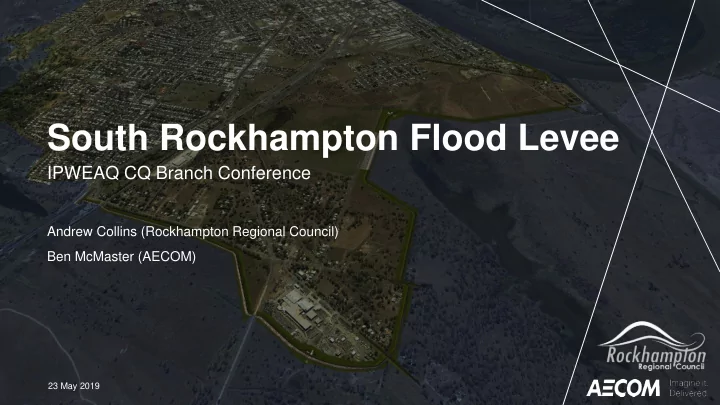
south rockhampton flood levee
SMART_READER_LITE
LIVE PREVIEW

South Rockhampton Flood Levee IPWEAQ CQ Branch Conference Andrew - - PowerPoint PPT Presentation

South Rockhampton Flood Levee IPWEAQ CQ Branch Conference Andrew Collins (Rockhampton Regional Council) Ben McMaster (AECOM) 23 May 2019 Structure 1. History & Context 2. Current Status 3. Technical Details 4. Whats next What is a

slide-1
SLIDE 1

South Rockhampton Flood Levee

IPWEAQ CQ Branch Conference

Andrew Collins (Rockhampton Regional Council) Ben McMaster (AECOM)

23 May 2019

slide-2
SLIDE 2

Structure

  • 1. History & Context
  • 2. Current Status
  • 3. Technical Details
  • 4. What’s next
slide-3
SLIDE 3

3

What is a levee?

Raised, predominantly earth, structures that provide protection against river flooding. Can include:

  • Flood walls
  • Pumps
  • Gates
  • Spillways … and more

Vital part of modern flood risk management. 12,000 levee systems throughout the United States

Several thousand kilometres of levees in Australia

slide-4
SLIDE 4

History & Context

slide-5
SLIDE 5

5

1. Fitzroy River Barrage Study (Department of Local Government) 1964 2. The Yeppen Model (Capricornia Institute of Advanced Education) 1977 3. Rockhampton Flood Management Study (CMPS&F) 1992 4. Rockhampton Floodplain Management Policy (Willing & Partners) 1999 5. Lower Splitters Creek Flood Study (Fisher Stewart) 2001 6. Fitzroy River Flood Study (Aurecon) 2011 7. Fitzroy River Floodplain and Road Planning Study (AECOM) 2012 8. SRFL Planning and Design (AECOM) 2014

History of Studies

slide-6
SLIDE 6

6

1992 Study Priority 1 Project – ORIGINAL ALIGNMENT

slide-7
SLIDE 7

7

Flood Risk:

  • Existing Risk – refers to existing buildings and developments on

flood-prone land; exposed to an “existing” risk of flooding.

  • Future risk – refers to buildings and developments that will be built on

flood-prone land; exposed to “future” flood risk.

  • Residual risk – refers to the risk that remains with floods.

Floodplain Risk Management Principles

Land Use Planning Mitigation Development Controls Flood Warning Systems

Most Proactive Most Reactive

slide-8
SLIDE 8

8

Local Example – NRFMI

slide-9
SLIDE 9

9

Local Example – NRFMI (2017 Event)

Protected Area

slide-10
SLIDE 10

10

SRFL Objectives

Overarching objectives:

  • Protect low-lying areas of Rockhampton
  • ccupied by:
  • Homes
  • Businesses
  • Schools
  • Parks
  • Infrastructure … from major flood events.
  • Improve the flood immunity of Lower Dawson

Road.

  • Minimise adverse impacts (visual amenity,

hydraulics, environmental, existing infrastructure, resumptions).

slide-11
SLIDE 11

Current Status

slide-12
SLIDE 12

12

Timeline 2011 → Major Flood Event (TC Yasi) 2014 → Original Concept Design 2017 → Major Flood Event (Ex-TC Debbie) 2018 → Early Works Packages 2019 → Updated Design, Statutory Approvals, EOI + ETI

slide-13
SLIDE 13

13

Revised Alignment

slide-14
SLIDE 14

14

Approvals Background

Nov 2018:

  • SRFL receives “Prescribed Project” status.

“Enables the Office of Coordinator General (OCG) to intervene in State and Local Government approval processes to ensure timely decision making for the prescribed project.”

May 2019:

  • Notice of proposed Ministerial Infrastructure Designation

received.

  • Statutory consultation period commenced (closes 21st June).
  • EAR released to the public

SRFL = 1st Linear Infrastructure Designation Project

slide-15
SLIDE 15

Technical Details

slide-16
SLIDE 16

16

Levee Overview

slide-17
SLIDE 17

17

Levee Types – Earth Embankment

slide-18
SLIDE 18

18

Levee Types – Composite Wall Systems

Day-to-Day During Flood

slide-19
SLIDE 19

19

Levee Types – Crib Walls

slide-20
SLIDE 20

20

Rail Crossing

slide-21
SLIDE 21

21

Road Crossings

slide-22
SLIDE 22

22

Pump Stations

slide-23
SLIDE 23

23

Flyover Placeholder

INSERT

slide-24
SLIDE 24

What’s Next

slide-25
SLIDE 25

25

Moving Forward

  • Designation approval & EPBC mid-2019
  • EOI closing end of May
  • Council adopting GC21 (conditions of contract)
  • QR & PUP agency ongoing liaison
  • Finalising land acquisitions
  • Reviewing material borrow sources
  • Commence early works (river bank revetment)
  • Anticipated construction period:
  • Ancillary Infrastructure = 2019 wet season
  • Levee System = 2020 dry season
  • Commissioning = 2021
slide-26
SLIDE 26