Policy Insights 2019: Examining Racial and Gender Wealth Inequity - - PowerPoint PPT Presentation

policy insights 2019 examining racial and gender wealth
SMART_READER_LITE
LIVE PREVIEW

Policy Insights 2019: Examining Racial and Gender Wealth Inequity - - PowerPoint PPT Presentation

Policy Insights 2019: Examining Racial and Gender Wealth Inequity Jhumpa Bhattacharya, Insight Center for Community Economic Development Behind the Curtain: the Creation of Wealth Wealth, what you own minus what you owe, is the key to


slide-1
SLIDE 1

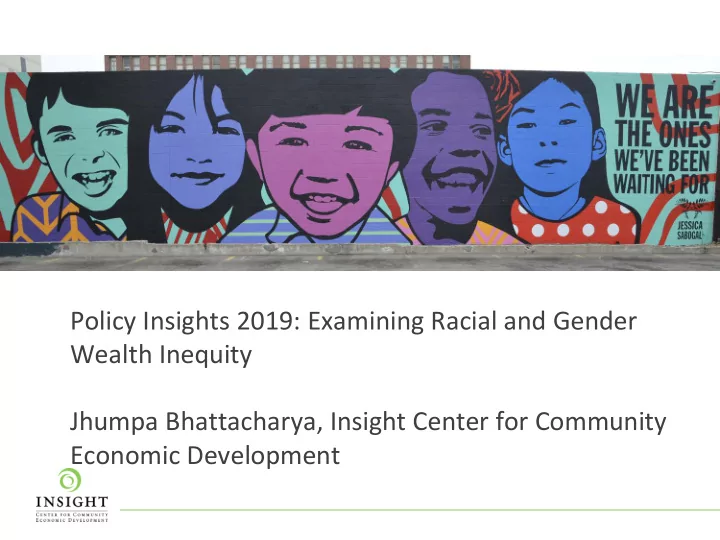
Policy Insights 2019: Examining Racial and Gender Wealth Inequity Jhumpa Bhattacharya, Insight Center for Community Economic Development

slide-2
SLIDE 2

Behind the Curtain:

the Creation of Wealth

Wealth, what you own minus what you owe, is the key to ensuring economic security and enables families to build a better future. It allows us to live with dignity and security and can be passed down from generation to generation.

slide-3
SLIDE 3

Racial wealth injustices are the result of historic bias and racism in public policy, regulations and practice. It will take bold structural changes to close it.

$171,000 $17,100 $20,600

$0 $20,000 $40,000 $60,000 $80,000 $100,000 $120,000 $140,000 $160,000 $180,000

White Black Latino

Median Net Worth By Race, Ethnicity

Source: Survey of Consumer Finances, 2016

slide-4
SLIDE 4

White families had a 30 year head start in building wealth through homeownership

1935 Social Security: Blacks and Latino farm and domestic workers paid in, but were excluded from benefits 1937 FHA: First federal agency to openly counsel and support segregation-Between 1930 and 1950, 3 in 5 homes purchased in U.S. were financed by FHA, yet less than 2% were made to non-white home buyers

slide-5
SLIDE 5

The GI Bill was the single greatest instrument for widening racial inequities in postwar America

The largest federal public benefits program in history, and a low-cost route to wealth creation

  • Paid college tuition
  • Low interest home mortgages
  • For every dollar invested, the GI

Bill returned $7 dollars to the nation but… Discrimination in college admission and housing markets prevented most soldiers of color from using the benefits, and thus prevented an accumulation and transfer of wealth to future generations.

slide-6
SLIDE 6

Source: Umbrellas Don’t Make it Rain: Why Studying and Working Hard Isn’t Enough for Black Americans

slide-7
SLIDE 7

Source: Umbrellas Don’t Make it Rain: Why Studying and Working Hard Isn’t Enough for Black Americans

slide-8
SLIDE 8

8

slide-9
SLIDE 9

Present Day State Sponsored Wealth Extraction