
Craig Chambers 111 CSE 501
Optimizing Procedure Calls
Procedure calls can be costly
- direct costs of call, return, argument & result passing,
stack frame maintainance
- indirect cost of damage to intraprocedural analysis
- f caller and callee
Optimization techniques:
- hardware support
- inlining
- tail call optimization
- interprocedural analysis
- procedure specialization
Craig Chambers 112 CSE 501
Inlining
(A.k.a. procedure integration, unfolding, beta-reduction, ...) Replace call with body of callee
- insert assignments for actual/formal mapping,
return/result mapping
- do copy propagation to eliminate copies
- manage variable scoping correctly
- e.g. α-rename local variables, or tag names with scopes, ...
Pros & Cons: + eliminate overhead of call/return sequence + eliminate overhead of passing arguments and returning results + can optimize callee in context of caller, and vice versa − can increase compiled code space requirements − can slow down compilation In what part of compiler to implement inlining? front-end? back-end? linker?
Craig Chambers 113 CSE 501
What/where to inline?
Inline where highest benefit for the cost E.g.:
- most frequently executed call sites
- call sites with small callees
- call sites with callees that benefit most from optimization
Can be chosen by:
- explicit programmer annotations
- annotate procedure or call site?
- automatically
- get execution frequencies from
static estimates or dynamic profiles
Craig Chambers 114 CSE 501
Program representation for inlining
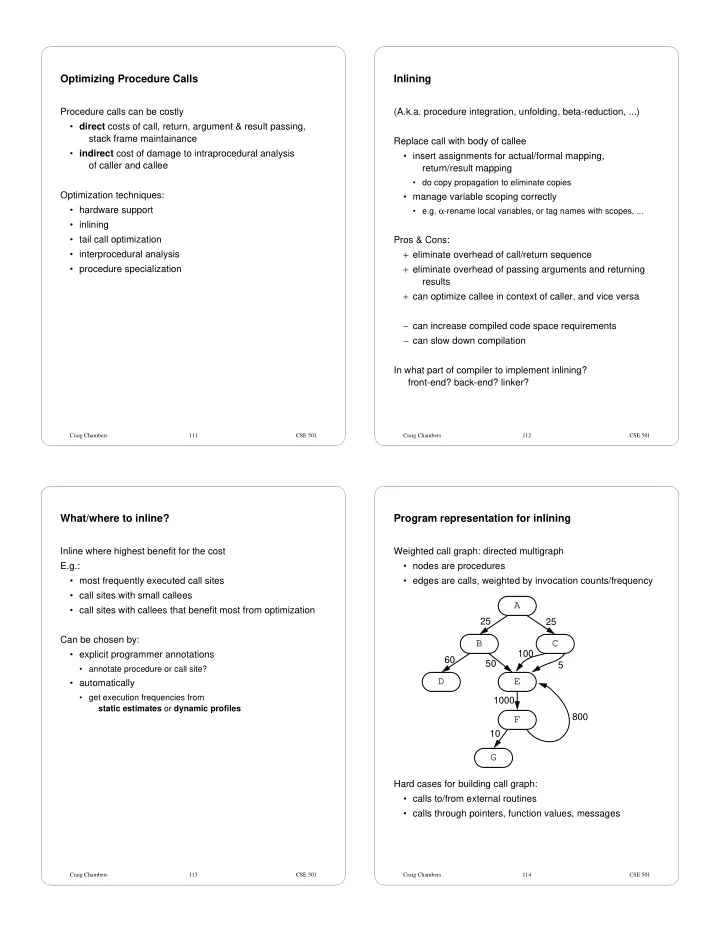
Weighted call graph: directed multigraph
- nodes are procedures
- edges are calls, weighted by invocation counts/frequency
Hard cases for building call graph:
- calls to/from external routines
- calls through pointers, function values, messages
A B C E D F G
25 25 60 50 100 5 1000 800 10