
SLIDE 1
1
Measles
Meg Fisher, MD Medical Director
Disclosures
- I have no disclosures
- I may be mentioning
- ff label uses of drugs
Objectives
- Recognize measles
- Manage a child with measles
- Prevent transmission
- Advise families regarding measles
immunization
Measles
- RNA virus: family Paramyxoviridae,
genus Morbillivirus
- Transmitted by droplets and air
- Extremely contagious
- Incubation period 8 to 12 days
- Contagious 4 days prior to 4 days
after the rash appears
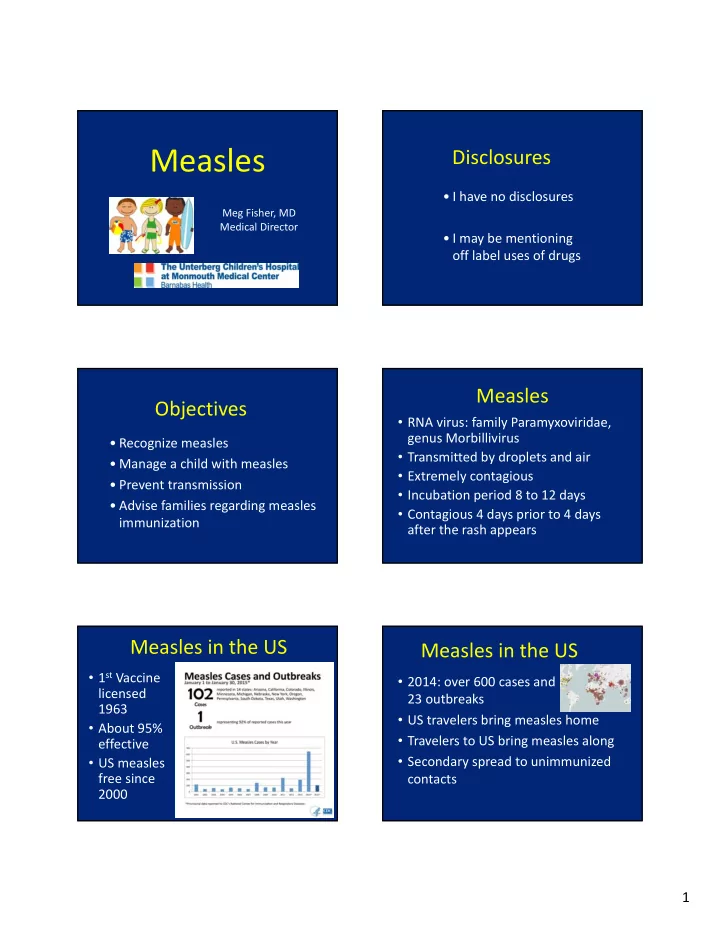
Measles in the US
- 1st Vaccine
licensed 1963
- About 95%
effective
- US measles
free since 2000
Measles in the US
- 2014: over 600 cases and
23 outbreaks
- US travelers bring measles home
- Travelers to US bring measles along
- Secondary spread to unimmunized
contacts