
SLIDE 1
Humanitarian Response Plan Crisis preparedness and contingency - - PowerPoint PPT Presentation
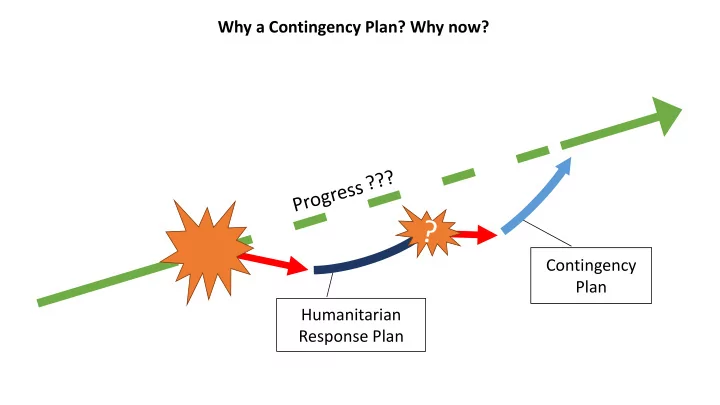
Why a Contingency Plan? Why now? Contingency Plan Humanitarian Response Plan Crisis preparedness and contingency Ongoing crisis Changes in the situation Possible escalation of the conflict More cities affected More
AFFECTED LEARNERS…. Expected Individuals affected (IDPs & remaining pop) Children affected (25%) Children school age - 6 to 16 years (61% of total affected children) Children pre- school age - 3 to 5 years (16% of total affected children) Total (School+Pre- school) 1,200,000 300,000 183,000 48,000 231,000 Assumed displaced (61% of total) 732,000 183,000 111,630 29,280 140,910 Assumed remaining pop (39%) 468,000 117,000 71,370 18,720 90,090
psychosocial support through non-formal education for unenrolled children in summer- camps
39% of total of 183,000 in affected areas assumed to remain = 71,370 children
teacher
90 per student
231,000 children
(leaflet/poster)
education personnel
7320 teachers (school 1:25) 480 teachers (KG 1:100)
provision of psychosocial support to learners.
231,000 children
inclusive of wash.
Assumed 34% damage of schools in affected areas = 321 schools 34% of remaining students in affected areas (90,090) assumed = 30,630
150
month - USD 10 per learner/teacher.
231,000
Gap & Constraint What do we do about it? Funding Partners develop proposals for donor funding Warehouse Preposition stock/education materials Map IDP movement patterns to identify potential IDP hosting schools Monitor/maintain list of school damages Immediate development of MRE training programmes Currently being developed Immediate identification of suitable MRE trainers Currently being developed
Organisation Provision of non formal education in summercamps MRE PSS to teachers and edu personnel Training of teachers to provide PSS Temp repair of infrastructure Edu & ECD kits ADRA DRC/DDG Save the Children YMCA UNICEF Human Home Ukrainian Frontier