Food Presentation by Shawn Bucher, MBA, CEC, CCE, CCP, CDM, CFPP P - - PDF document

food presentation
SMART_READER_LITE
LIVE PREVIEW

Food Presentation by Shawn Bucher, MBA, CEC, CCE, CCP, CDM, CFPP P - - PDF document

I DEA STA RT E R S Food Presentation by Shawn Bucher, MBA, CEC, CCE, CCP, CDM, CFPP P resenting beautiful food is as much an art as painting to set standards that most everyone would agree make our a picture, composing a song, or taking a


slide-1
SLIDE 1 Nutrition & Foodservice Edge | March 2015

22

I DEA STA RT E R S

P

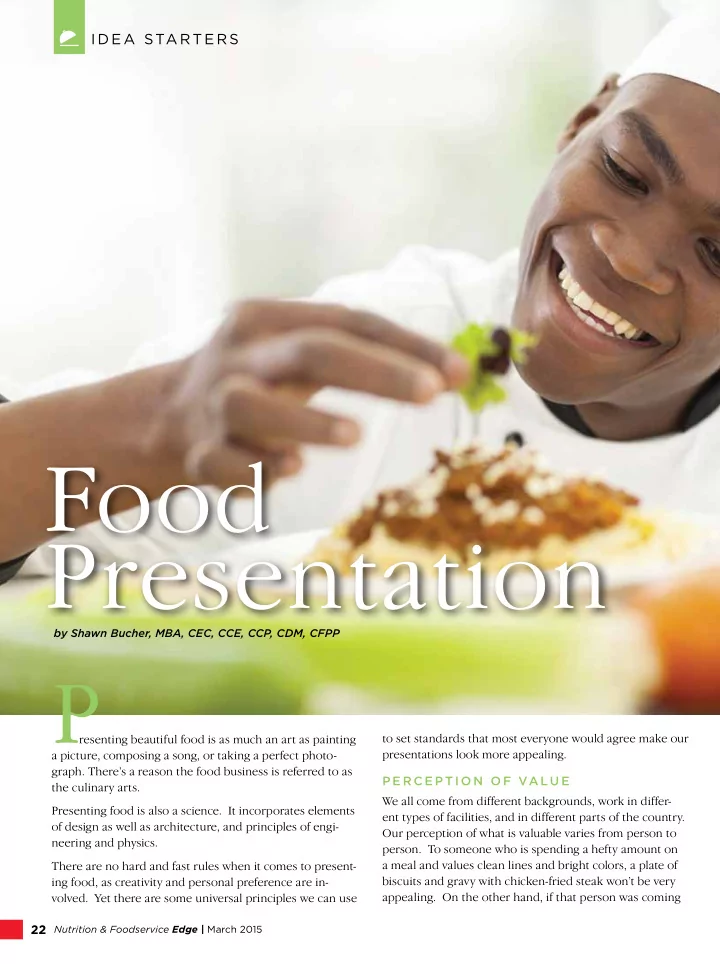
resenting beautiful food is as much an art as painting a picture, composing a song, or taking a perfect photo-

  • graph. There’s a reason the food business is referred to as

the culinary arts. Presenting food is also a science. It incorporates elements

  • f design as well as architecture, and principles of engi-

neering and physics. There are no hard and fast rules when it comes to present- ing food, as creativity and personal preference are in-

  • volved. Yet there are some universal principles we can use

to set standards that most everyone would agree make our presentations look more appealing. P E R C E P T I O N O F VA LU E We all come from different backgrounds, work in differ- ent types of facilities, and in different parts of the country. Our perception of what is valuable varies from person to

  • person. To someone who is spending a hefty amount on

a meal and values clean lines and bright colors, a plate of biscuits and gravy with chicken-fried steak won’t be very

  • appealing. On the other hand, if that person was coming

Food Presentation

by Shawn Bucher, MBA, CEC, CCE, CCP, CDM, CFPP

slide-2
SLIDE 2 Nutrition & Foodservice Edge | March 2015 23

like it’s just been picked and is neatly washed for your con- sumption? What about meats and seafood? Do you know anyone who has ever sought to buy meat that was dark or seafood that was gray? Not only is the raw food we pick critical, but when it is cooked and presented it’s important that it’s as close to the natural color as possible. This is a perception of value to me as a chef. I know when some-

  • ne understands what they are doing in the kitchen when

the food comes out to the table and it’s colorful. It means they started cooking it when I ordered it, paid attention so it wouldn’t be overcooked, and served it when it was ready. Garnishes like chopped herbs or small diced vegetables are an important part of providing a contrast in colors and they offer a burst of color that might not otherwise be there. in from a long day of hard labor, they may prefer that big plate of comfort food. Food presentation has a lot to do with knowing your clientele and serving them accordingly. Let’s look at some of the things we can do that generally increase the perception of value to all of our guests. Color Bright colors show off food in a way that attracts us to it. Think about vegetables. When was the last time you were excited to eat withered, olive green-colored vegetables? Compare that image to a brightly colored carrot that looks

Continued on page 24

TI P S FO R MA KI NG MEA LS LO O K THE I R BEST

The same goes for setting a table or setting up a steam

  • table. Colors can not only tell you how long the food has

been setting out deteriorating in a hot well, they can also tell you how much time, thought, and effort went into displaying the offerings properly. Numbers When it comes to how many of something to present, there is a long and a short answer. The short answer is

  • dd numbers. Odd numbers look more appealing to our
  • eyes. That’s why you’ll see items plated in quantities like
  • ne, three, or fjve. The longer answer is, when plating a

single serving make sure it’s just that – a single serving.

slide-3
SLIDE 3 Nutrition & Foodservice Edge | March 2015

24 Many times we overload plates with certain items and un- derutilize other components. It’s important to have every- thing in harmony, which makes your dishes more cohesive from both a nutrition and presentation standpoint. Textures Presenting different textured items is another way we cre- ate a perception of value for our customers. The French dessert Crème Brulee is a good example of contrasting textures in one dish – the rich custard is silky smooth, the sugar layer is burned – bruleed – so it caramelizes and hardens, offering crunch. Height Building a dish or stacking is another way you can high- light different components of a dish and increase a cus- tomer’s perception of value. Placement A mistake that many cooks make when plating dishes is simply putting items on the plate without having a plan. Here are a few guidelines for utilizing the concepts we just addressed and placing each component on the plate. Use multiple colors. Create a focal point (usually the most expensive or interesting item on the plate). Keep the plate rim clean. B A S I C S O F FO O D P R E S E N TAT I O N We outlined some principles to use when presenting food to increase a customer’s perception of value. Now let’s incorporate those principles and put them into practice by discussing the basics of food presentation for various dishes. Passed Appetizers One of the challenges with passed appetizers is they are not sitting in a heating vessel, so they get cold quickly. To help alleviate this, a best practice with passed appetizers is to keep them mostly as cold or room temperature options. Another challenge is they have a tendency to slide around

  • n the tray or platter. To avoid this, place something un-

derneath them – like a paper doily or napkin. Tossed Salads Tossed salads on a buffet should be served with the dress- ing on the side to avoid a soggy mess. Plated tossed salads should be dressed just prior to leaving the kitchen, or have the dressing available on the tables in a banquet setting. On a buffet, when tossed salads include many ingredients, be sure to layer those ingredients within the salad so they can be more equally dispersed among the guests.

Continued from page 23

ANFP ONLINE COURSE

Learn More About Food Presentation

$40 ANFP Members | $50 Non-Members Order at www.ANFPonline.org/market

ANFP offers a 5-hour online course titled Food Presentation: Tips for Mak- ing Meals Look Their Best. This course shows you how to look at food pre- sentation and create a strategy for your events and meals to help you really stand out. You’ll learn basic tips, techniques, and secrets used by high-end hotels and restaurants to really make their food “pop.” Lots of color images are provided to augment the text.

slide-4
SLIDE 4 Nutrition & Foodservice Edge | March 2015 25

Hot and Cold Buffet Dishes Provide variety and keep in mind the principles described above—good color, neat placement, and overall appeal. On a hot buffet, be aware that if meats or vegetables are cut too thin, they will overcook if left in a chafjng dish or hot well. Cold Desserts Although you want to keep them cold, it’s also important to recognize that the fmavor of food is best around room

  • temperature. So instead of serving cold desserts straight
  • ut of the fridge, allow them to “temper” by sitting out at

room temperature for about 30 minutes before service. This keeps them out of the temperature danger zone, while allowing the fmavors to show through. Every item is different, so understand the melting point of certain components such as whipped cream and chocolate, and at what point condensation starts to show on them. P R E S E N T I N G B E V E R AG E S Here are a few ways we can take advantage of current trends and give our customers an increased sense of value for the beverages we provide.

  • Use unique, customized,
  • r novel cups or glasses

when serving beverages.

  • Garnish your beverages.
  • Add fresh herbs or

spices. C E N T E R P I E C E S A N D D É CO R A beautifully set table can make as much of an impact on the fjrst impres- sion of a meal as the meal

  • itself. You can almost

immediately tell the qual- ity of the experience that you are about to have when you look at the table. Here are some questions you should ask yourself when preparing a menu and planning décor for your special event:

  • Will the meal be served inside or outside?
  • Is electricity available?
  • Is water or a sink available?
  • Is the event casual or upscale?
  • Is it a buffet or a plated meal?
  • Are you serving on china with stainless fmatware? Or us-

ing paper and plastic?

  • Is there a motif or theme?
  • What quality of food do attendees expect? High end,
  • rganic, or cheap and easy?

S U M M A RY Proper presentation begins with the end in mind. Keep consistent standards and stress your expectations with

  • thers. Know your guests and what they expect. Then

deliver not only what they want, but maybe even some- thing they aren’t anticipating—an even higher standard of

  • quality. E
Shawn Bucher, MBA, CEC, CCE, CCP, CDM, CFPP is a foodservice consul- tant for DM&A. He has a love for cu- linary education and is a former chef instructor and author of The First Timer’s series of cookbooks. This article is adapted from ANFP’s new
  • nline course which he authored,
Food Presentation: Tips for Making Meals Look Their Best. shawn@destination10.com