DNS and BGP CS642: Computer Security Professor - - PowerPoint PPT Presentation

dns and bgp cs642 computer security
SMART_READER_LITE
LIVE PREVIEW

DNS and BGP CS642: Computer Security Professor - - PowerPoint PPT Presentation

DNS and BGP CS642: Computer Security Professor Ristenpart h9p://www.cs.wisc.edu/~rist/ rist at cs dot wisc dot edu University of Wisconsin CS 642


slide-1
SLIDE 1
slide-2
SLIDE 2

CS642: ¡ ¡ Computer ¡Security ¡

Professor ¡Ristenpart ¡ h9p://www.cs.wisc.edu/~rist/ ¡ rist ¡at ¡cs ¡dot ¡wisc ¡dot ¡edu ¡

University ¡of ¡Wisconsin ¡CS ¡642 ¡

DNS ¡and ¡BGP ¡

slide-3
SLIDE 3

Internet ¡

Network ¡DMZ ¡

DMZ ¡(demilitarized ¡zone) ¡helps ¡isolate ¡public ¡network ¡ ¡ components ¡from ¡private ¡network ¡components ¡

Outer ¡ firewall ¡ Inner ¡ firewall ¡ Web ¡server ¡ IDS ¡ Customer ¡ databases ¡

Firewall ¡rules ¡to ¡disallow ¡traffic ¡from ¡Internet ¡to ¡internal ¡services ¡

slide-4
SLIDE 4

CIDF ¡ ¡ (Common ¡intrusion ¡detecSon ¡framework) ¡

Event ¡generators ¡ (E-­‑box) ¡ Analysis ¡engine ¡ ¡ (A-­‑box) ¡ From ¡h9p://insecure.org/sY/secnet_ids/secnet_ids.html ¡

slide-5
SLIDE 5

Two ¡broad ¡classes ¡

  • Anomaly ¡detecSon ¡

– What ¡does ¡“normal” ¡traffic ¡look ¡like? ¡ – Flag ¡abnormal ¡traffic ¡

  • Signature ¡based ¡

– Define ¡some ¡explicit ¡traffic ¡pa9erns ¡as ¡bad ¡ – Flag ¡them ¡ – E.g., ¡regular ¡expressions ¡

slide-6
SLIDE 6

Basic ¡NIDS ¡setup ¡

From ¡h9p://insecure.org/sY/secnet_ids/secnet_ids.html ¡

slide-7
SLIDE 7

Some ¡examples ¡

  • Snort ¡(MarSn ¡Roesch) ¡
  • Bro ¡(Vern ¡Paxson) ¡

– 1999: ¡27,000 ¡lines ¡of ¡C++ ¡code ¡

slide-8
SLIDE 8

A9acking ¡or ¡bypassing ¡NIDS ¡

  • How ¡can ¡one ¡circumvent ¡a ¡NIDS? ¡

Internet ¡ Outer ¡ firewall ¡ Inner ¡ firewall ¡ Web ¡server ¡ IDS ¡ Customer ¡ databases ¡

Overload ¡a9acks, ¡crash ¡a9acks, ¡subterfuge ¡a9acks ¡

slide-9
SLIDE 9

Subterfuge ¡a9ack ¡example ¡

Monitor

(10 hops)

(18 hops) USER seq= 6 ... 9 ttl=20 ttl=12 10 .. 13 nice 10 .. 13 ttl=20 root ttl expires USER nice USER root

? ?

USER root

Victim Attacker

Figure 2: A TTL-based evasion attack on an intrusion detec- tion system

From ¡Paxson, ¡ ¡“Bro: ¡A ¡System ¡for ¡DetecSng ¡Network ¡Intruders ¡in ¡Real-­‑Time”, ¡1999 ¡

slide-10
SLIDE 10

Anomalous, ¡non-­‑a9ack ¡traffic ¡

  • “Storms” ¡of ¡10,000s ¡of ¡FIN ¡or ¡RST ¡packets ¡due ¡

to ¡protocol ¡implementaSon ¡error ¡ ¡

  • “Storms” ¡due ¡to ¡foggy ¡days ¡

– Fog ¡in ¡SF ¡bay ¡area ¡killed ¡a ¡connecSon, ¡causing ¡ rouSng ¡flaps ¡and ¡in ¡turn ¡rouSng ¡loops ¡

  • SYN ¡packet ¡with ¡URG ¡flag ¡set ¡

– Flags ¡== ¡SYN ¡ ¡fails ¡

slide-11
SLIDE 11

Honeypots ¡

  • Systems ¡that ¡should ¡have ¡no ¡legiSmate ¡traffic ¡

– Isolated ¡and ¡monitored ¡ – Any ¡traffic ¡routed ¡to ¡it ¡is ¡spurious ¡

  • High ¡interacSon ¡(e.g., ¡a ¡full ¡system) ¡
  • Low ¡interacSon ¡(e.g., ¡Honeyd) ¡
  • Honeynets, ¡honeyfarms ¡

– lots ¡of ¡honeypots ¡

  • Honeytoken ¡

– email ¡address ¡ – credit ¡card ¡number ¡

slide-12
SLIDE 12

University ¡of ¡Wisconsin ¡CS ¡642 ¡

DNS ¡and ¡BGP ¡

slide-13
SLIDE 13

128.105.5.31 ¡

We ¡don’t ¡want ¡to ¡have ¡to ¡remember ¡IP ¡addresses ¡ Early ¡days ¡of ¡ARPANET: ¡manually ¡managed ¡hosts.txt ¡served ¡from ¡ single ¡computer ¡at ¡SRI ¡

slide-14
SLIDE 14

Heirarchical ¡domain ¡name ¡space ¡

(unnamed) ¡root ¡

  • rg ¡

net ¡ edu ¡ com ¡ tv ¡ ca ¡ wisc ¡ ucsd ¡ davis ¡ cs ¡ ece ¡ www ¡

Top ¡Level ¡ domains ¡ (TLD) ¡ Second ¡Level ¡ domains ¡

ICANN ¡(Internet ¡CorporaSon ¡for ¡Assigned ¡ Names ¡and ¡Numbers) ¡ root ¡nameservers ¡and ¡authoritaSve ¡nameservers ¡ Zone: ¡subtree ¡

max ¡63 ¡ characters ¡

slide-15
SLIDE 15

Resolving ¡names ¡

From ¡ ¡ h9p://en.wikipedia.org/wiki/File:An_example_of_theoreScal_DNS_recursion.svg ¡

slide-16
SLIDE 16

Example ¡DNS ¡query ¡types ¡

A ¡ address ¡(get ¡me ¡an ¡ IPv4 ¡address) ¡ AAAA ¡ IPv6 ¡address ¡ NS ¡ name ¡server ¡ TXT ¡ human ¡readable ¡text, ¡ has ¡been ¡used ¡for ¡ some ¡encrypSon ¡ mechanisms ¡ MX ¡ mail ¡exchange ¡

slide-17
SLIDE 17

Caching ¡

  • DNS ¡servers ¡will ¡cache ¡responses ¡

– Both ¡negaSve ¡and ¡posiSve ¡responses ¡ – Speeds ¡up ¡queries ¡ ¡ – periodically ¡Smes ¡out. ¡TTL ¡set ¡by ¡data ¡owner ¡

slide-18
SLIDE 18

DNS ¡packet ¡on ¡wire ¡

From ¡Friedl ¡explanaSon ¡of ¡DNS ¡cache ¡poisoning, ¡as ¡ are ¡following ¡diagrams ¡

Query ¡ID ¡is ¡16-­‑bit ¡ ¡ random ¡value ¡ We’ll ¡walk ¡through ¡ the ¡example ¡from ¡ Friedl’s ¡document ¡

slide-19
SLIDE 19

Query ¡from ¡resolver ¡to ¡NS ¡

slide-20
SLIDE 20

Response contains IP addr of next NS server (called “glue”) Response ignored if unrecognized QueryID

slide-21
SLIDE 21
slide-22
SLIDE 22

bailiwick ¡checking: ¡ ¡ ¡response ¡is ¡cached ¡if ¡ ¡ ¡it ¡is ¡within ¡the ¡same ¡ ¡ ¡ ¡domain ¡of ¡query ¡ ¡ ¡(i.e. ¡ ¡a.com ¡ ¡cannot ¡ ¡ ¡ ¡ ¡ ¡ ¡ ¡ ¡ ¡set ¡NS ¡for ¡b.com) ¡ ¡

slide-23
SLIDE 23

Here ¡we ¡go ¡again… ¡

  • What ¡security ¡checks ¡are ¡in ¡place? ¡

– Random ¡query ¡ID’s ¡to ¡link ¡responses ¡to ¡queries ¡ – Bailiwick ¡checking ¡(sanity ¡check ¡on ¡response) ¡

  • No ¡authenScaSon ¡

– DNSsec ¡is ¡supposed ¡to ¡fix ¡this ¡but ¡no ¡one ¡uses ¡it ¡ yet ¡

  • Many ¡things ¡trust ¡hostname ¡to ¡IP ¡mapping ¡

– Browser ¡same-­‑origin ¡policy ¡ – URL ¡address ¡bar ¡

slide-24
SLIDE 24

What ¡are ¡clear ¡problems? ¡

  • Corrupted ¡nameservers ¡
  • Intercept ¡& ¡manipulate ¡requests ¡
  • Other ¡obvious ¡issues? ¡
slide-25
SLIDE 25

DDoS ¡against ¡DNS ¡

  • Denial ¡of ¡Service ¡

– take ¡down ¡DNS ¡server, ¡clients ¡can’t ¡use ¡Internet ¡ – Feb ¡6, ¡2007 ¡a9ack ¡against ¡6 ¡of ¡13 ¡root ¡servers: ¡

  • 2 ¡suffered ¡very ¡badly ¡
  • Others ¡experienced ¡heavy ¡traffic ¡
  • DoD ¡purportedly ¡has ¡interesSng ¡response: ¡

– “In ¡the ¡event ¡of ¡a ¡massive ¡cybera9ack ¡against ¡the ¡country ¡that ¡ was ¡perceived ¡as ¡originaSng ¡from ¡a ¡foreign ¡source, ¡the ¡United ¡ States ¡would ¡consider ¡launching ¡a ¡countera9ack ¡or ¡bombing ¡ the ¡source ¡of ¡the ¡cybera9ack, ¡Hall ¡said. ¡But ¡he ¡noted ¡the ¡ preferred ¡route ¡would ¡be ¡warning ¡the ¡source ¡to ¡shut ¡down ¡the ¡ a9ack ¡before ¡a ¡military ¡response.” ¡ ¡ ¡ ¡ – h9p://www.computerworld.com/s/arScle/9010921/ RSA_U.S._cyber_countera9ack_Bomb_one_way_or_the_other ¡

slide-26
SLIDE 26

DNS ¡cache ¡poisoning ¡

Internet ¡ Victm ¡DNS ¡server ¡ Clients ¡ bankofsteve.com ¡ 10.1.1.1 ¡ A9acker ¡site ¡ 10.9.9.99 ¡ goodguy.com ¡ IP ¡= ¡10.9.9.9 ¡

How ¡might ¡an ¡a9acker ¡do ¡this? ¡ Assume ¡DNS ¡server ¡uses ¡predictable ¡UDP ¡port ¡

slide-27
SLIDE 27
slide-28
SLIDE 28

Another ¡idea: ¡

  • ­‑ ¡Poison ¡cache ¡for ¡NS ¡

¡ ¡ ¡record ¡instead ¡

  • ­‑ ¡Now ¡can ¡take ¡over ¡all ¡of ¡ ¡

¡ ¡ ¡second ¡level ¡domain ¡ How ¡many ¡tries ¡does ¡ this ¡require? ¡

  • ­‑ Try ¡256 ¡different ¡QIDs ¡
  • ­‑ Good ¡chance ¡of ¡success ¡
slide-29
SLIDE 29

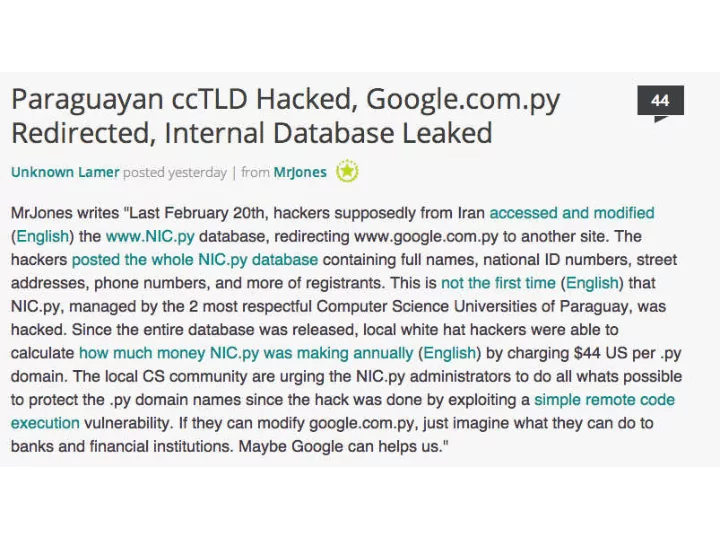
Does ¡happen ¡in ¡the ¡wild ¡

h9p://www.zdnet.com/blog/security/hd-­‑ moore-­‑pwned-­‑with-­‑his-­‑own-­‑dns-­‑exploit-­‑ vulnerable-­‑at-­‑t-­‑dns-­‑servers-­‑to-­‑blame/1608? tag=content;siu-­‑container ¡

slide-30
SLIDE 30

Defenses ¡

  • Query ¡ID ¡size ¡is ¡fixed ¡at ¡16 ¡bits ¡
  • Repeat ¡each ¡query ¡with ¡fresh ¡Query ¡ID ¡

– Doubles ¡the ¡space ¡

  • Randomize ¡UDP ¡ports ¡

– Dan ¡Bernstein’s ¡DJBDNS ¡did ¡this ¡already ¡ – Now ¡other ¡implementaSons ¡do, ¡too ¡

  • DNSsec ¡

– Cryptographically ¡sign ¡DNS ¡responses, ¡verify ¡via ¡ chain ¡of ¡trust ¡from ¡roots ¡on ¡down ¡

slide-31
SLIDE 31

Phishing ¡is ¡common ¡problem ¡

  • Typo ¡squawng: ¡ ¡

– www.ca.wisc.edu ¡ – www.goggle.com ¡

  • Other ¡shenanigans: ¡

– www.badguy.com/(256 ¡characters ¡of ¡filler)/ www.google.com ¡

  • Phishing ¡a9acks ¡

– These ¡just ¡trick ¡users ¡into ¡thinking ¡a ¡malicious ¡ domain ¡name ¡is ¡the ¡real ¡one ¡

slide-32
SLIDE 32
slide-33
SLIDE 33
slide-34
SLIDE 34

DNS ¡piggybacking ¡

A9ackers ¡maliciously ¡added ¡extra ¡lower ¡level ¡ domain ¡names ¡to ¡valid ¡domain ¡name ¡ This ¡is ¡helpful ¡for ¡search ¡engine ¡opSmizaSon ¡

From ¡h9ps://isc.sans.edu/diary/What+s+In+A+Name+/11770 ¡

slide-35
SLIDE 35

BGP ¡and ¡rouSng ¡

defense.gov ¡ wisc.edu ¡ charter.net ¡

BGP ¡(exterior ¡BGP) ¡

OSPF ¡within ¡AS’s ¡ (Open ¡shortest-­‑path ¡ first) ¡

slide-36
SLIDE 36

BGP ¡

  • Policy-­‑based ¡rouSng ¡

– AS ¡can ¡set ¡policy ¡about ¡how ¡to ¡route ¡ ¡

  • economic, ¡security, ¡poliScal ¡consideraSons ¡
  • BGP ¡routers ¡use ¡TCP ¡connecSons ¡to ¡transmit ¡

rouSng ¡informaSon ¡

  • IteraSve ¡announcement ¡of ¡routes ¡
slide-37
SLIDE 37

BGP ¡example ¡

  • 2, ¡7, ¡3, ¡6 ¡are ¡Transit ¡AS ¡
  • 8, ¡1 ¡are ¡Stub ¡AS ¡
  • 4,5 ¡mulShomed ¡AS ¡
  • Algorithm ¡seems ¡to ¡work ¡OK ¡in ¡pracSce ¡

– BGP ¡does ¡not ¡respond ¡well ¡to ¡frequent ¡node ¡outages ¡

3 4 6 5 7 1 8 2

7 7 2 7 2 7 2 7 3 2 7 6 2 7 2 6 5 2 6 5 2 6 5 3 2 6 5 7 2 6 5 6 5 5 5 ¡[D. ¡Wetherall] ¡

slide-38
SLIDE 38

IP ¡hijacking ¡

  • BGP ¡unauthenScated ¡ ¡

– Anyone ¡can ¡adverSse ¡any ¡routes ¡ – False ¡routes ¡will ¡be ¡propagated ¡

  • This ¡allows ¡IP ¡hijacking ¡

– AS ¡announces ¡it ¡originates ¡a ¡prefix ¡it ¡shouldn’t ¡ – AS ¡announces ¡it ¡has ¡shorter ¡path ¡to ¡a ¡prefix ¡ ¡ – AS ¡announces ¡more ¡specific ¡prefix ¡ ¡

slide-39
SLIDE 39

Malicious ¡or ¡misconfiguraSons? ¡

  • AS ¡7007 ¡incident ¡in ¡1997 ¡ ¡

– ¡“Okay, ¡so ¡panic ¡ensued, ¡and ¡we ¡unlugged ¡ *everything* ¡at ¡12:15PM ¡almost ¡to ¡the ¡ second.” ¡[sic] ¡ – h9p://www.merit.edu/mail.archives/nanog/ 1997-­‑04/msg00444.html ¡

  • China ¡Telecom ¡hijacks ¡large ¡chunks ¡of ¡Internet ¡

in ¡2010 ¡

– h9p://bgpmon.net/blog/?p=282 ¡

slide-40
SLIDE 40

Youtube ¡incident ¡

  • Pakistan ¡a9empts ¡to ¡block ¡Youtube ¡

– youtube ¡is ¡ ¡208.65.152.0/22 ¡

– youtube.com = 208.65.153.238

  • Pakistan ¡ISP ¡adverSses ¡208.65.153.0/24 ¡

– more ¡specific, ¡prefix ¡hijacking ¡

  • Internet ¡thinks ¡youtube.com ¡is ¡in ¡Pakistan ¡
  • Outage ¡resolved ¡in ¡2 ¡hours… ¡
slide-41
SLIDE 41

BGPsec ¡

  • Route ¡announcements ¡must ¡be ¡crypographically ¡signed ¡

– AS ¡can ¡only ¡adverSse ¡as ¡itself ¡ – AS ¡cannot ¡adverSse ¡for ¡IP ¡prefixes ¡it ¡does ¡not ¡own ¡

  • Requires ¡a ¡public-­‑key ¡infrastructure ¡(PKI) ¡
  • SSll ¡in ¡development: ¡ ¡

– h9p://tools.ieY.org/html/dra}-­‑lepinski-­‑bgpsec-­‑protocol-­‑00#ref-­‑7 ¡

3 4 6 5 7 1 8 2

7 7 2 7 2 7 2 7 3 2 7 6 2 7 2 6 5 2 6 5 2 6 5 3 2 6 5 7 2 6 5 6 5 5 5 ¡[D. ¡Wetherall] ¡

slide-42
SLIDE 42

Internet ¡Security ¡

  • Recurring ¡themes: ¡

– Built ¡without ¡any ¡authenScity ¡mechanisms ¡in ¡ mind ¡ – FuncSonality ¡mechanisms ¡(sequence ¡#’s) ¡become ¡ implicit ¡security ¡mechanisms ¡ – New ¡a9empts ¡at ¡backwards-­‑compaSble ¡security ¡ mechanisms ¡

  • IP ¡-­‑> ¡IPsec ¡
  • DNS ¡-­‑> ¡DNSsec ¡
  • BGP ¡-­‑> ¡BGPsec ¡
slide-43
SLIDE 43