CSE-571 Robot moves from to . Probabilistic - - PowerPoint PPT Presentation

cse 571
SMART_READER_LITE
LIVE PREVIEW

CSE-571 Robot moves from to . Probabilistic - - PowerPoint PPT Presentation

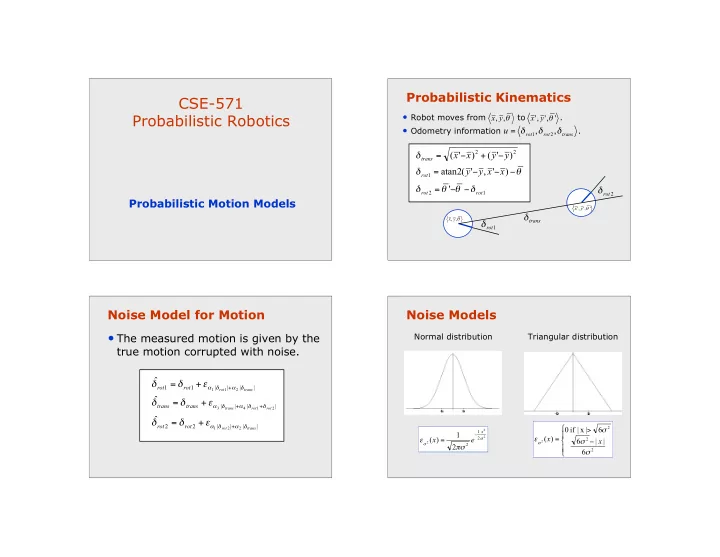
Probabilistic Kinematics CSE-571 Robot moves from to . Probabilistic Robotics x , y , x ' , y ' , ' Odometry information . u , , = rot 1 rot 2 trans


slide-1
SLIDE 1

CSE-571 Probabilistic Robotics

Probabilistic Motion Models

Probabilistic Kinematics

2 2

) ' ( ) ' ( y y x x

trans

  • +
  • =
  • =

) ' , ' ( atan2

1

x x y y

rot 1 2

'

rot rot

  • =
  • Robot moves from to .
  • Odometry information .
  • ,

, y x ' , ' , '

  • y

x

trans rot rot

u

  • ,

,

2 1

=

trans

  • 1

rot

  • 2

rot

  • ,

, y x ' , ' , '

  • y

x

Noise Model for Motion

  • The measured motion is given by the

true motion corrupted with noise.

| | | | 1 1

2 1 1

ˆ

trans rot

rot rot

  • +

+ =

| | | | 2 2

2 2 1

ˆ

trans rot

rot rot

  • +

+ =

| | | |

2 1 4 3

ˆ

rot rot trans

trans trans

  • +

+

+ =

Noise Models

2 2 2

2 1 2

2 1 ) (

  • x

e x

  • =
  • >

=

2 2 2

6 | | 6 6 | x | if ) (

2

  • x

x Normal distribution Triangular distribution

slide-2
SLIDE 2

Probabilistic Kinematics

  • Odometry information is inherently noisy.
  • How can we model this uncertainty?

x’ u

p(x|u,x’)

u x’

Sample-based Density Representation

Sample-based Motion

Start

Sample Odometry Motion Model

1. Algorithm sample_motion_model(u, x): 1. 2. 3. 4. 5. 6. 7. Return

) | | sample( ˆ

2 1 1 1 1 trans rot rot rot

  • +

+ = |)) | | (| sample( ˆ

2 1 4 3 rot rot trans trans trans

  • +

+ + = ) | | sample( ˆ

2 2 1 2 2 trans rot rot rot

  • +

+ = ) ˆ cos( ˆ '

1 rot trans

x x

  • +

+ = ) ˆ sin( ˆ '

1 rot trans

y y

  • +

+ =

2 1

ˆ ˆ '

rot rot

  • +

+ = ' , ' , '

  • y

x

  • ,

, , , ,

2 1

y x x u

trans rot rot

= =

slide-3
SLIDE 3

Examples (odometry based) Examples (velocity based) Motion Model with Map

) ' , | ( x u x P ) ' , | ( ) | ( ) , ' , | ( x u x P m x P m x u x P

  • =
  • When does this approximation fail?